

Age Spots
Age spots are one of the most visible signs of years spent in the sun. This guide explains what they are, why they appear and how we help you choose the right way to reduce them.
Quick answer
Age spots, also called sun spots or liver spots, are flat brown marks that appear on sun-exposed skin such as the face, hands and chest. They are usually harmless. At Naomi Waite Aesthetics in Lancaster, several treatments can help reduce their appearance once each spot has been assessed at consultation.
What are age spots?
Age spots, known medically as solar lentigines, are flat, well-defined patches of darker skin. They range from light tan to dark brown, are usually round or oval, and vary from a few millimetres to a centimetre or more across. Despite the name, they are caused mainly by sun exposure rather than age itself, and although they are sometimes called liver spots, they have nothing to do with the liver.
They are very common, particularly from middle age onwards, and tend to appear on the areas that have seen the most sun: the face, the backs of the hands, the forearms, shoulders and upper back. They are often mentioned alongside freckles, which are smaller and lighter and tend to darken in summer and fade in winter, whereas age spots usually stay much the same all year.
Age spots are not usually a health concern, but some skin changes can look similar. Any spot that is new, changing in size, shape or colour, raised, itchy or bleeding should be checked by your GP before any cosmetic treatment, and your practitioner will also assess each spot before treating it.
- Flat rather than raised
- Evenly coloured, from light tan to dark brown
- Clearly defined edges
- Found on skin that has seen a lot of sun
- Usually unchanged through the seasons
What causes age spots?
Age spots develop when years of ultraviolet (UV) exposure prompt pigment cells in the skin to produce extra melanin in concentrated areas. Melanin is the skin's natural defence against UV light, but when it gathers in one place rather than spreading evenly, it shows as a distinct spot. The pigment builds up gradually, which is why spots often appear years or even decades after the sun exposure that triggered them.
Some people are more prone to them than others. Fair skin that burns or freckles easily and a history of sunburn increase the likelihood, as does regular sunbed use, and genetics also play a part. Spots also tend to become more numerous with each decade, as sun exposure accumulates.
Because age spots are linked to sun exposure, protecting your skin with a broad-spectrum sunscreen every day helps reduce the chance of new ones forming, whether or not you choose treatment.
- Cumulative sun exposure over many years
- Sunbed use
- Fair skin that burns or freckles easily
- A history of sunburn
- A family tendency to pigment spots
Related treatments
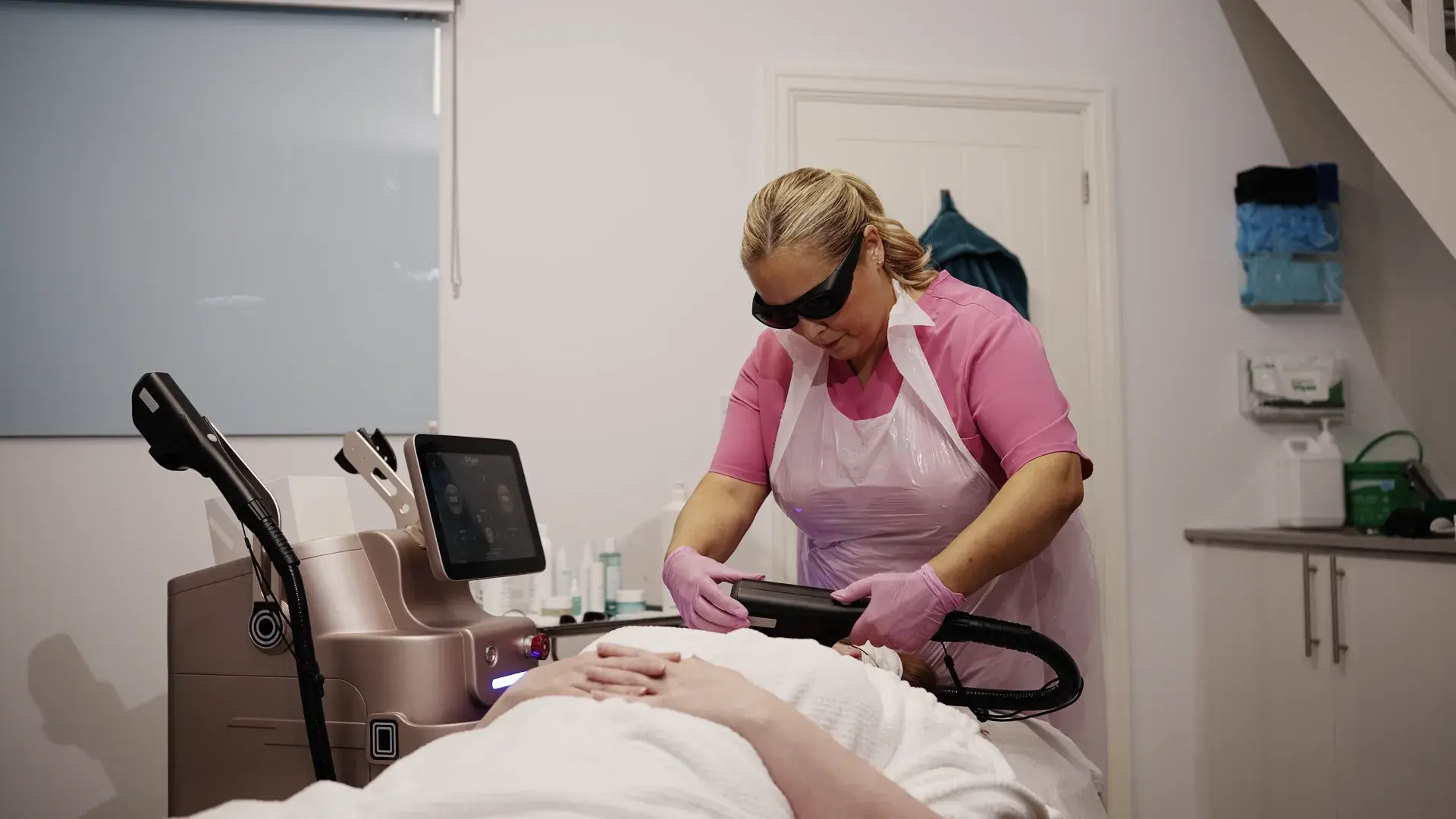 IPL Skin RejuvenationIPL skin rejuvenation uses intense pulsed light, a filtered broad-spectrum light rather than a laser, to treat facial redness, visible vessels, superficial pigmentation and sun damage. At Naomi Waite Aesthetics in Lancaster it is used for photorejuvenation of areas such as the face, neck, chest and hands, after a consultation to confirm your skin is suitable.Find out more
 Pico LaserPico laser is a picosecond laser that delivers very short pulses of energy to break tattoo ink and pigment into fragments, which the body then clears gradually. At Naomi Waite Aesthetics in Lancaster it is used for tattoo removal, permanent makeup (PMU) removal and selected pigmentation, following an assessment at consultation.Find out more
 Q-switched Nd:YAG 532/1064Q-switched Nd:YAG is a nanosecond laser with two wavelengths, 532 nm and 1064 nm, that uses short, high-energy pulses to target tattoo ink and pigment. At Naomi Waite Aesthetics in Lancaster it is used for tattoo removal, permanent makeup (PMU) removal and selected pigmentation, with suitability and a plan agreed at consultation.Find out more
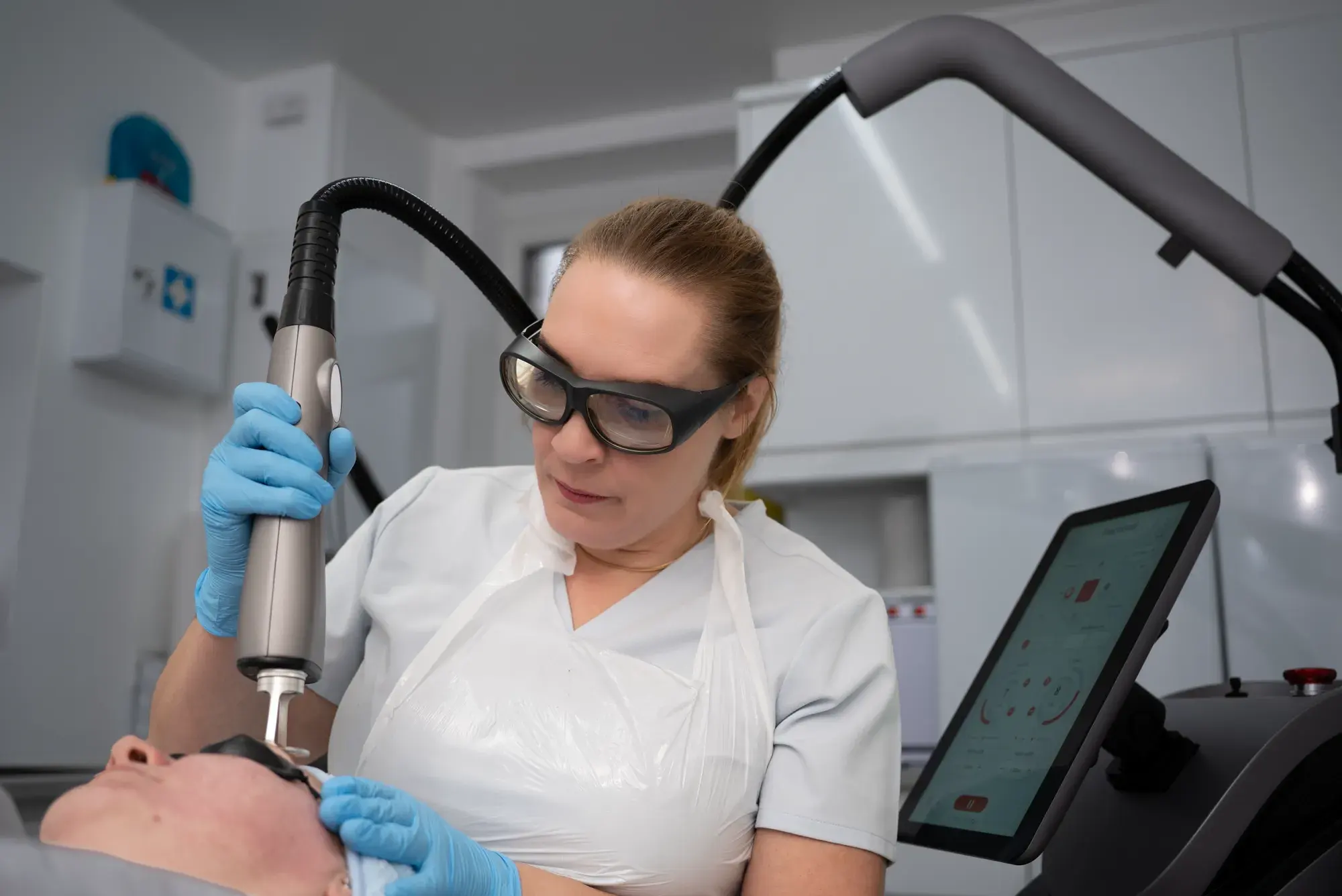 Thulium 1927/1550The Thulium 1927/1550 is a dual-wavelength fractional laser that treats the skin in microscopic zones. It is not an ablative resurfacing laser. At Naomi Waite Aesthetics in Lancaster it is used mainly for pigmentation, sun damage, uneven tone, texture and fine lines, with suitability for your skin confirmed at consultation.Find out more
 CryoPenCryoPen is a precision cryotherapy device that applies controlled freezing to selected superficial skin lesions. At Naomi Waite Aesthetics in Lancaster it is offered as another option for suitable benign blemishes, such as some skin tags and warts, alongside advanced electrolysis, which is generally the first choice. Every lesion is assessed before treatment.Find out more
How the main options for age spots differ
| Feature | IPL Skin Rejuvenation | Pigment lasers (Pico, Q-switched, Thulium) | CryoPen |
|---|---|---|---|
| Type of treatment | Intense pulsed light, a filtered broad-spectrum light (not a laser) | Laser light at specific wavelengths | Cryotherapy, applying controlled freezing |
| Often considered for | Sun-related spots, often alongside redness and overall rejuvenation | Selected pigment concerns, depending on the spot and your skin | Selected suitable benign superficial lesions, after assessment |
Frequently asked questions
Age spots are caused mainly by years of sun exposure, which prompts pigment cells to produce extra melanin in small, concentrated areas. Fair skin, a history of sunburn, sunbed use and genetics all make them more likely. They often appear long after the sun exposure that caused them.
There is no single best option. The right choice depends on the size, depth and number of spots, your skin type and whether each spot is suitable for cosmetic treatment. Your practitioner will assess every spot at consultation before recommending IPL, a pigment laser, Thulium or CryoPen.
This depends on the type and depth of the spots, how many are being treated and the treatment chosen. Some people need more than one session. Your practitioner will give you a realistic idea once your skin has been assessed.
Comfort levels vary with the treatment chosen and from person to person. Your practitioner will explain what you are likely to feel, and how any discomfort is managed, before treatment begins.
It depends on the treatment. Treated spots can darken or look more noticeable for a short time before they fade, and the skin may be pink afterwards. You will be told what to expect for your chosen treatment and given aftercare to follow, including sun protection.
Treatment aims to reduce the appearance of existing spots, but new ones can develop with further sun exposure and some treated spots may return over time. Daily broad-spectrum sun protection is the best way to protect your results.
Many people can be treated, but some options suit certain skin types and tones better than others, and deeper skin tones need careful selection to avoid unwanted pigment changes. Your practitioner will assess your skin before recommending anything, and a patch test may be advised for some treatments.
The cost depends on the treatment chosen and the number and size of the spots being treated. Current prices are listed on our prices page, and your practitioner will confirm the cost of your plan at your consultation in Lancaster.
Book Your Free Consultation
Tell us your goals. We'll tell you exactly what's possible and build a plan to get you there.