
Thread Veins & Red Vein Removal
Thread veins are very common, but they can make people feel self-conscious, especially on the face or legs. This guide explains what they are, why they appear and how we help you choose the right treatment.
Quick answer
Thread veins are small, fine red, purple or blue blood vessels visible just beneath the skin, most often on the face and legs. They are very common and usually harmless. At Naomi Waite Aesthetics in Lancaster, red vein removal is offered with laser (Alexandrite and Pico), VascuLase, IPL and advanced electrolysis, chosen after your veins and skin have been assessed.
What are thread veins?
Thread veins, also called spider veins, broken capillaries or telangiectasia, are tiny blood vessels that have widened and become visible through the skin. They look like fine red, purple or blue lines, sometimes branching out in a web-like pattern, and are usually flat rather than raised.
On the face they most often appear around the nose, cheeks and chin. On the body they are common on the thighs, calves and ankles. They can affect anyone, but become more common with age and are seen more often in women. On the face they can add to a general look of redness, and many people find them hard to cover with makeup.
Thread veins are different from varicose veins, which are larger, bulging veins that can cause aching or swelling. If your leg veins are raised or painful, or come with swelling, skin changes or ulcers, please see your GP first, as these need a medical assessment rather than cosmetic treatment.
- Fine red, purple or blue lines
- Small branching or web-like patterns
- Flat to the touch, not bulging
- Most often on the nose, cheeks, chin, thighs, calves or ankles
What causes thread veins?
Thread veins develop when the walls of small blood vessels weaken, or when the vessels widen and stay that way. There is often no single cause, and many people simply have a family tendency to them. Once a small vessel has widened, it does not usually return to normal on its own.
On the face, sun damage, rosacea and repeated flushing are common contributors, along with exposure to wind and cold. On the legs, hormonal changes, pregnancy and long periods of standing or sitting can play a part. An injury to the skin can also leave small visible vessels behind.
Your practitioner will assess the size, colour and location of your veins, as this is what guides which treatment is most suitable for you. Facial and leg veins often have different causes, which is one reason they are usually treated differently.
- Genetics and family history
- Ageing and thinning of the skin
- Sun exposure and sun damage
- Rosacea and frequent flushing
- Hormonal changes, including pregnancy
- Long periods of standing or sitting
- Extremes of temperature and alcohol
Related treatments
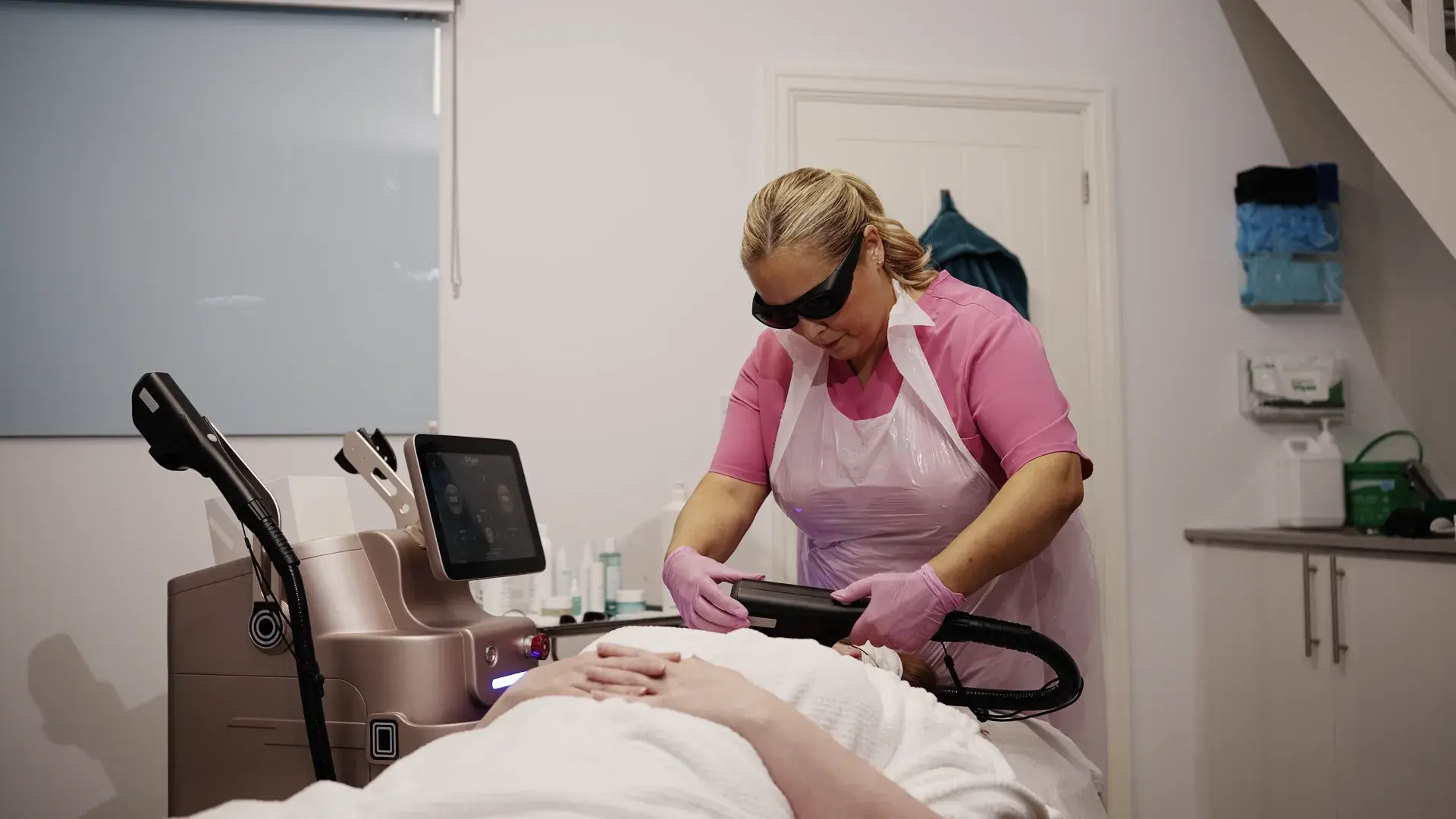 IPL Skin RejuvenationIPL skin rejuvenation uses intense pulsed light, a filtered broad-spectrum light rather than a laser, to treat facial redness, visible vessels, superficial pigmentation and sun damage. At Naomi Waite Aesthetics in Lancaster it is used for photorejuvenation of areas such as the face, neck, chest and hands, after a consultation to confirm your skin is suitable.Find out more
- Advanced ElectrolysisAdvanced electrolysis is a blemish-removal treatment that uses controlled electrical energy, delivered through a very fine probe, to treat selected superficial blemishes and small vessels. At Naomi Waite Aesthetics in Lancaster it is the preferred route for suitable skin tags, warts and other benign blemishes, once each blemish has been assessed.Find out more
 VascuLaseVascuLase is a targeted treatment for thread veins, the small visible blood vessels that can appear close to the surface of the skin. At Naomi Waite Aesthetics in Lancaster it is offered after a consultation, where your practitioner assesses your veins and skin and explains whether VascuLase or another option suits you best.Find out more
 Alexandrite / Nd:YAG HairAs well as hair removal, the Alexandrite / Nd:YAG laser treats skin conditions such as thread veins and red veins, chosen after your veins and skin have been assessed.Find out more
 Pico LaserPico laser is also used for red vein removal at Naomi Waite Aesthetics, chosen after your veins and skin have been assessed.Find out more
How the main options for thread veins differ
| Feature | IPL Skin Rejuvenation | Advanced Electrolysis |
|---|---|---|
| Type of treatment | Intense pulsed light, a filtered broad-spectrum light (not a laser) | Controlled electrical energy delivered through a very fine probe |
| Typically considered for | Facial redness and visible vessels | Selected small vessels and blemishes |
Frequently asked questions
Thread veins form when small blood vessels near the surface widen and stay visible. Genetics, ageing, sun damage, rosacea, hormonal changes and long periods of standing are common contributors, and often more than one factor is involved.
It depends on where the veins are, their size and colour, and your skin type. Facial veins are often approached differently from leg veins. Your practitioner will assess your veins at consultation and recommend IPL, advanced electrolysis or VascuLase accordingly.
This varies with the number, size and location of the veins and the treatment chosen. Some people need more than one session. Your practitioner will give you a realistic idea once your veins have been assessed.
Comfort levels vary with the treatment chosen, the area and from person to person. Your practitioner will explain what you are likely to feel, and how any discomfort is managed, before treatment begins.
It depends on the treatment and the area. Some temporary redness, swelling or small marks can be expected after many vein treatments, and how long they last varies. Your practitioner will explain what is typical for your treatment and give you aftercare to follow.
Treatment aims to reduce the appearance of existing veins, but new thread veins can develop over time, particularly if you have a family tendency or ongoing triggers such as sun exposure. Some people choose occasional top-up treatments.
Suitability depends on your skin type and tone, the veins themselves and your medical history, and some treatments suit certain skin types better than others. Larger or bulging veins need medical assessment first. Your practitioner will check all of this at consultation.
The cost depends on the treatment chosen, the area and how many sessions you need. Current prices are listed on our prices page, and your practitioner will confirm the cost of your plan at your consultation in Lancaster.
Book Your Free Consultation
Tell us your goals. We'll tell you exactly what's possible and build a plan to get you there.