
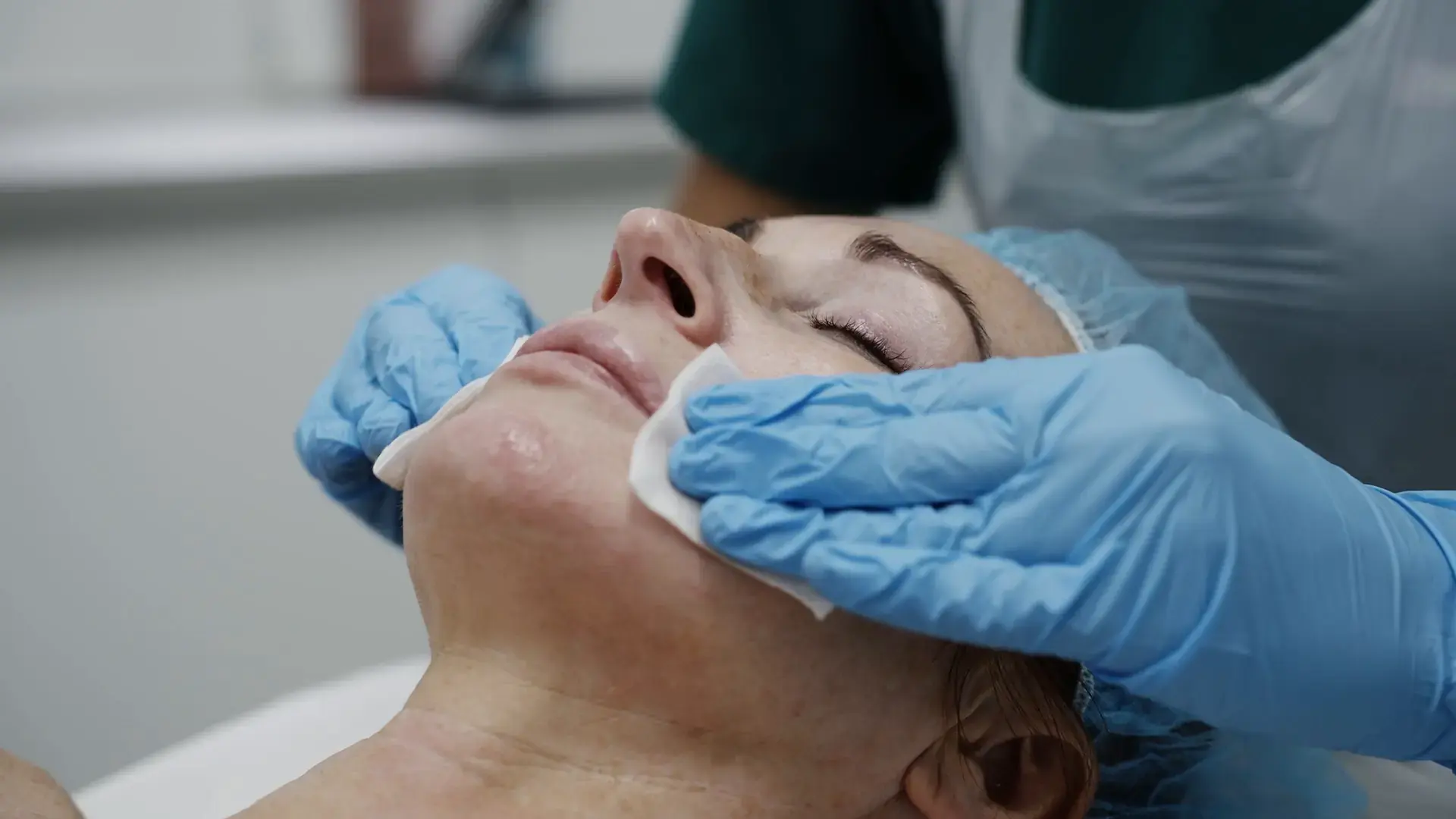
How DermaQuest Peels can help with dull skin
When dull skin feels more stubborn, or comes with rougher texture or marks, a corrective peel is often the option your practitioner will discuss rather than a standard facial.
Quick answer
DermaQuest Peels can help with dull skin that has become more established or textural, working through corrective exfoliation rather than cleansing and hydration alone. They tend to be considered when gentler facials have not made enough difference, or when dullness sits alongside texture, congestion marks or pigmentation. Suitability is confirmed at consultation.
How DermaQuest Peels help with dull skin
Dullness that has been present for a while, or that comes with a rougher surface, uneven tone or congestion marks, often needs more than surface cleansing to shift. DermaQuest Peels work by accelerating exfoliation and renewal at a level chosen for your skin, which is why they are grouped as a corrective, resurfacing category rather than a maintenance facial.
This is a different route from Hydrofacial and from DermaQuest Active Facials. Where those work with the skin's surface through cleansing, hydration or targeted formulations, a peel is designed to encourage the skin to renew itself more actively, which can be a better fit when dullness has become entrenched.
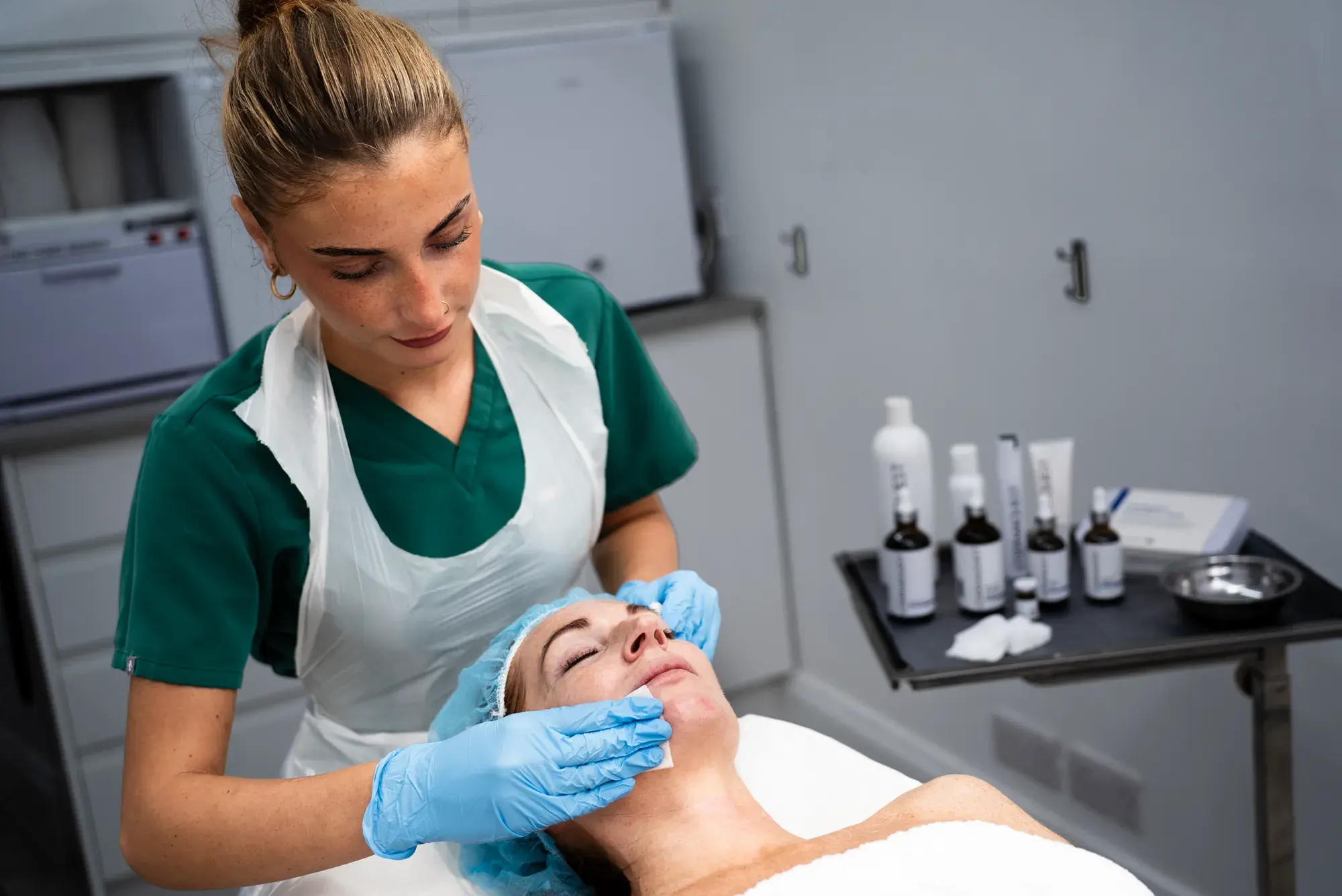
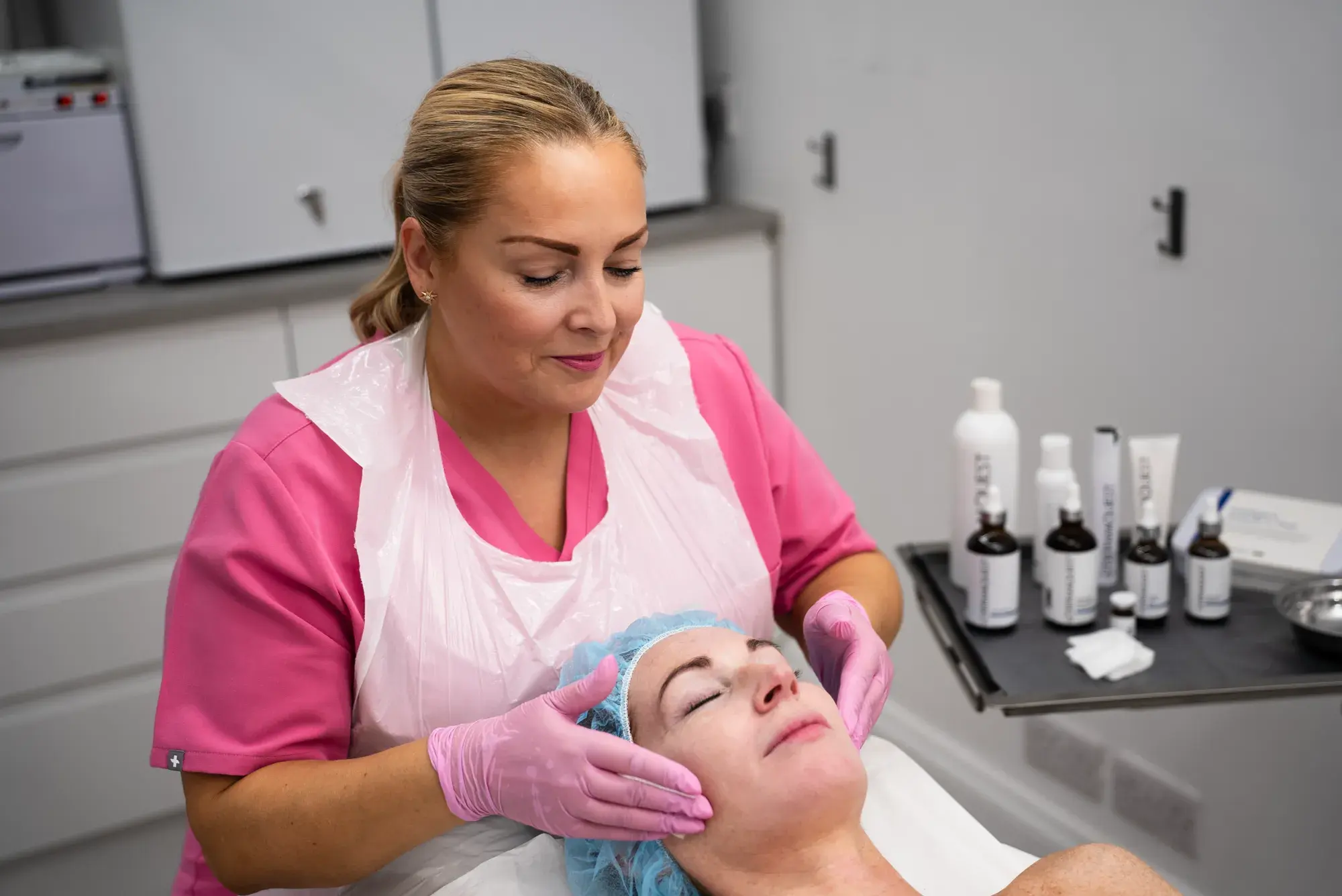
Who DermaQuest Peels suits for dull skin
A peel tends to be considered when dullness comes with visible texture, uneven tone, congestion marks or where lighter facials have not made much difference. It suits people who are comfortable with a more corrective approach and can commit to the aftercare a peel needs.
If your dullness is mild, or mainly linked to dehydration or a lack of regular maintenance, Hydrofacial or DermaQuest Active Facials are usually gentler starting points. Your practitioner will also check your medical history and any current medication, since peels are not suitable for everyone, before recommending one.
- Dullness alongside rougher texture or visible congestion marks
- Dullness that has not improved much with gentler facials
- Dullness alongside pigmentation or sun-related unevenness
What a course of DermaQuest Peels looks like at Naomi Waite Aesthetics
Peels for dull skin are usually approached as a course with rest periods built in between sessions, rather than a single visit, so the skin has time to respond before the next step is decided. Your practitioner will not fix the whole plan in advance.
Instead, they will review how your skin has responded after each session and adjust the strength or spacing accordingly. This individualised approach is part of why peel courses vary so much between clients.
DermaQuest Peels compared with other options for dull skin
DermaQuest Peels are the more corrective option for dull skin, sitting apart from Hydrofacial and DermaQuest Active Facials, and using a chemical exfoliation approach rather than the physical exfoliation used in dermaplaning. Your practitioner can explain which is a better starting point for your skin.
Aftercare after DermaQuest Peels for dull skin
Because a peel encourages the skin to renew itself, protecting that renewed skin matters more here than after a maintenance facial. Daily sun protection is particularly important while your skin is going through this process, since freshly renewed skin can be more reactive to UV.
Your practitioner will give you specific aftercare guidance for your skin and the strength of peel used, including which products to pause and when it is sensible to reintroduce your usual skincare routine.
Frequently asked questions
Questions clients often ask about DermaQuest Peels for dull skin are below; a consultation is the best place to discuss anything specific to your own skin.
Related guides
See the main dull skin hub and the DermaQuest Peels treatment page, along with related guides on pigmentation and sun damage.
Book a consultation
Wondering whether a peel is right for your dull skin? Book a consultation with Naomi Waite Aesthetics in Lancaster.
Frequently asked questions
DermaQuest Peels can help with dull skin, especially when it is linked to texture, congestion marks or pigmentation rather than simple dehydration. Your practitioner will confirm at consultation whether a peel or a gentler facial is the more sensible starting point for you.
Peel courses are planned around how your individual skin responds, so there is no fixed number that applies to everyone. Your practitioner will suggest a starting plan and review it with you between sessions.
Peels are not automatically suitable for every skin type or every individual, and factors such as pregnancy, certain medications and some skin conditions may need to be considered first. Your practitioner will assess your medical history at consultation before recommending one.
Sensations vary depending on the type and strength of peel used, and your practitioner will talk you through what to expect before starting. They will also explain any temporary effects you might notice as your skin renews itself.
This depends on your skin, the peel used and how many sessions are involved, so it is not something we can put an exact timeframe on in advance. Your practitioner can give you a more realistic sense of this at consultation.
Neither is universally better: Hydrofacial is a gentler cleansing and hydration facial, while a peel is a more corrective, resurfacing treatment. If your dullness is mild, Hydrofacial is often tried first; if it is more established or textural, a peel may be considered, which your practitioner will confirm.
Book Your Free Consultation
Tell us your goals. We'll tell you exactly what's possible and build a plan to get you there.