
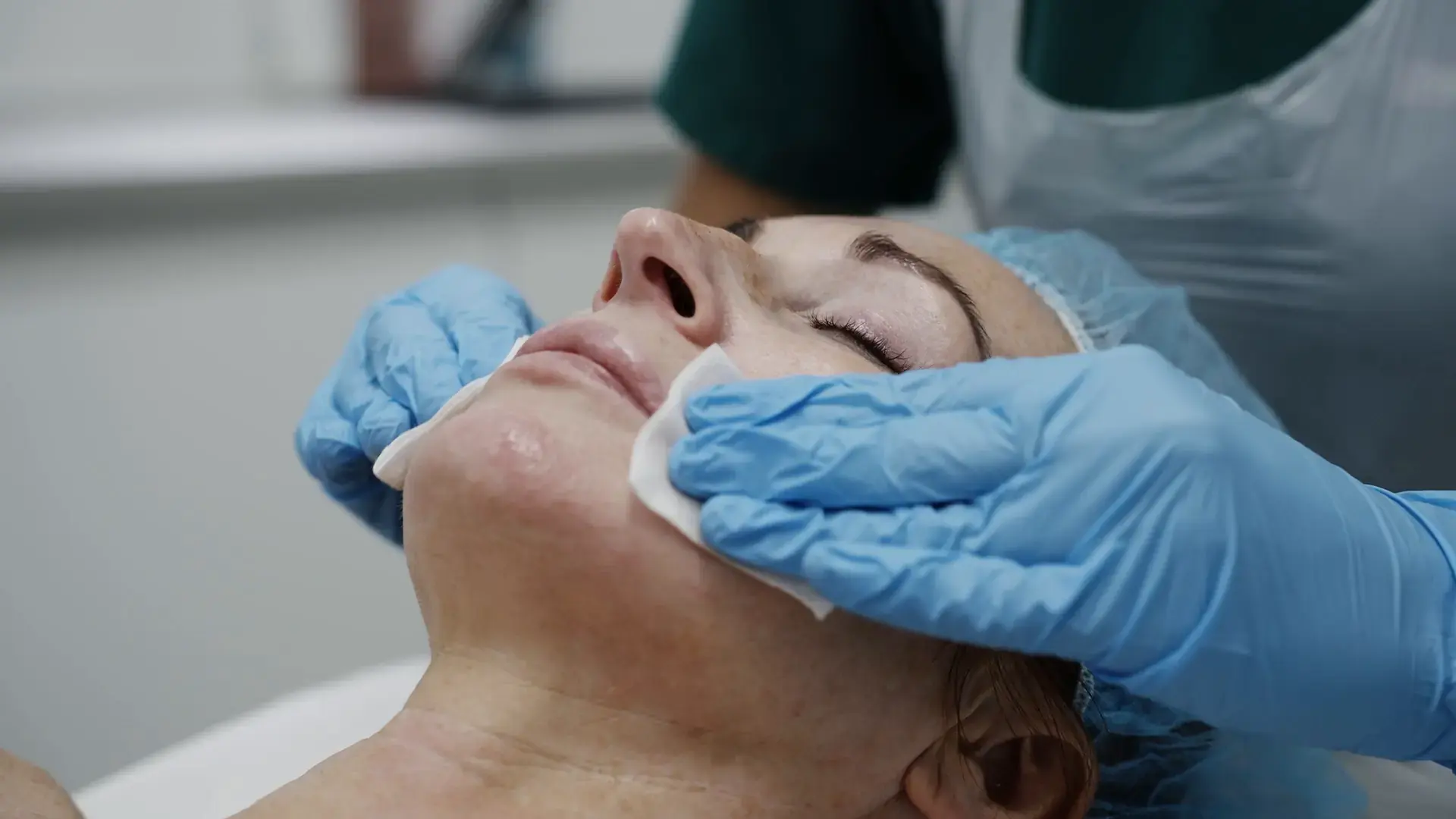
How DermaQuest Peels can help with pigmentation
This page focuses on DermaQuest peels specifically for pigmentation, alongside the device-based options covered in our pigmentation guide.
Quick answer
DermaQuest peels use professional-strength topical acids and resurfacing formulations to speed up exfoliation, which can help with superficial pigmentation, particularly where it overlaps with congestion, post-acne marks or dull, uneven texture. They're a topical, course-based option rather than a laser or light device, and the right strength and formulation for your pigment is chosen at consultation.
How DermaQuest Peels works on pigmentation
How DermaQuest peels and resurfacers work as a category is explained on the treatment page. For pigmentation, their value often lies in treating tone unevenness alongside other concerns at the same time, such as post-acne marks, congestion or rough texture, rather than targeting a single spot the way a laser might.
Because they work topically rather than with light or heat energy, they're often considered a useful complement to device-based pigment treatments as well as a standalone option. This makes peels a flexible option when pigment isn't the only thing you want to address.
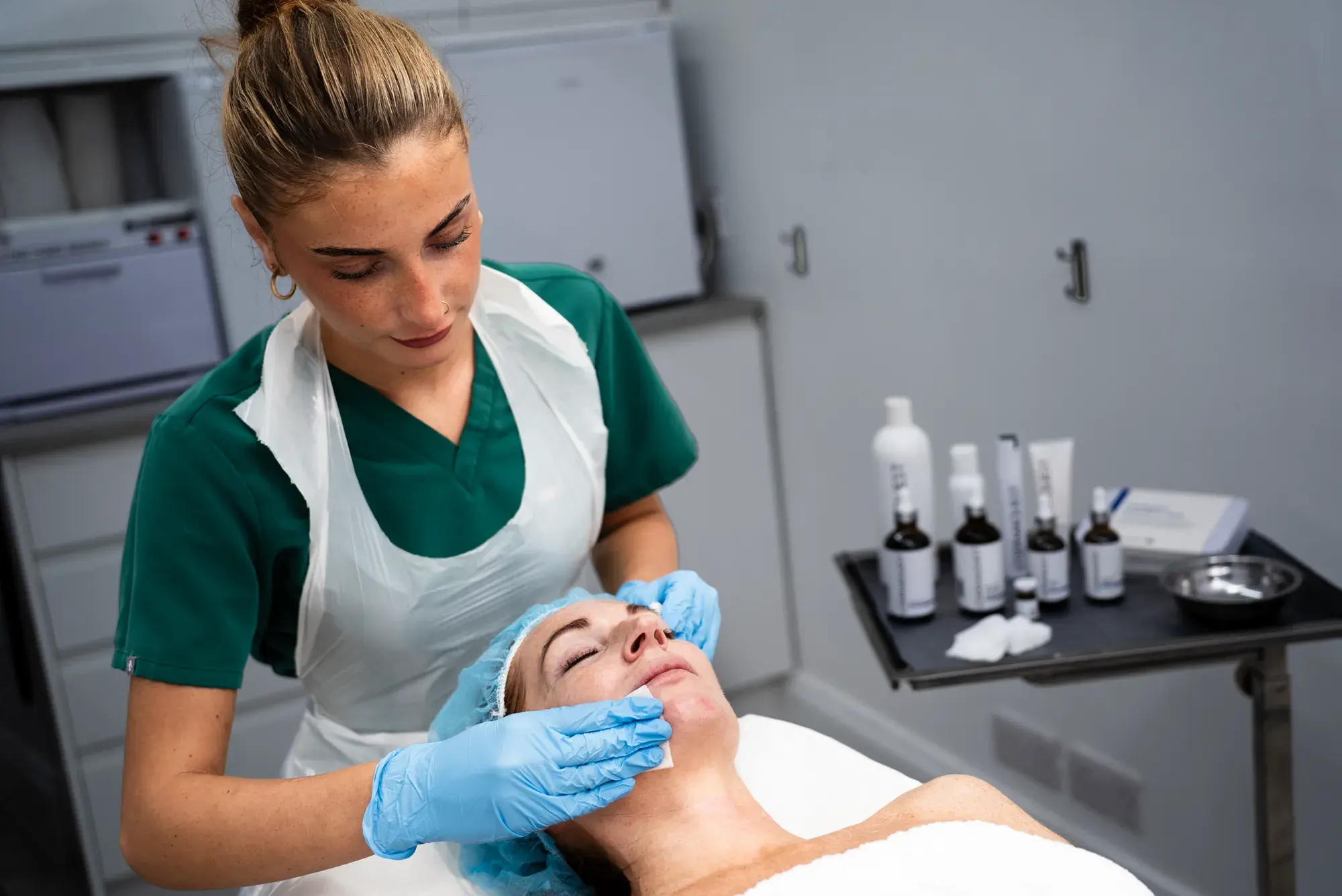
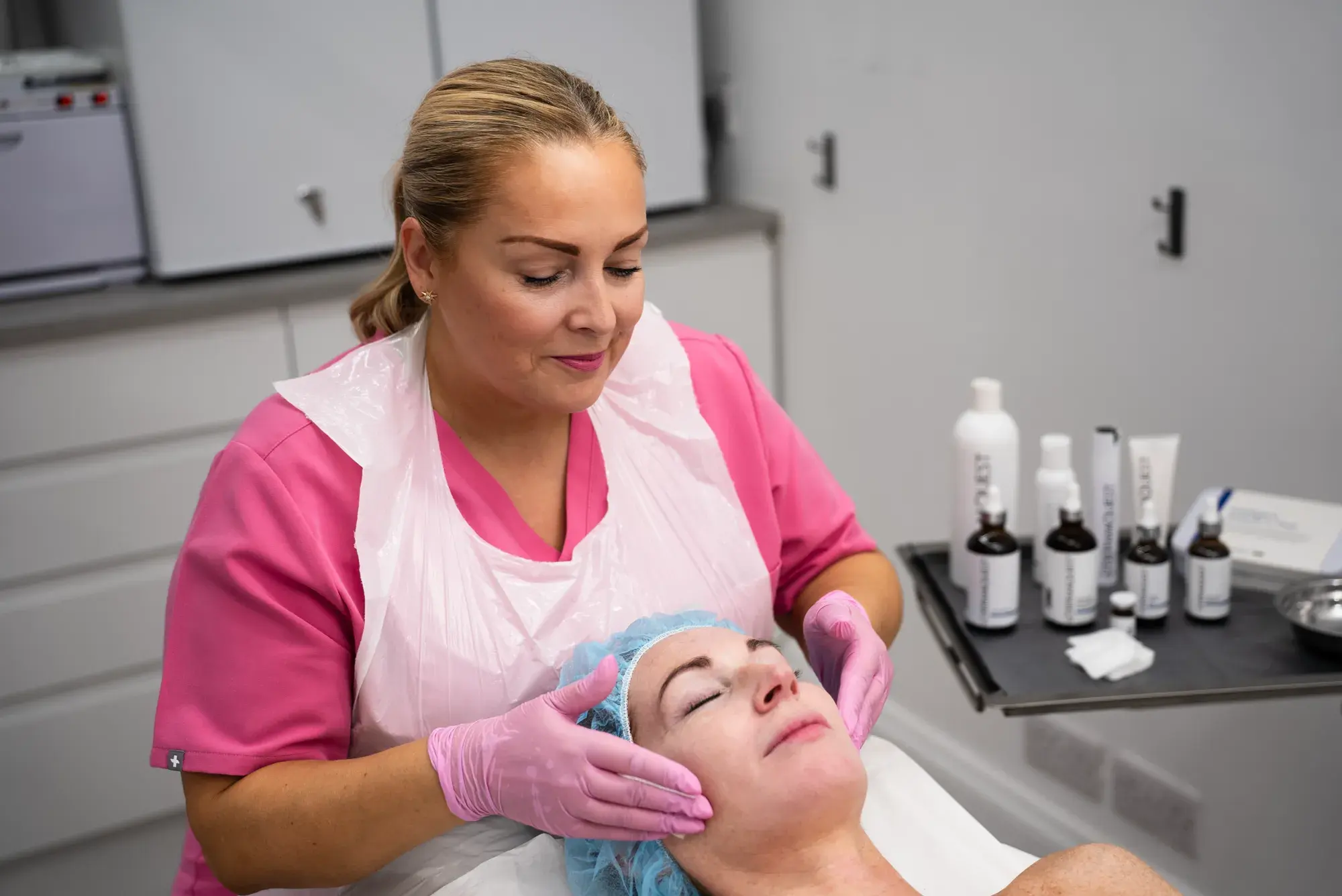
Who DermaQuest Peels suits for pigmentation (and when another option may fit better)
Peels tend to suit pigmentation that is fairly superficial and diffuse, especially where breakouts, congestion or textural dullness are part of the picture, since a peel can address several of these together. For a single, well-defined pigmented spot, a more targeted laser or IPL may work faster; for pigment linked to significant sun damage across a wider area, Thulium may be considered instead of or alongside a peel programme.
Some people also use a peel programme as ongoing maintenance between laser or light sessions to help keep tone even. Which strength and type of peel, if any, is suitable for your skin and pigment is decided at consultation.
What a course looks like at Naomi Waite Aesthetics
General session structure and spacing for DermaQuest peels is set out on the treatment page. For pigmentation, your practitioner will usually build a course gradually, checking how your skin responds and adjusting the plan as needed, rather than committing to a fixed strength or number of sessions from the outset.
DermaQuest Peels compared with other options for pigmentation
Peels are often discussed alongside IPL, Thulium and Q-switched Nd:YAG for pigmentation at Naomi Waite Aesthetics; see the comparison below.
Aftercare after DermaQuest Peels for pigmentation
General peel aftercare is covered on the treatment page and should be followed closely, particularly around sun protection. For pigmentation, daily SPF is essential afterwards, since new sun exposure can undo progress or trigger further pigment; your practitioner will also advise on how to reintroduce your usual skincare, including any active ingredients, without irritating the treated skin. Mild flaking or dryness for a few days is common as the skin renews, and your practitioner will confirm what's typical for the specific peel used on your pigment.
Frequently asked questions
Common questions about DermaQuest peels for pigmentation are answered below.
Related guides
Related guides on pigmentation, peels and skin texture are linked below.
Book a consultation
Book a consultation to find out which peel, if any, suits your pigmentation and skin.
DermaQuest Peels and IPL Skin Rejuvenation for pigmentation, compared
| DermaQuest Peels | IPL Skin Rejuvenation | |
|---|---|---|
| Type of treatment | Topical acids/resurfacing formulations (not a laser or light device) | Broad-spectrum filtered light (not a laser) |
| Best suited to | Superficial pigment, especially with congestion, marks or texture | Lighter, diffuse pigment, often with redness or visible vessels |
| Also addresses | Congestion, post-acne marks, texture, enlarged pores, dullness | Redness and visible vessels in the same course |
| Suitability | Formulation and strength matched to skin at consultation | Confirmed at consultation based on skin tone and pigment pattern |
Frequently asked questions
DermaQuest peels can improve the appearance of superficial pigmentation, especially when it appears alongside congestion, post-acne marks or uneven texture. They tend to work gradually over a course rather than producing an instant change, and your practitioner will assess whether a peel programme suits your specific pigment.
This depends on your skin and how it responds, and general guidance is covered on the treatment page. Your practitioner will build a course for your pigmentation gradually rather than committing to a fixed number upfront.
A wide range of skin types can be considered for DermaQuest peels, with the specific formulation and strength matched to your skin and pigment at consultation. Some pigment, such as melasma, needs particularly careful handling.
General sensation during a peel is described on the treatment page. Most clients describe a warming or tingling feeling rather than pain, and your practitioner will talk you through what to expect for the specific peel chosen.
Peels tend to produce a gradual improvement in tone over a course rather than a dramatic change after one session. Your practitioner will give you a realistic idea of timing based on your skin and pigment at consultation.
Peels work topically and can address pigment alongside congestion or texture in the same course, while IPL uses light energy and tends to suit lighter, diffuse pigment, often with redness. Which fits your skin depends on what else you want to address alongside your pigmentation, discussed at consultation.
Book Your Free Consultation
Tell us your goals. We'll tell you exactly what's possible and build a plan to get you there.