
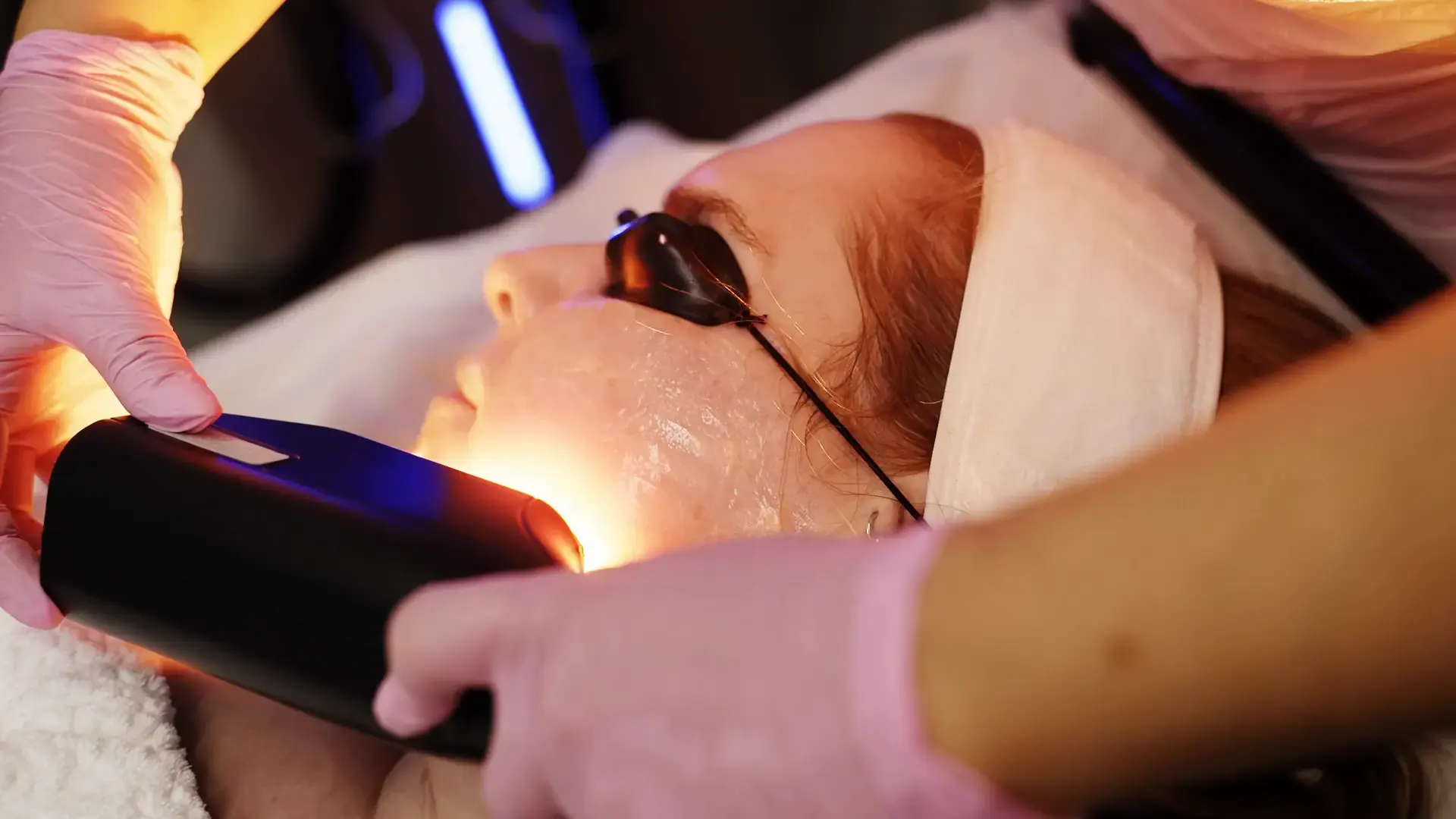
How IPL Skin Rejuvenation can help with pigmentation
This page focuses specifically on how IPL Skin Rejuvenation applies to pigmentation, one of several options covered in our full pigmentation guide.
Quick answer
IPL skin rejuvenation uses broad-spectrum light rather than a single laser wavelength, which makes it well suited to superficial, sun-related pigmentation that often appears alongside redness or visible vessels. It's usually considered for milder, diffuse discolouration rather than dense spots or complex pigment such as melasma, with suitability confirmed at consultation.
How IPL Skin Rejuvenation works on pigmentation
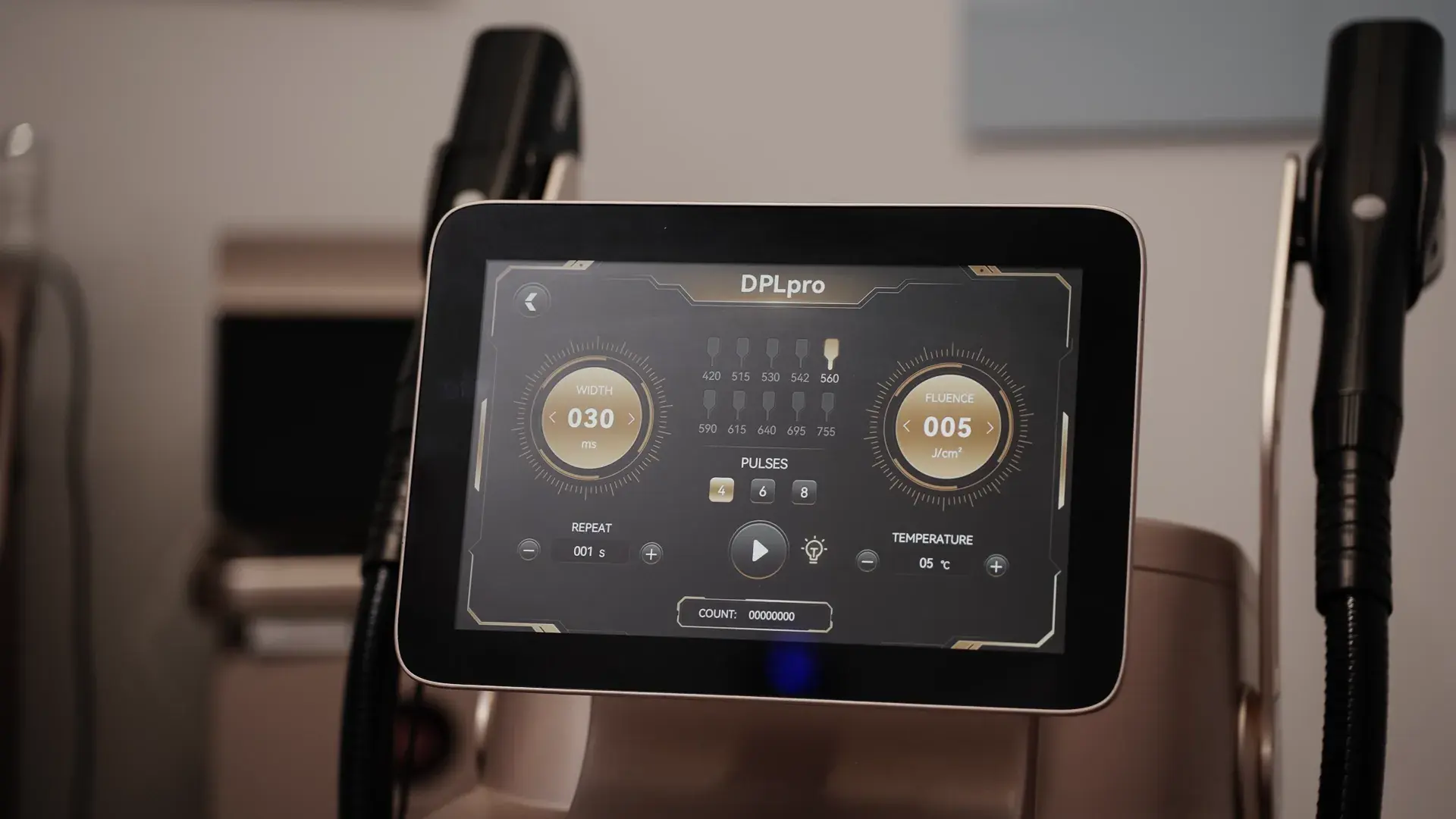
IPL treats the skin with filtered broad-spectrum light rather than a single wavelength, and you can read more about how the technology works on the IPL Skin Rejuvenation treatment page. For pigmentation specifically, this breadth matters: many people with sun-related pigment also have background redness, uneven tone or visible vessels, and IPL can address several of these at once in the same course rather than treating pigment in isolation.
It tends to suit lighter, more diffuse discolouration, such as early sun damage or generalised unevenness across the cheeks and forehead, rather than a single dense, well-defined spot, where a more targeted technology may make more sense.
Who IPL Skin Rejuvenation suits for pigmentation (and when another option may fit better)
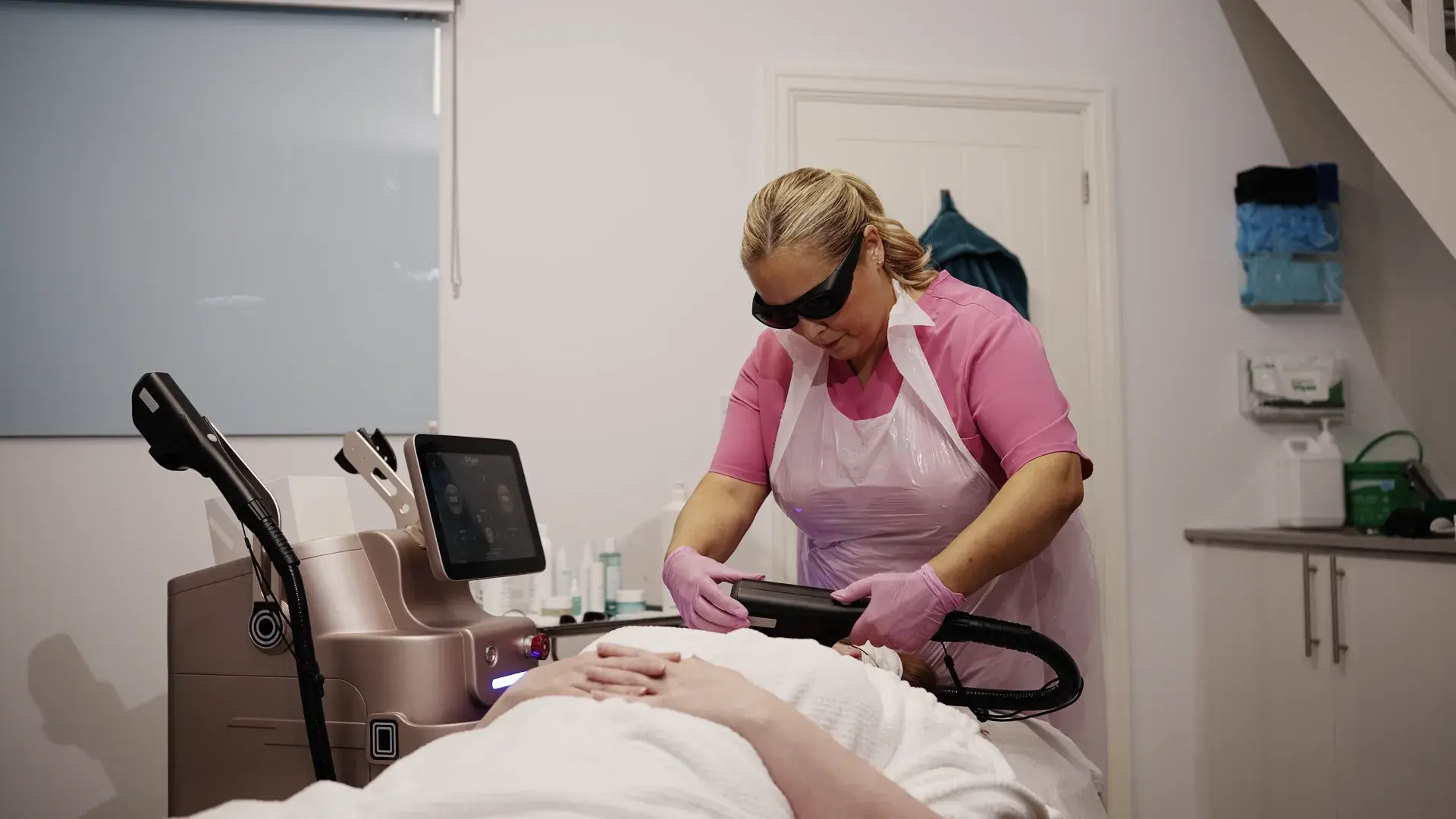
IPL for pigmentation often suits people whose main concern is overall tone and brightness rather than one stubborn mark, and who may also want some improvement in redness or visible vessels at the same time. Skin type and how tanned the skin currently is both affect suitability, which is why this is always assessed at consultation rather than assumed from a photo.
For denser, more clearly defined pigmentation, or complex pigment such as melasma or post-inflammatory marks, a more targeted option such as Pico Laser or Q-switched Nd:YAG, or a course of DermaQuest peels, may be considered instead of or alongside IPL, depending on what your skin needs.
What a course looks like at Naomi Waite Aesthetics
A course for pigmentation is planned individually after your consultation and skin scanner assessment, taking into account your skin type, how much pigment is present and whether redness or vessels are also a factor. General session numbers and spacing for IPL are covered on the treatment page; for pigmentation, your practitioner will also talk through how your particular pattern of discolouration is likely to respond and what a realistic pace of improvement looks like for you.
IPL Skin Rejuvenation compared with other options for pigmentation
Alongside IPL, Pico Laser and DermaQuest peels are the options most often discussed for pigmentation at Naomi Waite Aesthetics; how they compare is set out below.
Aftercare after IPL Skin Rejuvenation for pigmentation
General aftercare for IPL, including sun protection, is covered on the treatment page and applies in full. For pigmentation specifically, treated marks may darken slightly before flaking or fading over the following days or weeks, and strict daily SPF is particularly important afterwards, since further sun exposure can encourage new pigment to form or existing marks to return. Your practitioner will let you know what to expect for your own skin and pigment pattern.
Frequently asked questions
A few common questions about using IPL for pigmentation are answered below.
Related guides
Related reading on pigmentation and IPL is linked below.
Book a consultation
Book a consultation to find out whether IPL is a good fit for your pigmentation, or whether another option would suit your skin better.
IPL Skin Rejuvenation and Pico Laser for pigmentation, compared
| IPL Skin Rejuvenation | Pico Laser | |
|---|---|---|
| Type of energy | Broad-spectrum filtered light (not a laser) | Picosecond laser pulses |
| Best suited to | Lighter, diffuse pigment, often with redness or visible vessels | Denser or more clearly defined pigment |
| Also addresses | Redness and visible vessels in the same course | Also used for tattoo and PMU removal |
| Suitability | Confirmed at consultation based on skin tone and pigment pattern | Confirmed at consultation based on pigment type and skin |
Frequently asked questions
IPL can improve the appearance of superficial, sun-related pigmentation for many people, particularly when it's diffuse or accompanied by redness. It's not equally effective for every type of pigment, and complex pigmentation such as melasma needs a cautious, consultation-led approach. Your practitioner will assess your skin and pigment pattern before recommending IPL.
This depends on how much pigment is present, your skin type and whether redness is also being treated. General session guidance for IPL is covered on the treatment page, and your practitioner will confirm a plan for your pigmentation specifically at consultation.
Suitability depends on your skin tone, current level of tan and the type of pigment you have, which is why a consultation and skin assessment come before any treatment plan. Some skin types and some forms of pigmentation respond better to a different technology, so your practitioner may suggest an alternative or a combination approach.
General sensation during IPL is described on the treatment page. For pigmented areas, some clients notice the pigment feels slightly warmer or more noticeable for a short time immediately after treatment before it begins to fade.
Pigment often darkens before it fades, so early changes can look like the mark has become more visible rather than less. Timelines vary between individuals and pigment types, and your practitioner will talk you through what to expect for your skin at consultation.
Neither is universally better: IPL uses broad-spectrum light and tends to suit lighter, more diffuse pigment, often alongside redness, while Pico Laser uses very short laser pulses that are typically reserved for denser or more defined pigment. Which fits your skin is decided at consultation based on your pigment type and overall goals.
Book Your Free Consultation
Tell us your goals. We'll tell you exactly what's possible and build a plan to get you there.