
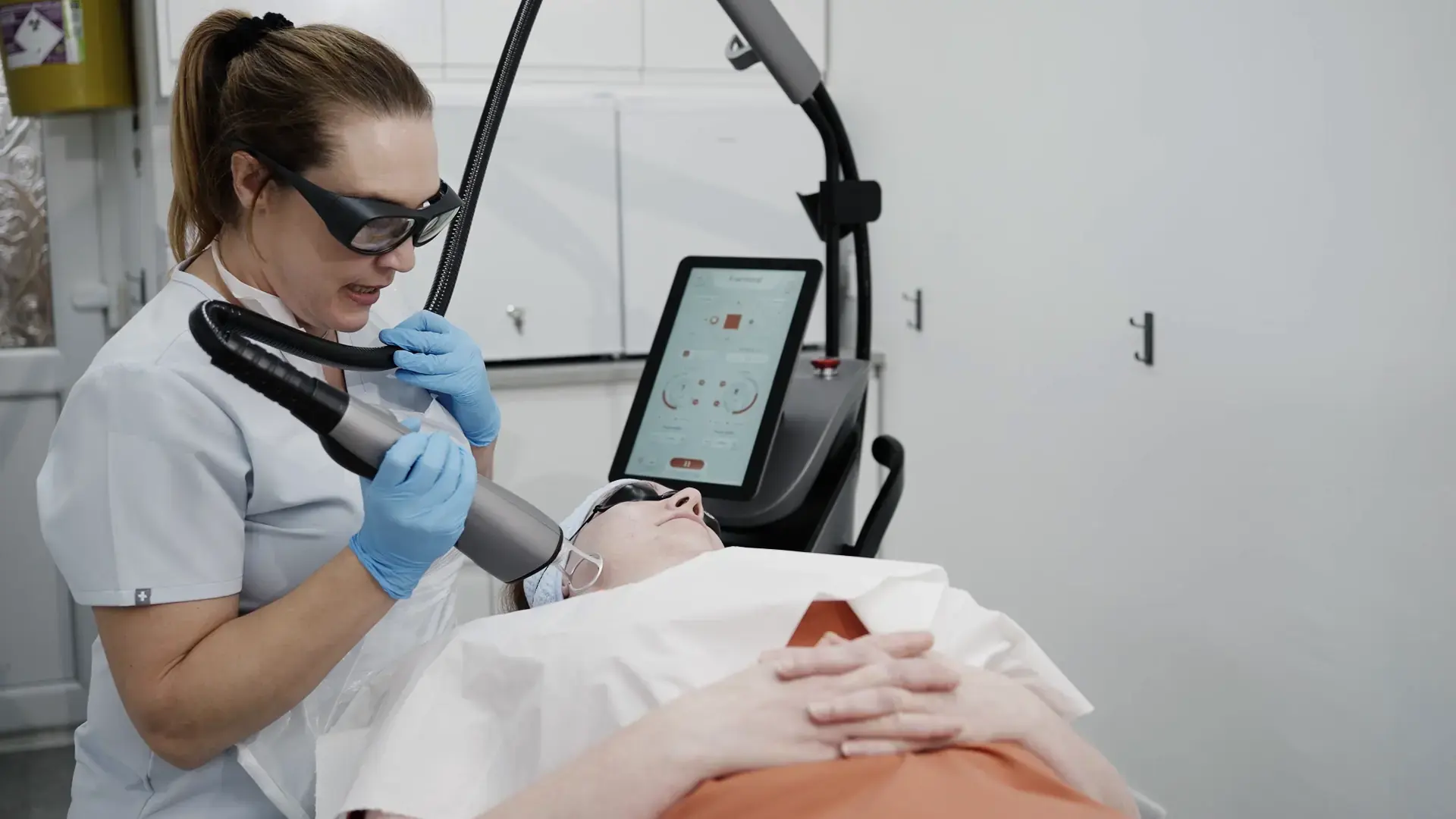
How Thulium 1927/1550 can help with pigmentation
This page looks at Thulium 1927/1550 specifically for pigmentation, one of the technologies most closely linked to tone and photodamage in our pigmentation guide.
Quick answer
Thulium 1927/1550 is a dual-wavelength fractional laser, and its 1927 nm wavelength in particular is closely associated with pigmentation and sun-related photoageing. At Naomi Waite Aesthetics it's one of the technologies most closely linked to tone and pigment concerns, treating skin in fractional zones rather than as a single ablative pass. Suitability is confirmed at consultation.
How Thulium 1927/1550 works on pigmentation
The fractional, non-ablative approach and the difference between the 1927 nm and 1550 nm wavelengths are explained on the treatment page. For pigmentation, the 1927 nm wavelength is the one more closely linked to tone and sun damage, working across many microscopic zones at once rather than targeting a single mark, which suits generalised unevenness and photodamage as much as individual spots.
The 1550 nm wavelength plays a different role and is not simply an alternative way of doing the same thing.
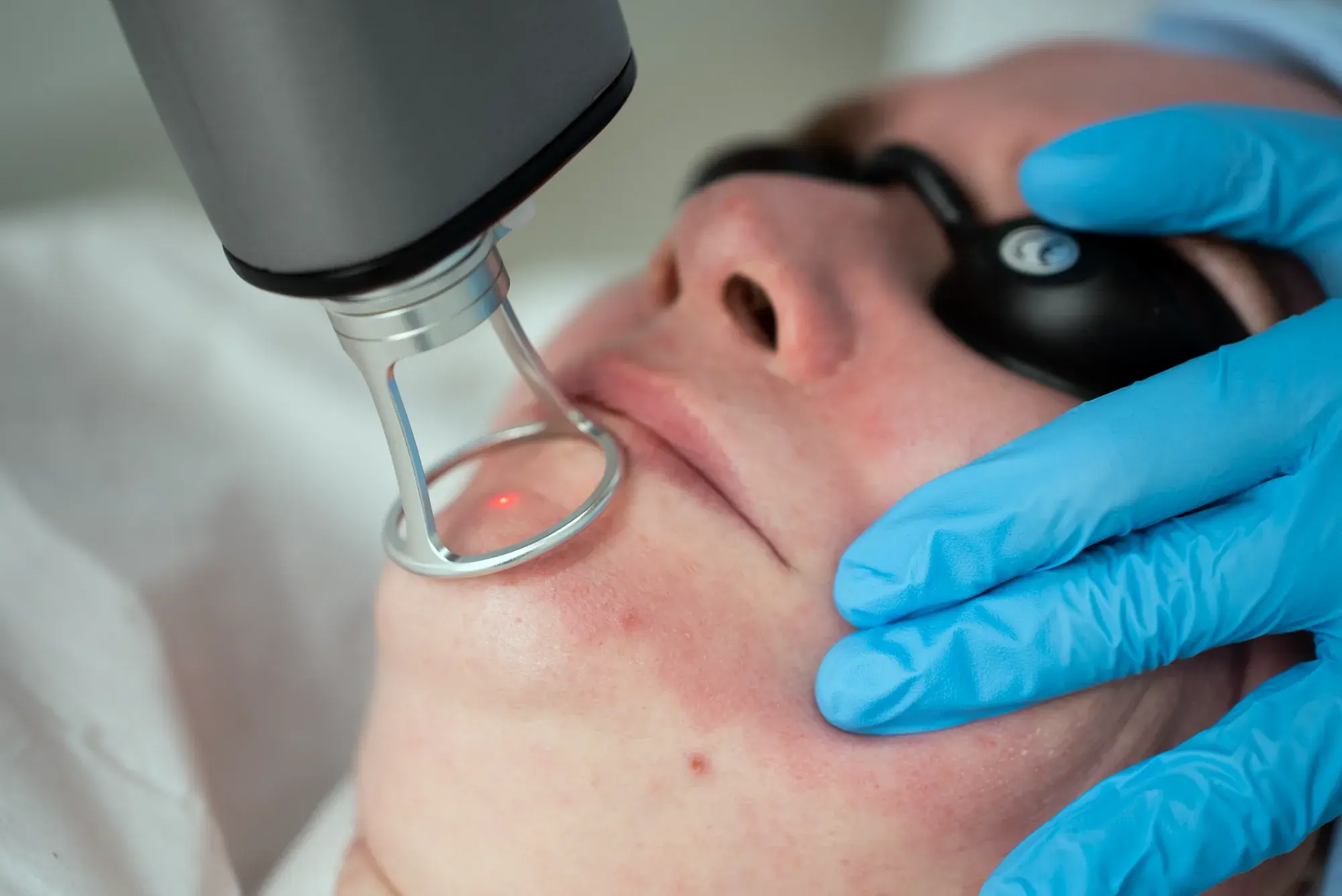
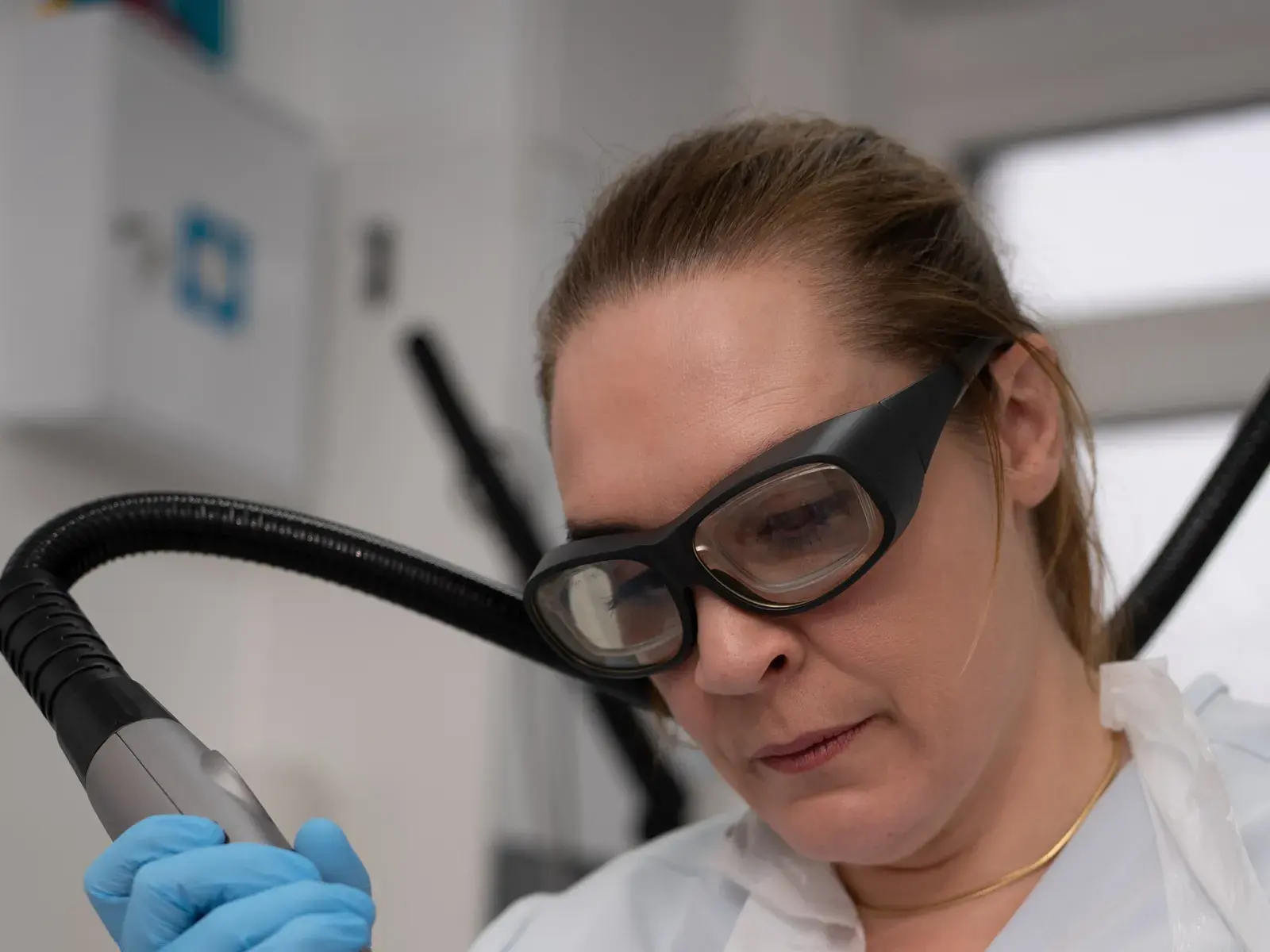
Who Thulium 1927/1550 suits for pigmentation (and when another option may fit better)
Thulium tends to be considered for people whose pigmentation sits alongside broader sun damage, uneven tone or early texture changes, where treating the whole area rather than a single mark makes sense. Skin type and how the pigment behaves matter: some phototypes and some forms of pigmentation, particularly melasma or post-inflammatory marks, carry a higher risk of the pigment recurring or worsening, so these are approached cautiously and may be better suited to a peel-led or more conservative plan.
For a single dense, well-defined spot, Pico Laser or Q-switched Nd:YAG may be considered instead. Your practitioner will also talk through how Thulium might fit alongside other treatments you're considering, such as a peel or a booster, if your goals go beyond pigment alone.
What a course looks like at Naomi Waite Aesthetics
A course is planned around your overall pattern of pigmentation and photodamage, not just one mark, following consultation and a skin scanner assessment where relevant. General session and spacing information for Thulium is on the treatment page; for pigmentation your practitioner will also explain how tone and texture are expected to change together over the course, since the two are often addressed at the same time.
Thulium 1927/1550 compared with other options for pigmentation
Thulium is often discussed alongside IPL, Pico Laser and DermaQuest peels for pigmentation; a short comparison follows.
Aftercare after Thulium 1927/1550 for pigmentation
Full aftercare guidance, including sun protection, is on the treatment page and matters just as much for pigmentation. Because pigment and recurrence risk are linked to UV exposure, consistent daily SPF afterwards is one of the most important things you can do to protect your results, alongside anything else your practitioner recommends for your skin. Some redness or a warm, sunburnt feeling in the treated area is common in the short term; this is described in more detail on the treatment page, and your practitioner will let you know what's typical for your skin.
Frequently asked questions
A few common questions about Thulium 1927/1550 for pigmentation.
Related guides
Related guides on pigmentation and photodamage are linked below.
Book a consultation
Book a consultation to discuss whether Thulium 1927/1550 fits your pigmentation and overall skin goals.
Thulium 1927/1550 and IPL Skin Rejuvenation for pigmentation, compared
| Thulium 1927/1550 | IPL Skin Rejuvenation | |
|---|---|---|
| Type of technology | Fractional laser (non-ablative) | Broad-spectrum filtered light (not a laser) |
| Best suited to | Broader tone, photodamage and texture concerns treated together | Lighter, diffuse pigment, often with redness or visible vessels |
| Approach | Treats the whole area in fractional zones | Treats the whole area with filtered light pulses |
| Suitability | Confirmed at consultation, with extra care for melasma/PIH | Confirmed at consultation based on skin tone and pigment pattern |
Frequently asked questions
Thulium is one of the technologies most closely associated with pigmentation and sun-related photoageing at the clinic, and many clients see an improvement in tone over a course of treatment. Results vary between individuals and pigment types, and complex pigment such as melasma needs a cautious, consultation-led approach.
This depends on how much pigment and photodamage is present and how your skin responds. General session guidance is on the treatment page, and your practitioner will confirm a plan for your pigmentation at consultation.
Most skin types can be considered for Thulium, but how the pigment behaves matters as much as skin tone itself, particularly for melasma or marks left by inflammation. This is always assessed individually at consultation.
General sensation during treatment is covered on the treatment page. Treated pigment may feel warmer than the surrounding skin for a short time afterwards, and your practitioner can talk you through what to expect for your skin.
Because Thulium treats tone and texture together in fractional zones, changes tend to build gradually over a course rather than appearing after a single session. Your practitioner will explain a realistic timeframe based on your pigment and skin at consultation.
Thulium's fractional approach suits broader tone and photodamage concerns, often alongside texture, while IPL's broad-spectrum light suits lighter, diffuse pigment, often alongside redness or visible vessels. Neither is universally better, and the right choice depends on your specific pattern of pigmentation, decided at consultation.
Book Your Free Consultation
Tell us your goals. We'll tell you exactly what's possible and build a plan to get you there.