
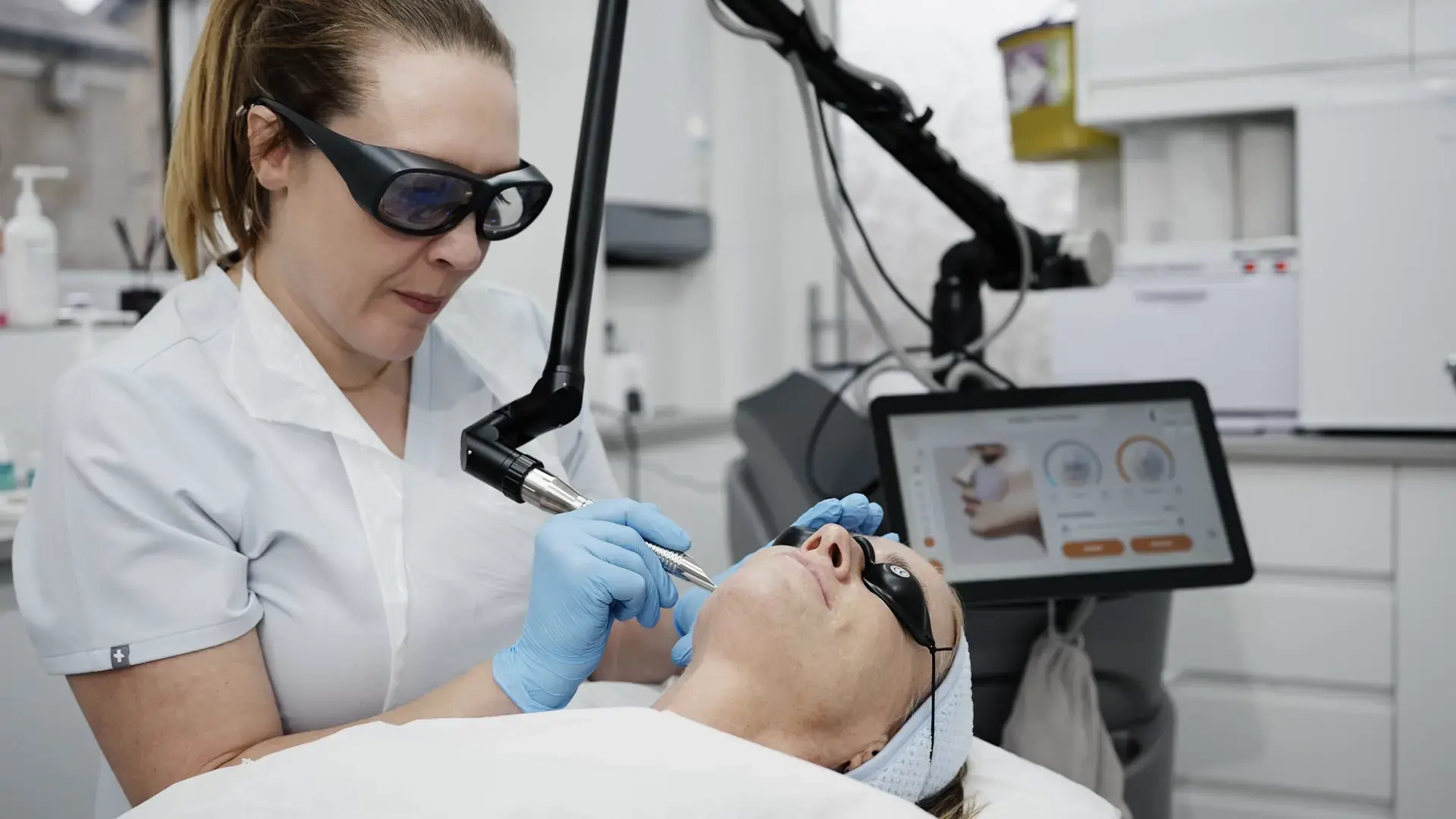
How Er:YAG 2940 Laser can help with sun damage
Sun damage that has left texture, not just colour, changed can call for a resurfacing laser, and there is more than one type worth understanding.
Quick answer
Er:YAG 2940 laser is one of two ablative resurfacing options at Naomi Waite Aesthetics for sun damage that has changed the skin's texture, the other being CO2. Its wavelength is absorbed differently by water in the skin, giving it a different ablation and thermal profile, so the two are typically compared directly at consultation before choosing between them.
How Er:YAG 2940 Laser works on sun damage
Where sun damage has left the skin's texture rougher, with fine lines more pronounced alongside pigment, Er:YAG is one of the ablative resurfacing routes that comes up in conversation. Its 2940 nm wavelength is strongly absorbed by water in the skin, which gives it a different balance of ablation and thermal effect compared with CO2, another ablative wavelength used at the clinic.
This does not mean one is simply the stronger or weaker version of the other; the two work differently, and neither should be assumed to suit every pattern of sun damage automatically. Deciding between Er:YAG and CO2 for your skin is a comparison your practitioner makes directly, based on your degree of textural change and how your skin has responded to the sun over time.
Who Er:YAG 2940 Laser suits for sun damage (and when another option may fit better)
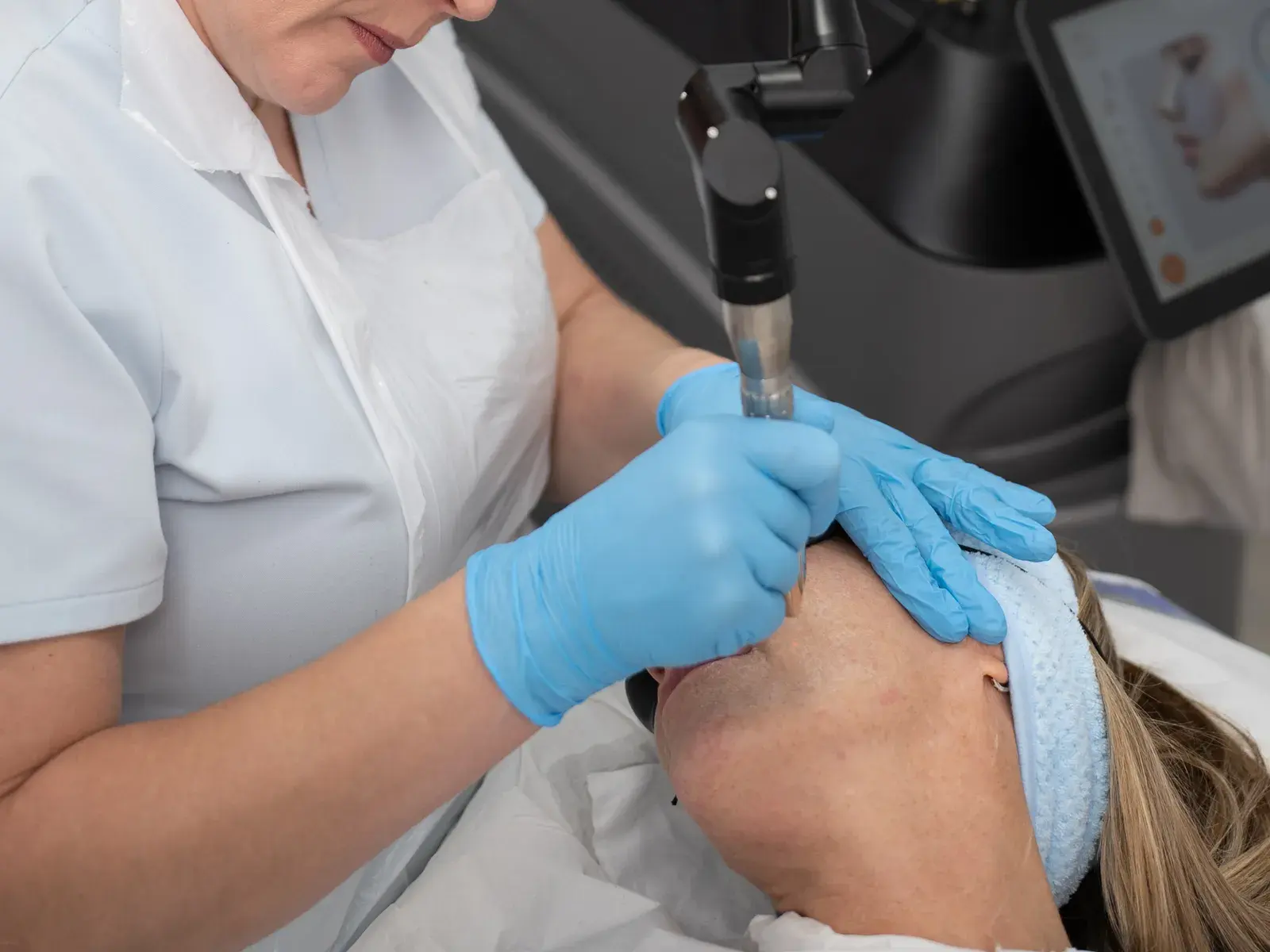
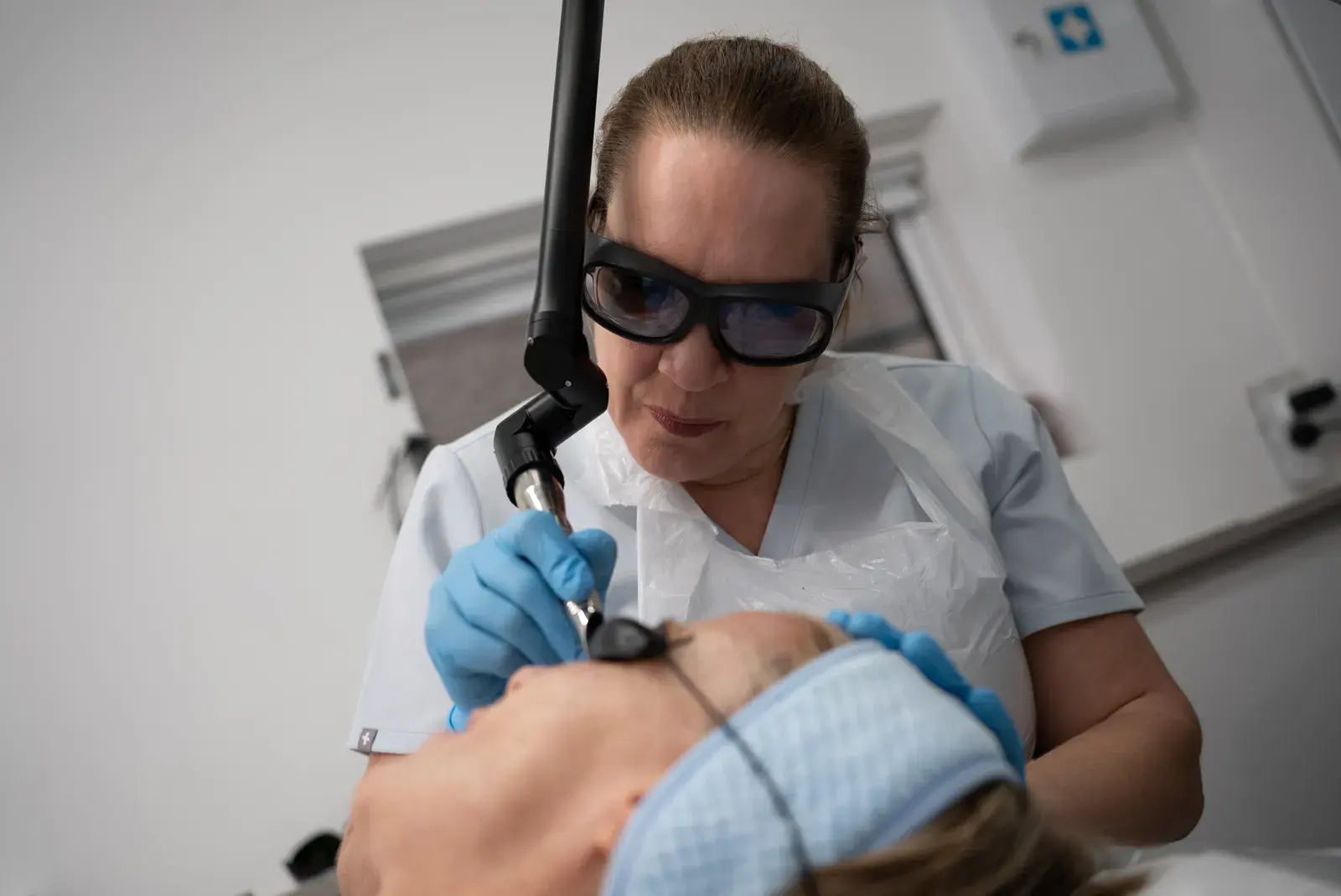
Er:YAG tends to be discussed with clients who have textural sun damage that a practitioner judges may suit its particular ablation and thermal profile better than CO2's, once both have been considered for that individual. As with CO2, it is aimed at more established textural change rather than pigment or redness on their own.
If your sun damage is mainly about tone and redness with texture still relatively even, IPL or Thulium are more likely to be discussed first, and a course of DermaQuest peels is another route for clients who prefer to build change up gradually rather than with a single resurfacing approach. Which of these, or which ablative option, is worth pursuing is a decision made with your practitioner rather than in general reading.
What a course looks like at Naomi Waite Aesthetics
As with other ablative resurfacing, a plan built around Er:YAG for sun damage takes into account recovery time and how your skin has behaved with sun exposure historically. Your practitioner will explain how Er:YAG's particular settings and passes are being used for your specific texture and pigment pattern, without this page setting out exact parameters, since those are chosen for the individual rather than published as a general recommendation.
For some clients, Er:YAG and CO2 are considered for different areas or at different points, rather than one route being used exclusively; this is worked out together with your practitioner as your sun damage responds.
Er:YAG 2940 Laser compared with other options for sun damage
Er:YAG is best understood alongside CO2, the other ablative resurfacing option for sun damage, and against a non-ablative alternative such as Thulium. The table below sets out the general differences.
Aftercare after Er:YAG 2940 Laser for sun damage
Because sun damage is a record of past UV exposure, the skin being resurfaced has already shown it reacts to the sun, which is one reason sun protection during recovery is discussed so specifically rather than as a generic instruction. Your practitioner will set out how long heightened sensitivity is likely to last for your particular treatment and how strictly that needs to be managed.
Recovery expectations for Er:YAG are not identical to CO2's, even though both are ablative, so it is worth asking your practitioner what is specific to the wavelength and settings used on your skin. Full aftercare detail for the treatment itself is on the Er:YAG 2940 Laser treatment page.
Frequently asked questions
Common questions about Er:YAG for sun damage are answered below.
Related guides
More reading on sun damage and on Er:YAG 2940 Laser is linked below.
Book a consultation
To discuss whether Er:YAG or another resurfacing route suits your sun damage, book a consultation with Naomi Waite Aesthetics.
A general comparison for sun damage. Exact suitability for your skin is confirmed at consultation.
| Er:YAG 2940 Laser | CO2 Fractional Laser | Thulium 1927/1550 | |
|---|---|---|---|
| Type of technology | Ablative resurfacing laser, wavelength strongly absorbed by water | Ablative fractional resurfacing laser, different absorption profile to Er:YAG | Non-ablative dual-wavelength fractional laser |
| Typical focus for sun damage | Texture refinement, compared with CO2 at consultation | Coarser texture and deeper lines alongside pigment | Tone and texture together, without ablating the surface |
| Intensity for this concern | Ablative; balance of ablation and thermal effect depends on settings chosen for you | Also ablative and intensive | A gentler, non-ablative alternative when texture change is less advanced |
Frequently asked questions
Er:YAG is a treatment many clients consider for sun damage that has changed the skin's texture. Whether it, or CO2, is the better fit for you depends on your skin and is assessed at consultation.
This depends on how established your sun damage is and how your skin responds to treatment. Your practitioner will discuss a realistic plan with you rather than quote a fixed number in advance.
Suitability for ablative resurfacing is assessed individually at consultation, taking your skin type and sun exposure history into account. If Er:YAG is not appropriate, your practitioner will discuss other options for sun damage.
This is best explained at your consultation, where your practitioner can talk through what to expect for your specific treatment. Fuller detail is set out on the Er:YAG 2940 Laser treatment page.
Resurfaced skin needs time to heal and remodel, so changes in texture and tone tend to appear gradually. Your practitioner can give you a realistic sense of timing based on your skin and treatment plan.
Neither suits every case: Er:YAG is generally considered for more established textural change, while IPL is generally considered where pigment and redness are the main features and texture is less affected. Your practitioner will help you decide based on your own skin.
Book Your Free Consultation
Tell us your goals. We'll tell you exactly what's possible and build a plan to get you there.