
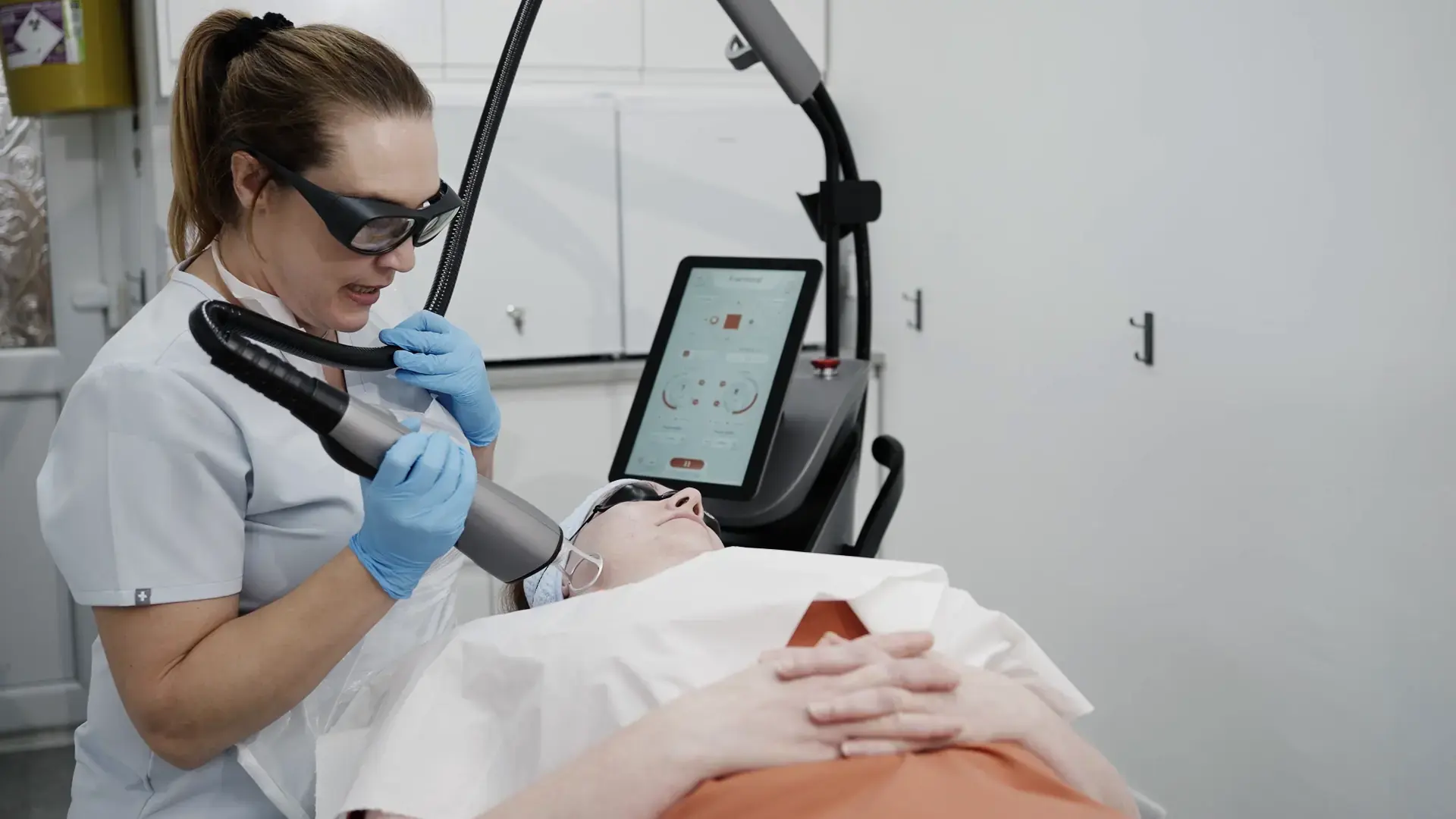
How Thulium 1927/1550 can help with sun damage
Sun damage does not always stop at pigment. Years of UV exposure often leave texture and fine lines changed as well, and that combination shapes which treatment is worth discussing.
Quick answer
Thulium 1927/1550 is often discussed for sun damage where tone and texture have both changed, not just pigment on its own. Because it works fractionally across two wavelengths, it is commonly considered for photoageing that includes rougher texture or fine lines alongside brown discolouration, with a plan built around your skin at consultation.
How Thulium 1927/1550 works on sun damage
Photoageing from years of sun exposure rarely affects colour alone. Alongside uneven pigment, the skin's surface often feels rougher, and fine lines can be more pronounced than in skin that has been better protected. Thulium's fractional approach across its two wavelengths is one reason it comes up for this combined picture: it is associated with tone and texture together rather than being a treatment aimed only at colour.
It works differently from a broad-spectrum light treatment or an ablative resurfacing laser, and it should not be assumed to do the same job as either. Which aspect of your sun damage, tone or texture, is the priority for your course is something your practitioner will discuss with you rather than something fixed for every client.
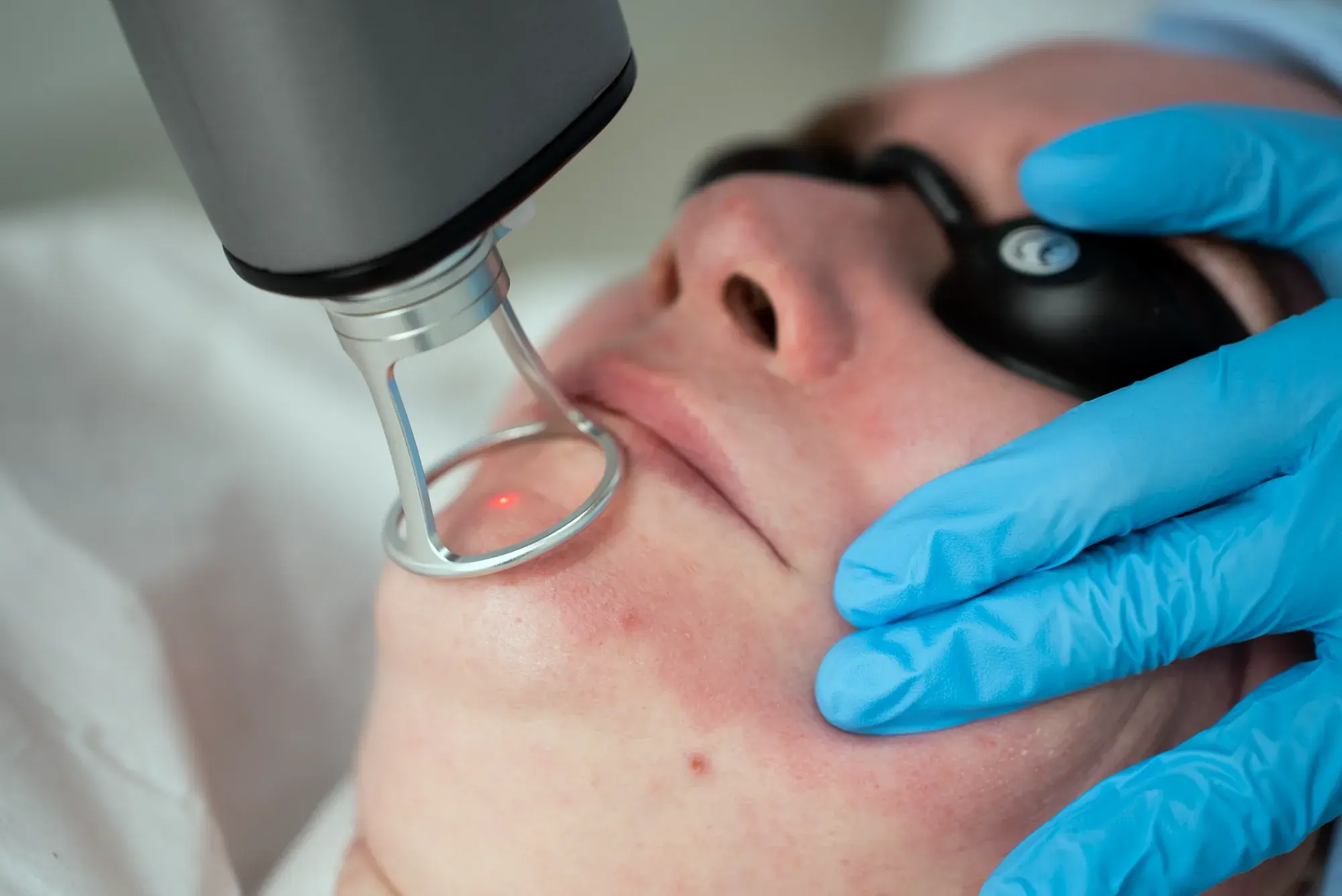
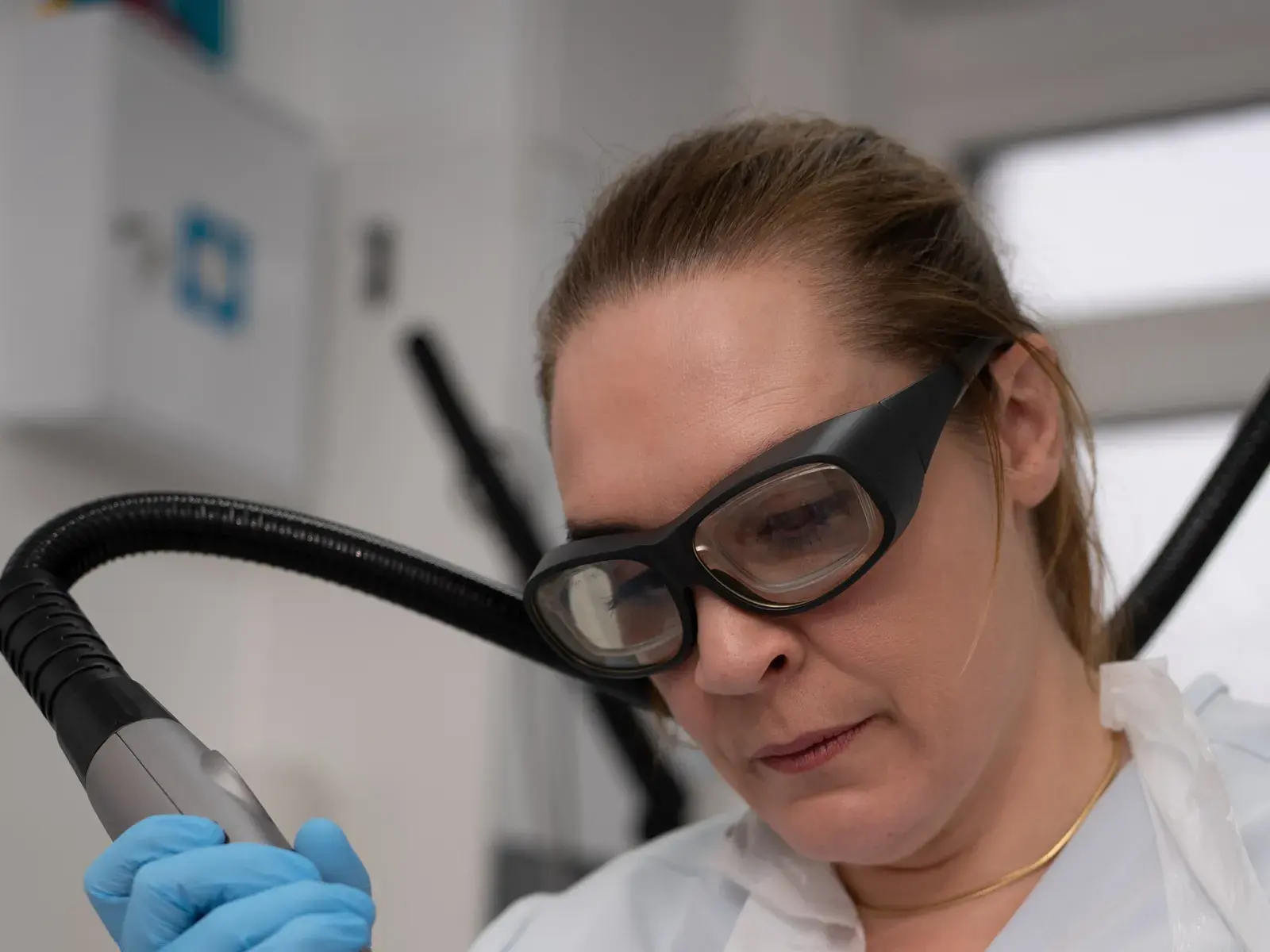
Who Thulium 1927/1550 suits for sun damage (and when another option may fit better)
Thulium is often considered for clients whose sun damage shows as a mix of unevenness and textural change, rather than redness or broken capillaries on their own. Clients who have tried to address pigment before but feel their skin's overall texture and tone still look uneven sometimes ask about it for this reason.
Where redness and visible vessels are the main concern alongside pigment, IPL may be discussed instead, and where sun damage has caused more pronounced textural change or deeper lines, an ablative option such as CO2 or Er:YAG, or a course of DermaQuest peels, may be a better fit. Your practitioner will talk through which pattern best describes your skin before recommending a route.
What a course looks like at Naomi Waite Aesthetics
Because Thulium is being asked to work on tone and texture at the same time for sun damage, your practitioner will usually plan a course with both in mind rather than treating them as separate problems. The areas covered often mirror where sun exposure has been greatest over the years, which for many clients means the face alongside the chest, neck or hands.
How the course is paced, and whether it is combined with anything else such as a maintenance facial or peel between sessions, is agreed individually and depends on how your skin is responding.
Thulium 1927/1550 compared with other options for sun damage
Because sun damage can involve pigment, redness and texture in different combinations, Naomi Waite Aesthetics offers more than one route to it. The table below sets out how Thulium compares with IPL and DermaQuest peels for this concern.
Aftercare after Thulium 1927/1550 for sun damage
Sun damage is, by definition, caused by UV exposure, so consistent sun protection after a fractional course matters more here than for concerns unrelated to the sun. Skin that has just been treated fractionally can be more sensitive to UV in the short term, and unprotected exposure risks working against the tone improvement the course is aiming for.
Because Thulium is treating both tone and texture, your practitioner may also talk about how skincare fits around your sessions to support both aspects. Step-by-step aftercare for the treatment itself, including immediately after a session, is set out on the Thulium 1927/1550 treatment page.
Frequently asked questions
Questions we're asked often about Thulium for sun damage are answered below.
Related guides
More reading on sun damage and on the Thulium 1927/1550 laser is linked below.
Book a consultation
To find out whether Thulium is the right route for your sun damage, book a consultation with Naomi Waite Aesthetics.
A general comparison for sun damage. Exact suitability for your skin is confirmed at consultation.
| Thulium 1927/1550 | IPL Skin Rejuvenation | DermaQuest Peels | |
|---|---|---|---|
| Type of technology | Dual-wavelength fractional laser | Broad-spectrum filtered light, not a laser | Topical chemical exfoliation, no light or laser device |
| Typical focus for sun damage | Tone and texture together | Combined pigment and redness or visible vessels | Pigment, dullness and texture at a depth chosen for your skin |
| How it's usually planned | A course, often reviewed for both tone and texture progress | A course across the affected areas | A course of peels, sometimes continued as ongoing maintenance |
Frequently asked questions
Thulium is a treatment many clients consider for sun damage that involves both tone and texture. Whether it is the right choice for you depends on the specific pattern of your sun damage, which is assessed at consultation.
This depends on how extensive your sun damage is and how your skin responds through the course. Your practitioner will set out a realistic plan at your consultation rather than promise a fixed number of sessions.
Suitability is assessed individually, taking your skin type and the pattern of your sun damage into account. If Thulium is not the best fit, your practitioner will discuss the other options available for sun damage.
This is best discussed at your consultation, where your practitioner can explain what to expect for your skin. General detail on the treatment is covered on the Thulium 1927/1550 treatment page.
Because Thulium works on tone and texture gradually, changes tend to build over a course rather than appear after a single session. Your practitioner can give you a realistic timeframe once your skin has been assessed.
Neither is universally better: Thulium is often considered where texture is part of the picture alongside tone, while IPL is often considered where redness and pigment are the main features. Your practitioner will help you weigh this up for your own skin.
Book Your Free Consultation
Tell us your goals. We'll tell you exactly what's possible and build a plan to get you there.