
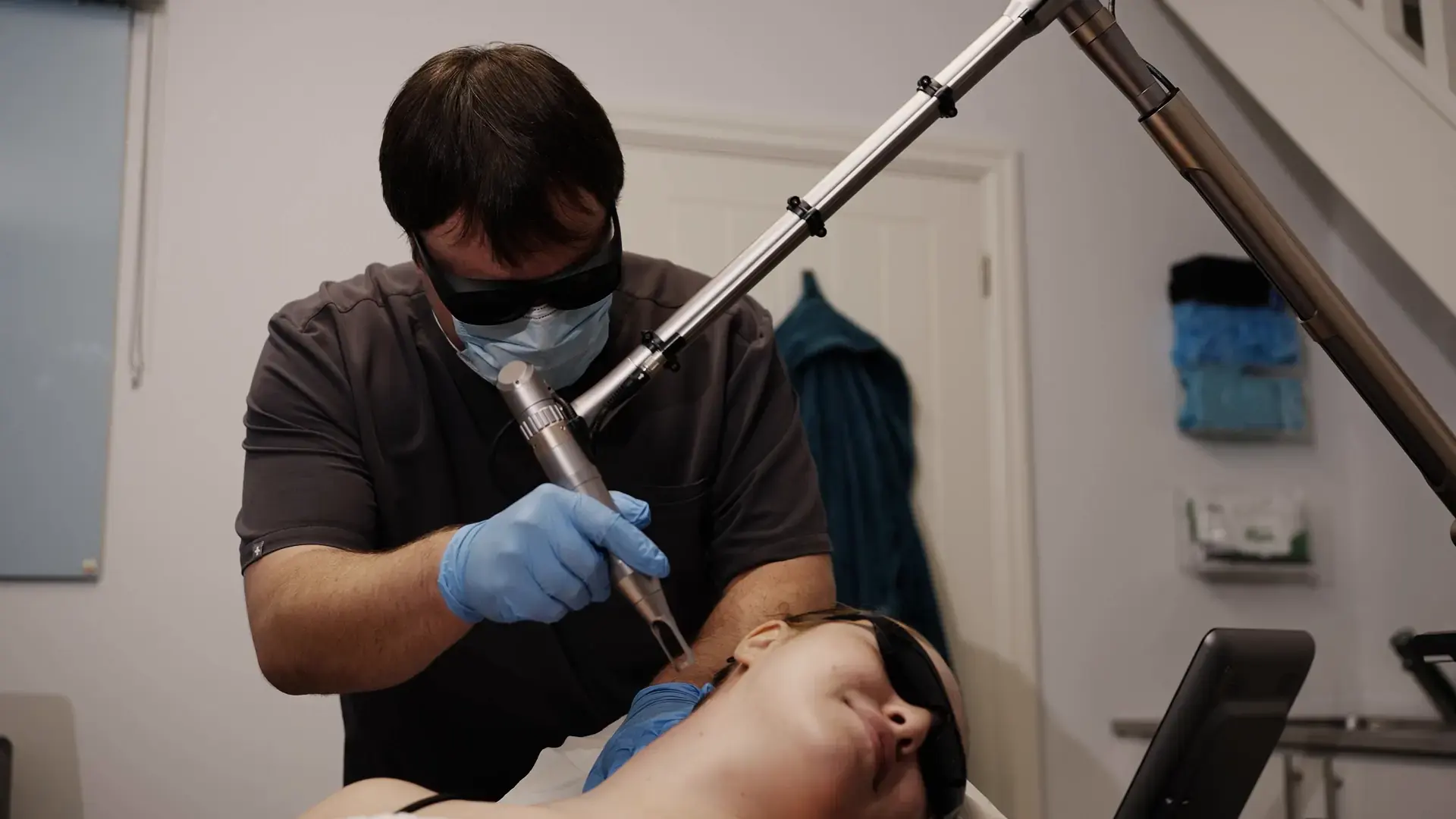
Tattoo Removal
Whether you want a tattoo lightened ahead of a cover-up or faded as far as possible, this page explains what laser tattoo removal involves, what affects how your tattoo responds and how the clinic plans treatment around you.
Quick answer
Laser tattoo removal uses specialist lasers to break tattoo ink into smaller particles, which the body then clears gradually over time. At Naomi Waite Aesthetics in Lancaster, Pico laser and Q-switched Nd:YAG laser are both available. Every tattoo responds differently, so the right approach is agreed at consultation.
What is laser tattoo removal?
Laser tattoo removal is a gradual process for fading unwanted tattoo ink. Rather than lifting the ink out in one go, the laser targets the pigment so it breaks into smaller particles, which your body then clears naturally between sessions. That is why tattoos fade over time rather than disappearing after a single appointment, and why progress is reviewed as you go.
People come to the clinic for many different reasons. Some want to reduce the appearance of a tattoo that no longer feels like them, some want an older or blurred design lightened before a cover-up, and others want to fade a name, a small symbol or amateur work. Some want a tattoo faded as far as possible, while others only want it softened. Every tattoo is different, even two designs that look alike on the surface.
Black and dark inks, red and warm colours, and multicoloured designs can all behave differently, which is one reason the clinic has more than one tattoo removal laser. The aim is always a realistic plan for your tattoo, discussed openly at consultation, rather than a promise of complete removal.
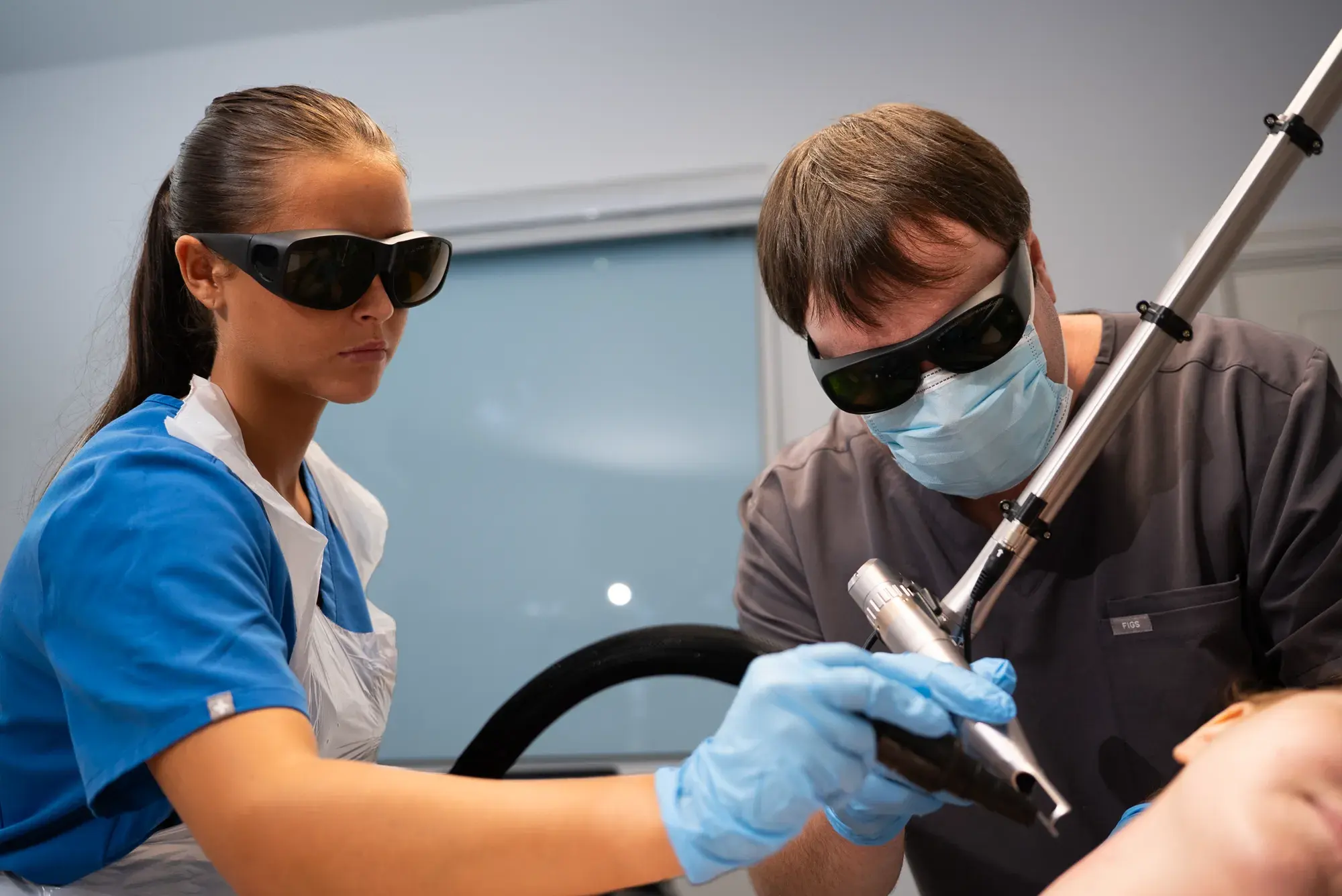
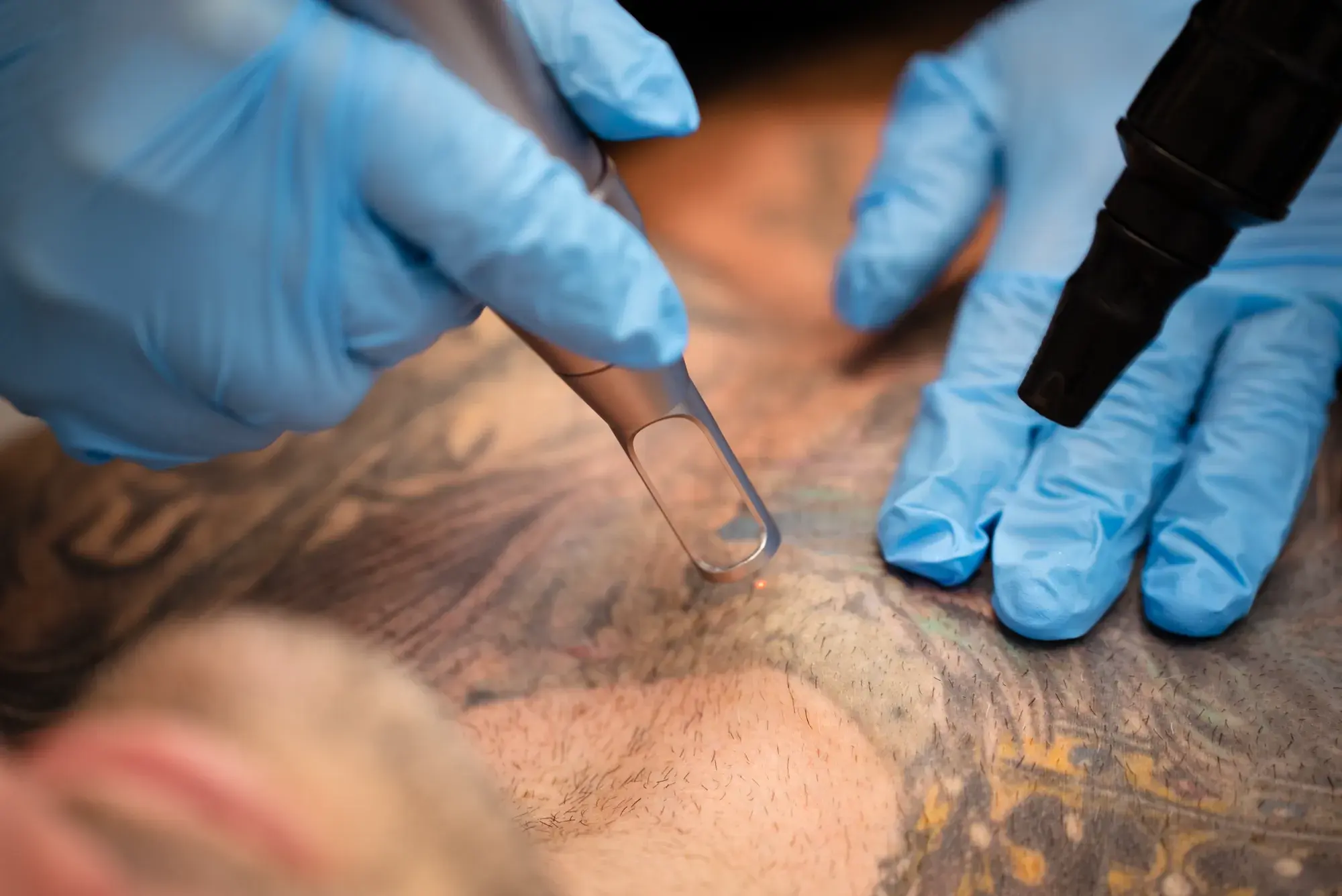
Why people choose tattoo removal, and what affects the result
The reasons for wanting a tattoo faded are personal: a change in taste or circumstances, a design that has blurred or spread with age, a workplace dress code, or plans for new artwork over the top. Whatever the reason, how well and how quickly a tattoo fades depends on the tattoo itself and on your skin.
Your practitioner will look at these factors before recommending a plan:
Cosmetic and some modern pigments can behave unpredictably under laser, and it is not always possible to know an ink's exact makeup in advance. This is why the clinic gives you an honest assessment rather than a fixed outcome or a set number of sessions. If your tattoo includes colours or areas that may respond less predictably, your practitioner will say so at the outset, so you can decide whether fading or lightening for a cover-up is the better goal for you.
- Ink colour and composition: black and dark inks are often more responsive, while some colours can be more stubborn
- How deep and how densely the ink sits, which varies between professional and amateur work
- Your skin type and tone, which guides which laser and approach may suit you
- The age of the tattoo and where it sits on the body
- Any previous removal attempts, cover-ups or layered work
Related treatments
 Pico LaserPico laser is a picosecond laser that delivers very short pulses of energy to break tattoo ink and pigment into fragments, which the body then clears gradually. At Naomi Waite Aesthetics in Lancaster it is used for tattoo removal, permanent makeup (PMU) removal and selected pigmentation, following an assessment at consultation.Find out more
 Q-switched Nd:YAG 532/1064Q-switched Nd:YAG is a nanosecond laser with two wavelengths, 532 nm and 1064 nm, that uses short, high-energy pulses to target tattoo ink and pigment. At Naomi Waite Aesthetics in Lancaster it is used for tattoo removal, permanent makeup (PMU) removal and selected pigmentation, with suitability and a plan agreed at consultation.Find out more
Pico laser and Q-switched Nd:YAG at a glance
| Feature | Pico Laser | Q-switched Nd:YAG 532/1064 |
|---|---|---|
| Pulse type | Picosecond pulses (trillionths of a second) | Nanosecond pulses (billionths of a second) |
| Used at the clinic for | Tattoo removal, PMU removal and selected pigment | Tattoo removal, PMU removal and selected pigment |
| How the choice is made | At consultation, based on ink colour, depth, your skin type and any previous work | At consultation, based on ink colour, depth, your skin type and any previous work |
Frequently asked questions
People choose laser tattoo removal for many reasons, from a design that no longer feels right to a blurred older tattoo or plans for a cover-up. How your tattoo responds depends on its ink colour and composition, its depth, your skin type and any previous work, all of which are assessed at consultation.
No single laser is best for every tattoo. The clinic offers Pico laser and Q-switched Nd:YAG laser, and your practitioner chooses between them based on your ink colours, the depth of the tattoo, your skin type and any previous treatment.
It is not possible to give an exact number in advance. Tattoo removal usually takes a course of sessions, spaced out to give your body time to clear the ink, and the number varies with the ink, its depth, your skin and how your tattoo responds. Your practitioner will give you a realistic estimate at consultation and review progress as you go.
Comfort levels vary from person to person and depend on the area being treated. Your practitioner will explain what the treatment feels like and how comfort is managed before you begin, and you can ask to pause at any point.
The treated area needs some care while it settles, and how the skin looks and feels afterwards varies between people and tattoos. Your practitioner will give you personal aftercare advice and explain what to expect before your first session.
Laser treatment aims to fade the ink gradually as your body clears it. Results vary: some tattoos fade considerably, while others may keep some remaining pigment. Your practitioner will talk you through what is realistic for your tattoo before you start.
Skin type is one of the most important factors in planning tattoo removal, because it guides which laser and approach may suit you. Your practitioner will assess your skin at consultation, with support from skin analysis where helpful, before recommending anything.
Current prices are listed on our prices page. The cost of your plan depends on the size and complexity of your tattoo and how it responds, and your practitioner will confirm this at consultation before any treatment is booked.
Not every colour responds in the same way. Black and dark inks are often more responsive, while some colours can be more stubborn, and the exact composition of an ink is not always known. Your practitioner will assess your tattoo's colours and explain honestly what may be achievable.
Yes, many people choose laser treatment to lighten a tattoo before new artwork, which can give a tattoo artist more freedom with the design. Your practitioner can talk through your cover-up plans at consultation and explain what level of fading may be realistic.
Book Your Free Consultation
Tell us your goals. We'll tell you exactly what's possible and build a plan to get you there.