
Unwanted Hair
If shaving, waxing or plucking has become a constant chore, a longer-term approach may appeal. Here is why unwanted hair grows and how the clinic helps you choose the right route.
Quick answer
Unwanted hair is hair on the face or body that you would prefer to reduce, whether for comfort, confidence or convenience. At Naomi Waite Aesthetics in Lancaster, laser hair removal and IPL can help reduce dark, pigmented hair, while electrolysis is used for grey, white and fair hair that light cannot target. Options are chosen at consultation.
What is unwanted hair?
Unwanted hair simply means hair growing where you would rather it did not. For some people that is the upper lip, chin or jawline, and for others the underarms, bikini line, legs, back or chest. It affects people of every gender, and the reasons for wanting to reduce it are personal, from comfort and confidence to irritation from regular shaving or waxing.
The type of hair matters when choosing treatment. Laser and IPL hair removal work by targeting the pigment in the hair, so they are suited to darker, pigmented hair. Grey, white, blonde and red hairs cannot be effectively targeted by light-based methods, which is why electrolysis, a method that treats each follicle individually, is used for these hairs instead.
Some people notice hair growth that is new, sudden or heavier than expected, sometimes described as hirsutism when it appears in a typically male pattern in women. If this applies to you, it is worth speaking to your GP, as there may be an underlying cause that should be checked.
What causes unwanted hair?
Hair grows in cycles, with each follicle moving through a growing phase, a resting phase and a shedding phase. Not every hair is in the same phase at the same time, which is one reason hair reduction is carried out as a course of treatments rather than in a single session.
Hormone-related hair growth can continue over time, so some people notice new hairs appearing even after treatment. Your practitioner will discuss this openly at consultation, so your expectations are realistic from the start.
How much hair you have, and where it grows, is influenced by several factors:
- Genetics and family background
- Hormones, including changes during puberty, pregnancy and menopause
- Conditions such as polycystic ovary syndrome (PCOS)
- Some medications
- Age, as hair can become coarser, finer or change colour over time
Related treatments
 Alexandrite / Nd:YAG HairAlexandrite / Nd:YAG laser hair removal uses a dual-wavelength, long-pulsed laser to target the pigment in hair and heat the follicle. At Naomi Waite Aesthetics in Lancaster it is offered for long-term reduction of unwanted pigmented hair and, where suitable, ingrown hairs, with the wavelength chosen for your skin and hair.Find out more
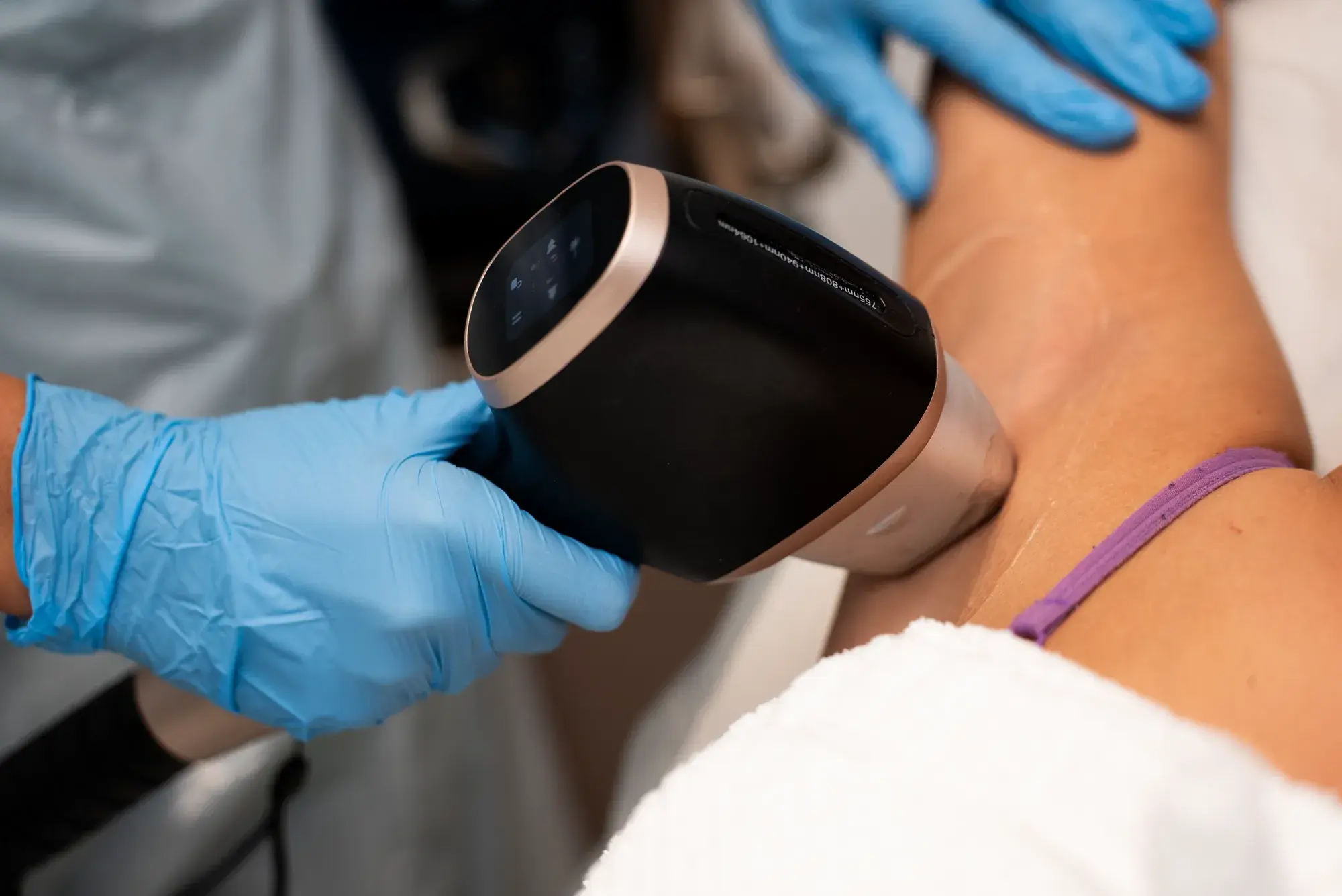 Diode Laser Hair RemovalDiode laser hair removal uses diode laser energy to target the pigment in hair and heat the follicle, for long-term reduction of unwanted pigmented hair. At Naomi Waite Aesthetics in Lancaster it is one of the clinic's core laser hair-removal options, with suitability for your skin and hair checked at consultation.Find out more
 IPL Hair RemovalIPL hair removal uses intense pulsed light, a filtered broad-spectrum light rather than a laser, to reduce unwanted hair over a course of sessions. At Naomi Waite Aesthetics in Lancaster it is one of several hair-reduction options, alongside diode and Alexandrite / Nd:YAG laser, with suitability for your skin and hair checked at consultation.Find out more
How the clinic's laser and IPL hair removal options differ
| Feature | Alexandrite / Nd:YAG Hair | Diode Laser Hair Removal | IPL Hair Removal |
|---|---|---|---|
| Type of light | Dual-wavelength, long-pulsed laser | Diode laser | Intense pulsed light, which is not a laser |
| Hair it suits | Pigmented hair, with the wavelength chosen for your skin and hair | Pigmented hair | Pigmented hair, where suitable |
| Grey, white or very fair hair | Not effective, electrolysis may be discussed instead | Not effective, electrolysis may be discussed instead | Not effective, electrolysis may be discussed instead |
Frequently asked questions
Hair growth is influenced by genetics, hormones, age and sometimes medical conditions such as PCOS or certain medications. If you notice sudden or unusual new hair growth, it is worth speaking to your GP to check for an underlying cause.
The right option depends on the colour of your hair, your skin and the area you want treated. Alexandrite / Nd:YAG, diode laser and IPL are used for pigmented hair, while electrolysis is used for grey, white, blonde and red hair. Your practitioner will recommend a route after assessing your hair and skin at consultation.
Hair grows in cycles, so hair reduction is usually carried out as a course of treatments. The number you need depends on the area, your hair and skin, and hormonal factors. Your practitioner will talk you through a suggested plan at consultation rather than promising a fixed number.
Comfort varies with the treatment, the area and the person. Your practitioner will explain what to expect and check on your comfort throughout. Electrolysis treats hairs one at a time, so it can feel different from laser or IPL.
Downtime varies between treatments and areas. Your practitioner will explain what to expect for your treatment and give you clear aftercare advice to follow afterwards.
Laser and IPL aim to reduce hair growth over the long term, but results vary and some hairs may regrow, particularly where hormones are involved. Occasional maintenance sessions are sometimes suggested. Your practitioner will be clear about realistic expectations at consultation.
Your skin tone affects which technology is suitable, and the Alexandrite / Nd:YAG platform allows the wavelength to be chosen for your skin and hair. Suitability is always confirmed at consultation, along with your medical history.
The cost depends on the treatment, the size of the area and the number of sessions in your plan. Current prices are listed on the clinic's prices page, and your practitioner will confirm the cost of your personalised plan at consultation.
No. Laser hair removal relies on pigment in the hair to absorb the energy, and grey and white hairs do not have enough of it to be targeted effectively. IPL works in a similar way. Electrolysis is the clinic's route for these hairs, as it treats each follicle directly rather than relying on pigment.
Laser and IPL treat pigmented hair across an area, while electrolysis treats one hair at a time and is used for grey, white, blonde and red hair, or for stray hairs left after laser. Some plans use both, for example laser first and electrolysis for any remaining fair hairs. Your practitioner will recommend the right approach after looking at your hair and skin.
Book Your Free Consultation
Tell us your goals. We'll tell you exactly what's possible and build a plan to get you there.