
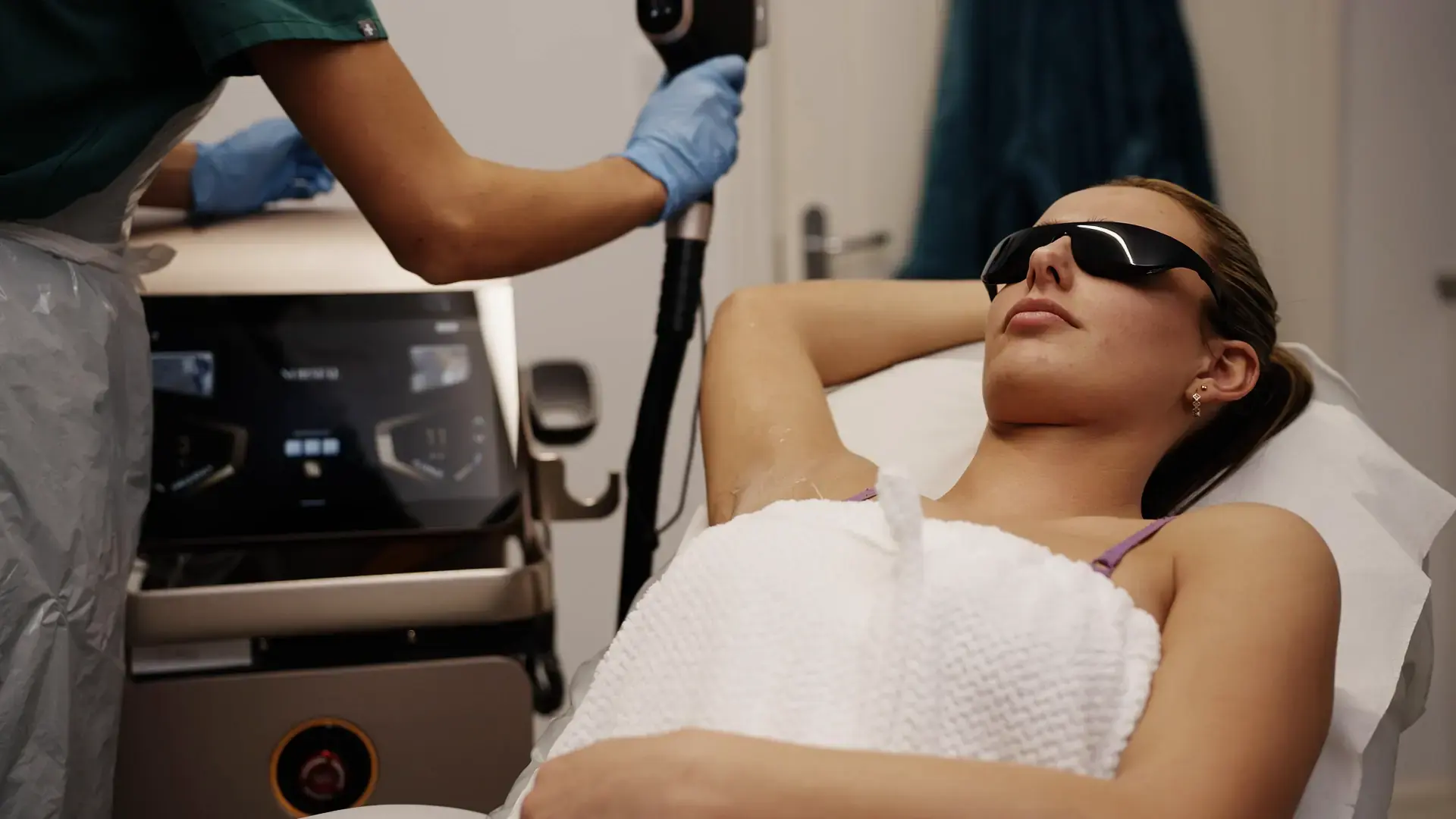
Diode laser hair removal in Lancaster
Diode laser is one of the clinic's core technologies for reducing unwanted hair. It offers long-term reduction rather than permanent removal, and this page explains how it works, who it suits and how to prepare.
Quick answer
Diode laser hair removal uses diode laser energy to target the pigment in hair and heat the follicle, for long-term reduction of unwanted pigmented hair. At Naomi Waite Aesthetics in Lancaster it is one of the clinic's core laser hair-removal options, with suitability for your skin and hair checked at consultation.
What is diode laser hair removal?
Diode laser hair removal uses a diode laser to reduce unwanted hair over a course of treatment. It is aimed at long-term hair reduction, not guaranteed permanent removal.
It is a separate laser platform from the clinic's Alexandrite / Nd:YAG system, and both belong to the hair-removal pathway. Which one is recommended for you depends on your skin and hair.
How diode laser hair removal works
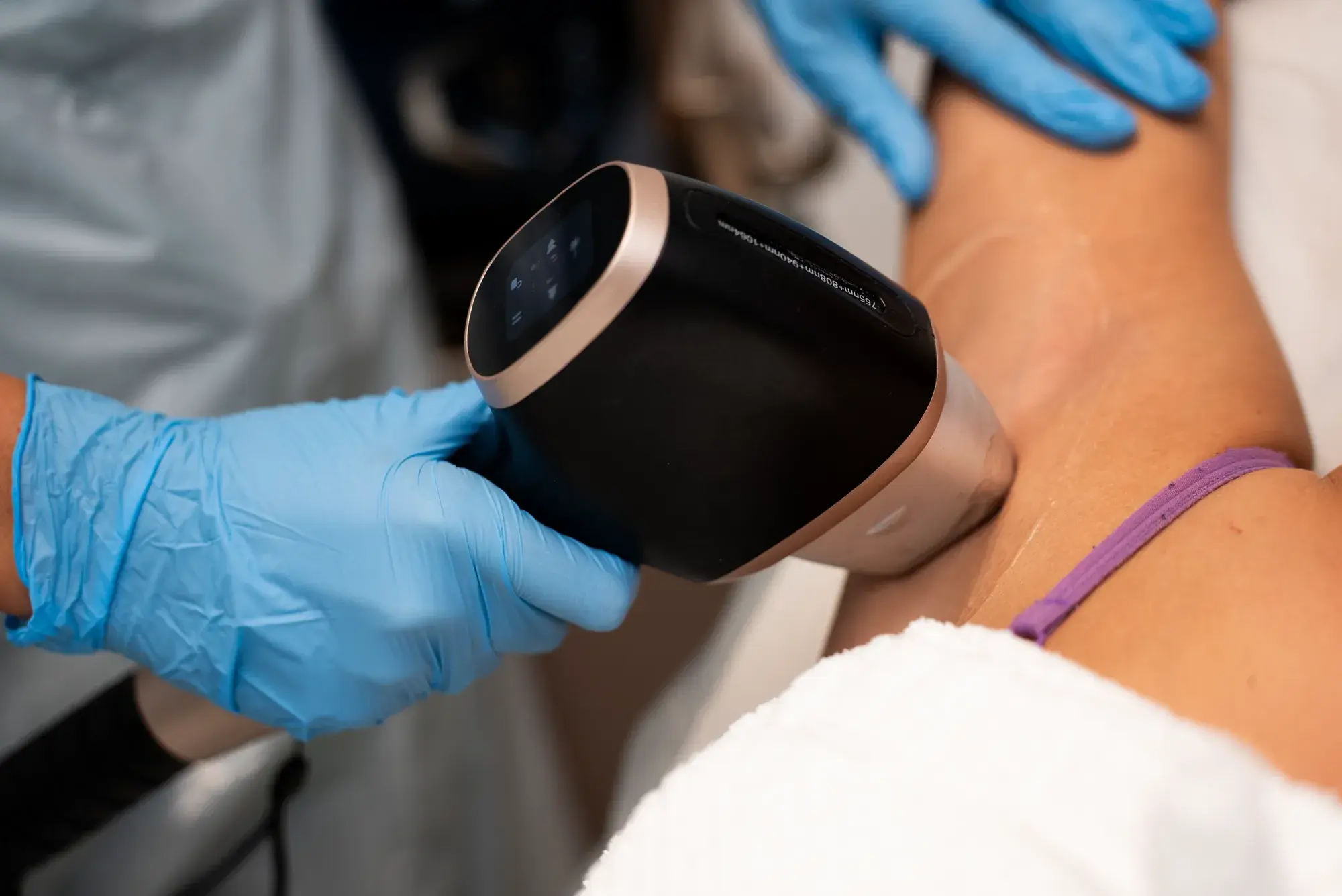
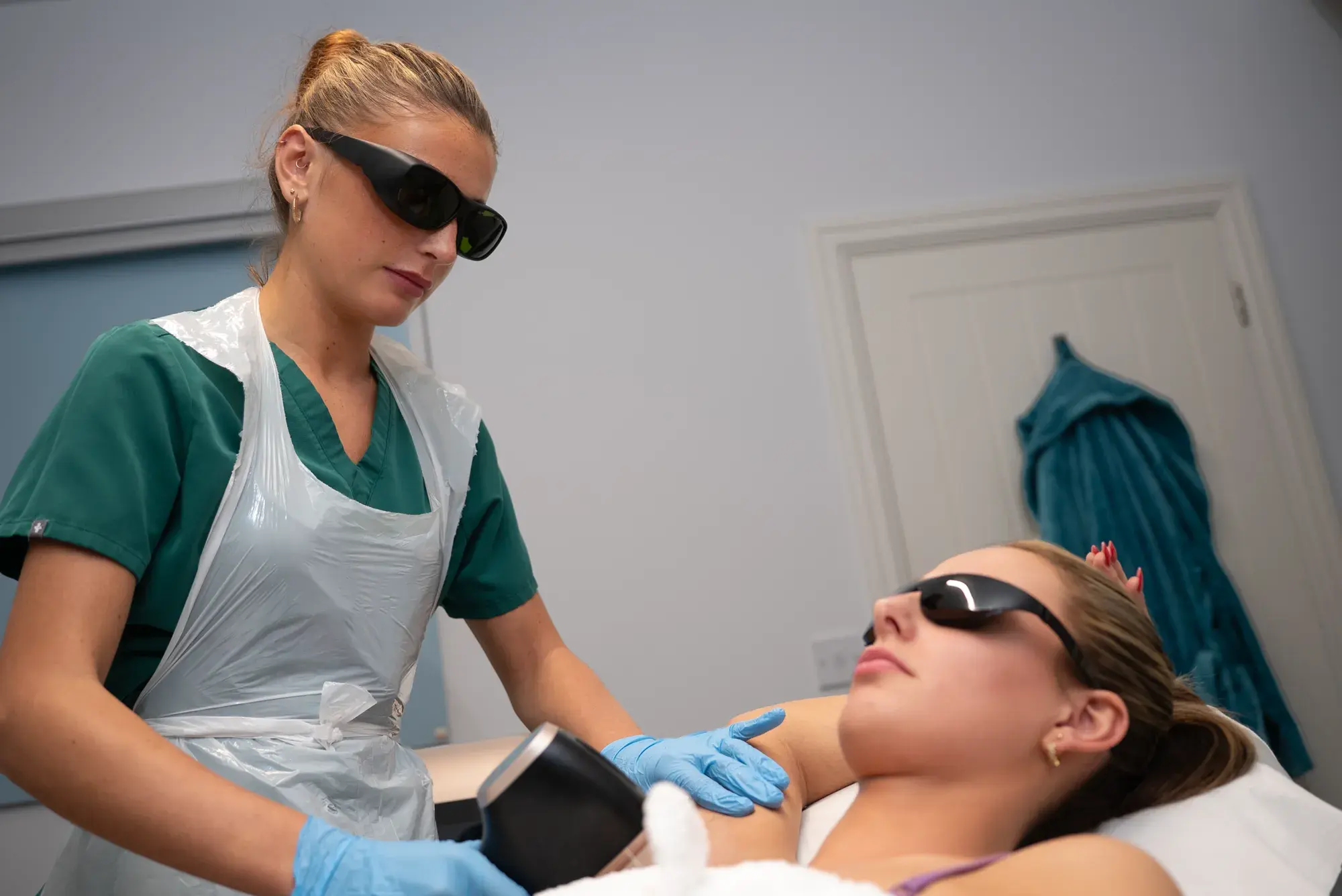
Diode laser energy targets melanin, the pigment in suitable hair, and generates heat in the follicle. This damages the follicle and reduces its ability to produce hair.
Hair grows in cycles, and the laser is effective on hair in its active growth phase. Because not every hair is in that phase at once, laser hair removal is carried out as a course of sessions rather than a single appointment.
What diode laser can help with
Diode laser is used for the concerns below, where your skin and hair are suitable.
- Unwanted hair: long-term reduction of pigmented hair
- Ingrown hairs: reducing the hair growth behind them, where suitable
Is diode laser hair removal right for me?
Diode laser needs pigment in the hair to work, so it is not effective on white or grey hair, and blonde hair may not be suitable either. Your skin type, hair colour and thickness, and the area to be treated are all considered at consultation.
If laser is not the right route, electrolysis may be discussed for non-pigmented or residual hairs. Tell your practitioner about any medical conditions, such as diabetes or a history of cold sores, as these can affect the safety and effectiveness of treatment.
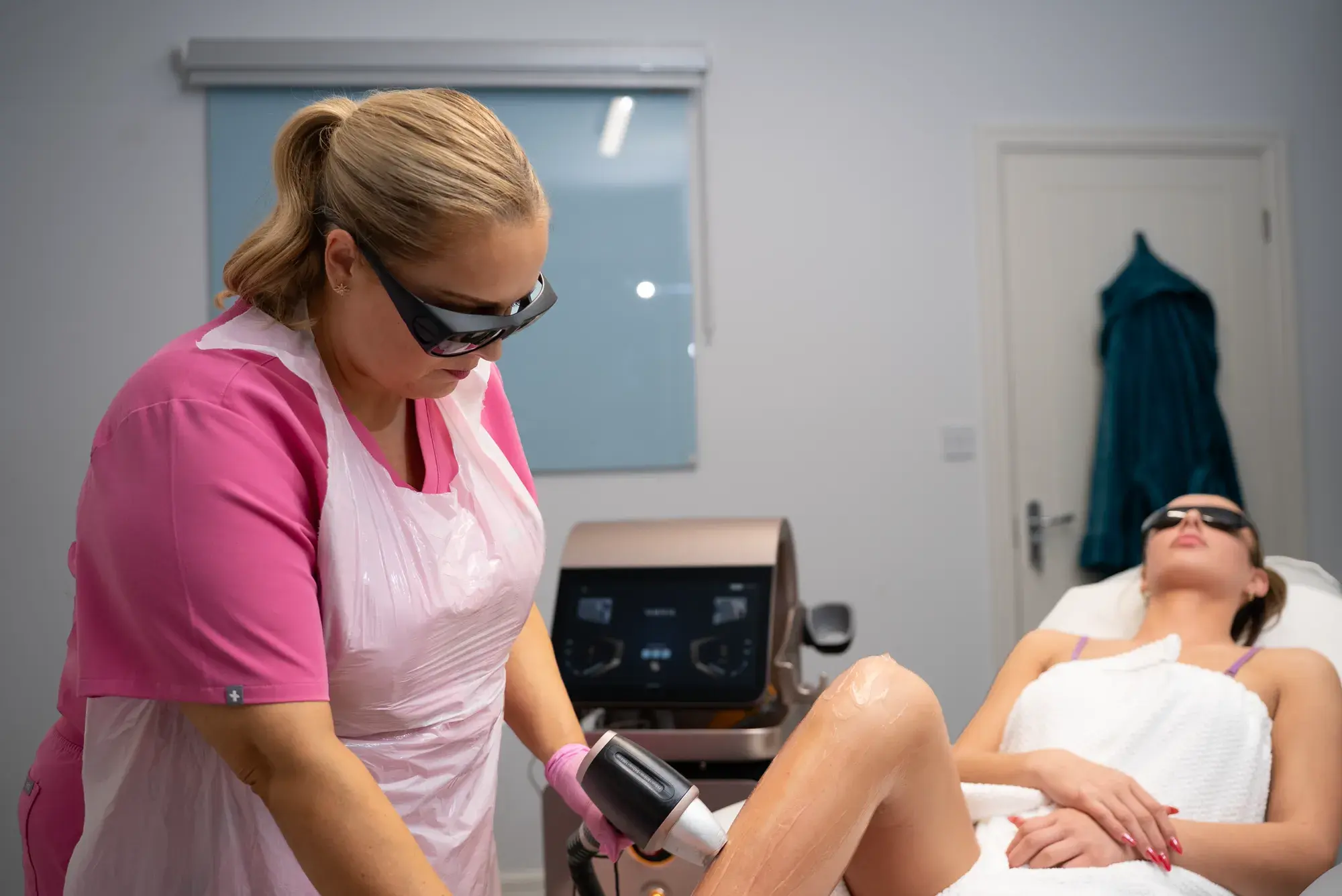
What happens during treatment
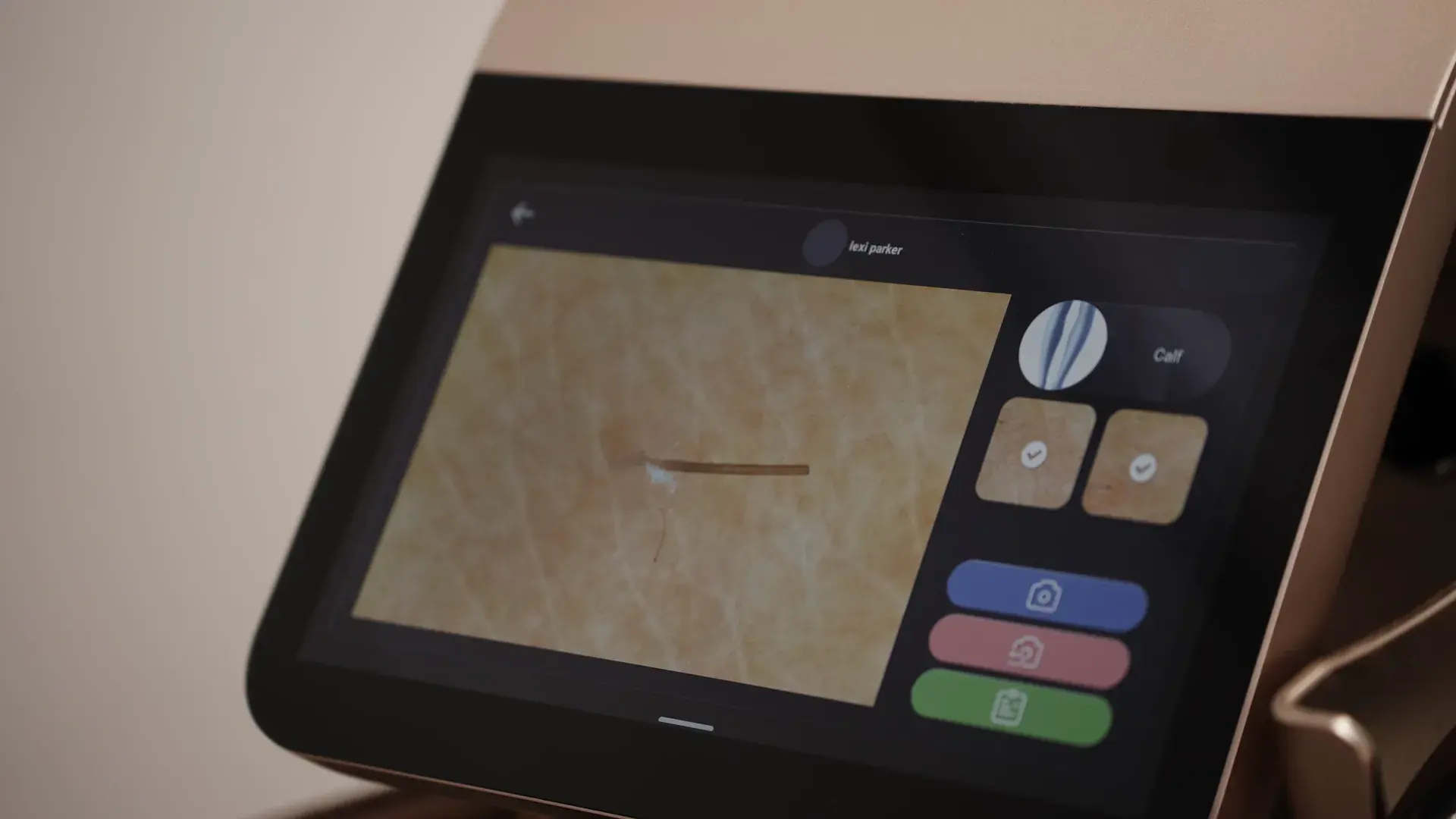
Before your appointment you will be asked to shave the area, and not to pluck, wax or bleach it for the period advised, so the follicle is intact for the laser. Avoid sun exposure and sunbeds beforehand, and pause products containing retinoids, alpha hydroxy acids or benzoyl peroxide on the area as advised.
Arrive with clean skin, free of make-up, lotion or deodorant on the area. A cooling gel is applied to help with comfort and the laser is passed over the skin. Small areas such as the upper lip take only a few minutes, while larger areas such as the legs or back take longer.
Downtime and aftercare
Mild redness, swelling or warmth in the treated area is common afterwards and usually settles. Your practitioner will explain what to expect and give you aftercare to follow, including:
- Applying a cool compress straight after treatment if the area feels warm or red
- Avoiding direct sun and sunbeds, and applying a broad-spectrum sunscreen of SPF 30 or higher to treated skin
- Avoiding hot baths, saunas and steam rooms for the period advised
- Avoiding perfumed products and exfoliants on the area for the period advised
- Not picking, scratching or rubbing the area
- Contacting the clinic straight away if you notice blistering, crusting or scabbing
How diode compares with other hair-removal options
Diode and Alexandrite / Nd:YAG are different laser platforms, and both are used in the clinic's hair-removal pathway. IPL hair removal is another option, and IPL is not a laser. Rather than one being best, the right choice depends on your skin, your hair and the area being treated, and is made with your practitioner at consultation.
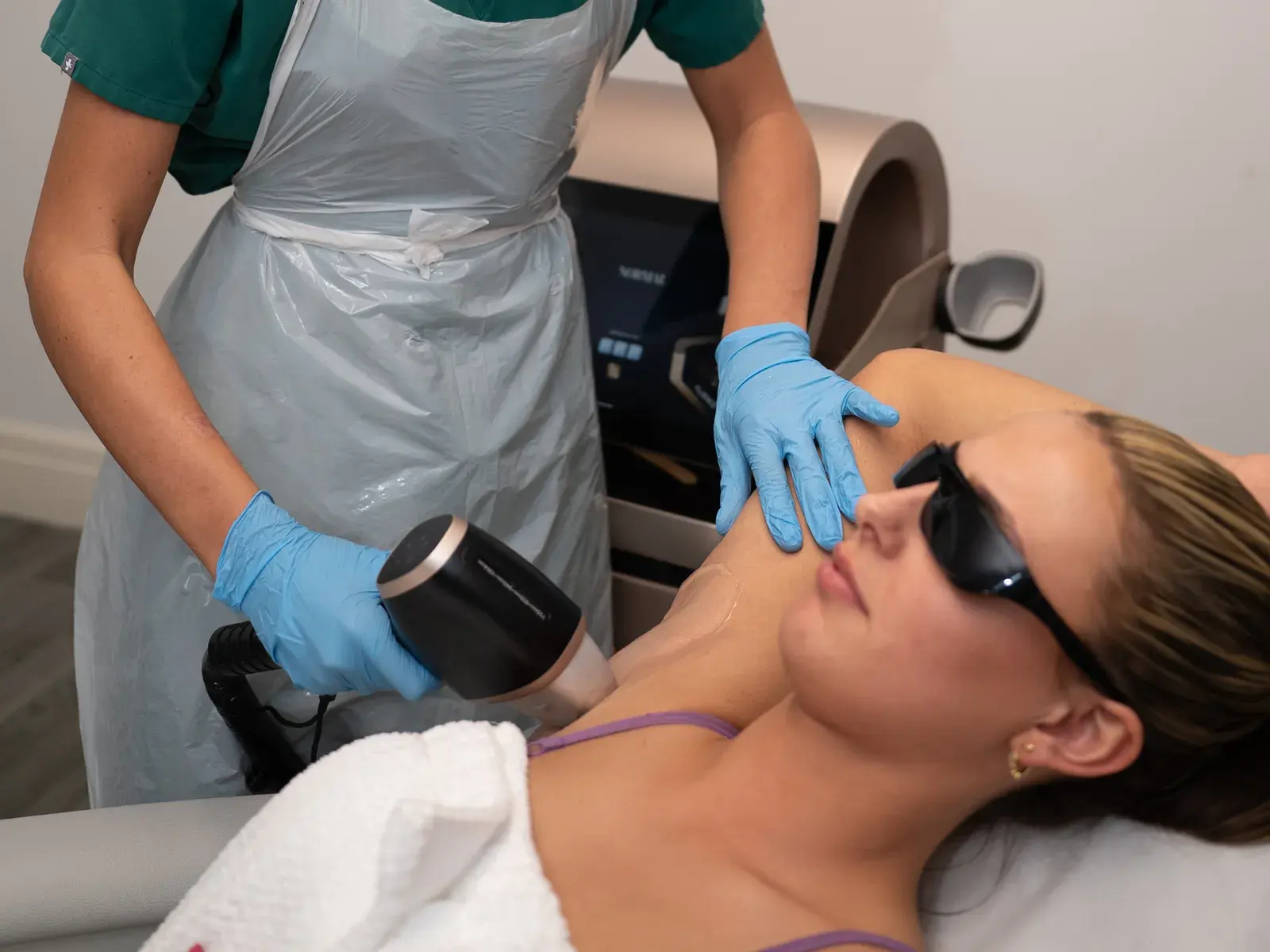

Results
Results vary significantly from person to person, and we do not guarantee specific results. Diode laser offers long-term hair reduction, not permanent removal, and some people choose occasional maintenance sessions.
Where we show before and after photographs, they are of real clients, not stock or manufacturer images.
Diode laser hair removal prices in Lancaster
The cost depends on the area being treated and the number of sessions in your plan. Current prices are on our prices page, and your practitioner can give you a personalised quote at consultation.
Diode laser: frequently asked questions
The questions we are asked most often about diode laser hair removal. Anything else can be answered at your consultation.
Related treatments and guides
These pages cover the clinic's other hair-removal options and the concerns they treat.
- Alexandrite / Nd:YAG laser hair removal
- IPL hair removal
- Electrolysis
- Unwanted hair
- Ingrown hairs
Frequently asked questions
Diode laser hair removal uses diode laser energy to target the pigment in hair and heat the follicle, reducing its ability to grow hair. It is aimed at long-term reduction of unwanted pigmented hair, not permanent removal. At Naomi Waite Aesthetics in Lancaster it is one of the clinic's core hair-removal options. It is a separate platform from the clinic's Alexandrite / Nd:YAG system, and your practitioner will explain which suits your skin and hair.
Most people describe the sensation as similar to a rubber band being snapped against the skin. A cooling gel is applied before treatment to help with comfort. How it feels varies with the area and your own sensitivity. Your practitioner will talk you through the sensation before starting.
It varies from person to person, depending on your hair type, skin type and the area treated. Treatment is planned as a course, because the laser works on hair in its active growth phase and hair grows in cycles. Your practitioner will recommend a plan at consultation.
Mild redness and swelling in the treated area are the most common reactions and usually settle. In rare cases temporary pigment changes or blistering can occur. You will be given aftercare to follow, including avoiding direct sun and applying SPF to the treated area.
Diode laser is not effective on white or grey hair, and blonde hair may not be suitable. Some medical conditions, such as diabetes or a history of cold sores, and recent sun exposure can affect treatment. Your practitioner will assess your skin, hair and medical history at consultation to confirm whether it is right for you.
The cost depends on the area being treated and the number of sessions you need. Current prices are on our prices page, and packages can be tailored to you. Your practitioner will give you a personalised quote at your consultation in Lancaster.
Book Your Free Consultation
Tell us your goals. We'll tell you exactly what's possible and build a plan to get you there.