
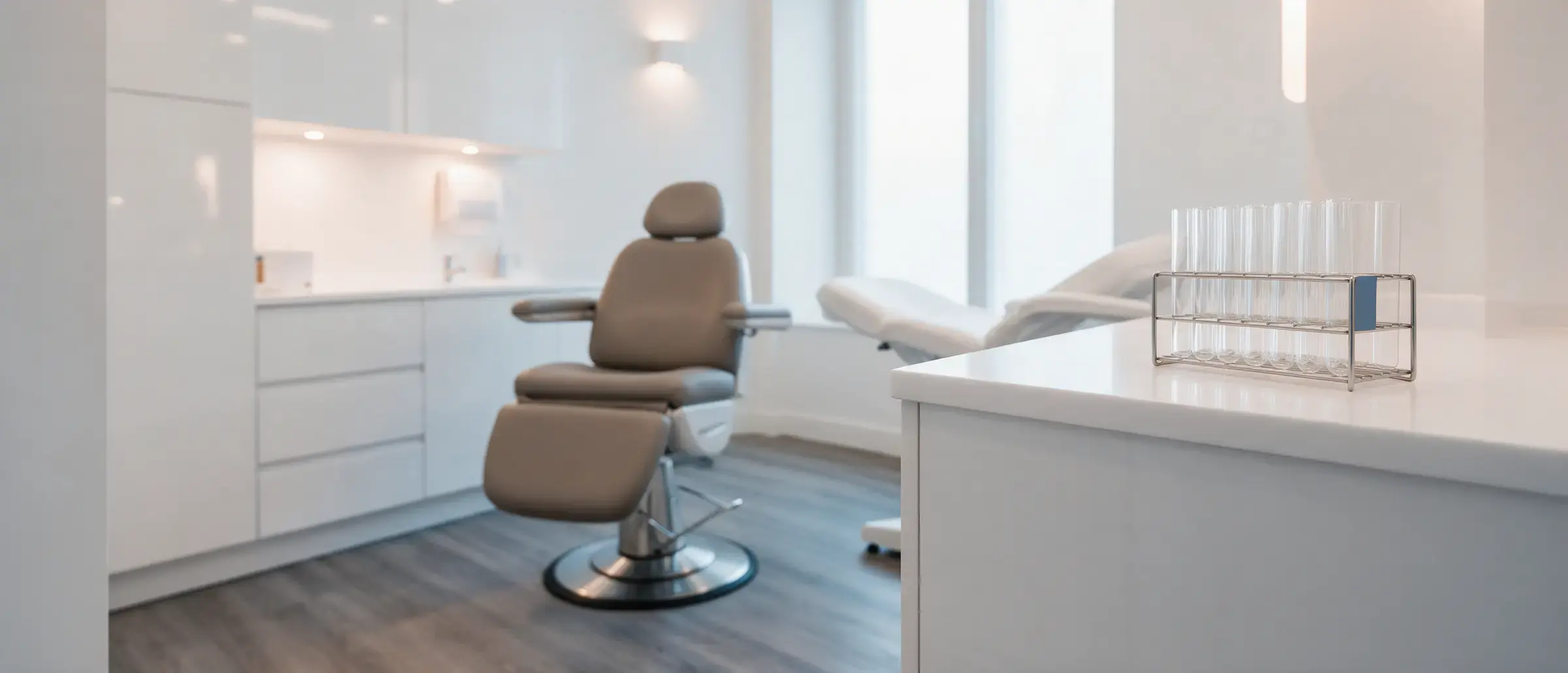
PRP facial in Lancaster
A PRP facial combines microneedling with platelet-rich plasma taken from your own blood. This page explains how it works, who it may suit and how to prepare and care for your skin around treatment in Lancaster.
Quick answer
A PRP facial uses platelet-rich plasma prepared from a small sample of your own blood. The plasma is applied to the skin during microneedling and may also be injected with a fine needle, to support the skin's natural repair processes. At Naomi Waite Aesthetics in Lancaster it is considered for fine lines and scars, following a consultation.
What is a PRP facial?
PRP stands for platelet-rich plasma. Platelets are cells in the blood that help it to clot, and they carry growth factors involved in the body's healing response. For a PRP facial, a small sample of your blood is taken and processed to separate the platelet-rich plasma.
The plasma is then used on your skin in two ways. Your practitioner carries out a microneedling treatment, using a microneedling device with sterile, single-use cartridges, and applies the plasma to the treatment area. It may also be injected into the skin with a fine needle. The aim is to support the skin's own repair processes, including collagen production.
A PRP facial is related to microneedling but is not the same treatment: the difference is the use of your own plasma alongside the needling.
Who a PRP facial may suit
A PRP facial may be considered by adults who want to improve the look of their skin using a treatment based on their own plasma. It is not offered during pregnancy. Your practitioner will review your health, your medicines and your skin at consultation, and will explain whether a PRP facial or a different treatment is the better fit for you.
Concerns it may be considered for include:
- Fine lines and wrinkles
- Scars
- Overall skin texture and quality
What to expect from a PRP facial
Your treatment begins with a consultation, where your practitioner assesses your skin, discusses your goals and explains the possible risks. On the day, a small blood sample is taken and prepared while your skin is cleansed. Numbing is used to help with comfort, and the appointment typically takes around an hour to an hour and a quarter.
Results develop gradually over the following weeks rather than straight away, and they vary from person to person. PRP facials are often planned as a course, and your practitioner will recommend the number of treatments for you after assessing your skin.
Possible side effects include redness, swelling, tenderness, bruising, bleeding at the needling points, sensitivity and dryness. It is sensible not to book your appointment just before a social or work commitment.
PRP facial aftercare
Before treatment, avoid alcohol for 24 to 48 hours and caffeinated drinks on the day, eat a snack beforehand to reduce the chance of feeling light-headed, and arrive with a clean face and no make-up. Tell your practitioner about any health problems and medicines you take.
After treatment, the clinic's guidance includes:
- Expect the skin to feel tight and dry for 1 to 3 days
- Avoid scrubbing the treated area
- From the evening of treatment, wash your face gently with a mild cleanser
- Avoid make-up for at least 24 hours, and until the skin has healed
- Avoid heat, steam and activities that make you sweat for the period your practitioner advises
- Return to your usual skincare routine once the skin has healed
- Contact the clinic straight away if you have any adverse effects
PRP facial prices in Lancaster
The cost of a PRP facial depends on the area treated and the number of sessions in your plan. Current prices are on our prices page, and your practitioner will confirm the cost of your plan at your consultation.
PRP facial: frequently asked questions
Answers to the questions we are asked most often about PRP facials. If yours is not here, bring it to your consultation.
Related treatments and guides
Depending on your goals, your practitioner may compare a PRP facial with these treatments and guides.
- Microneedling
- RF microneedling
- Skin boosters
- Polynucleotides
- Fine lines and wrinkles
- Scars
Frequently asked questions
A PRP facial uses platelet-rich plasma prepared from a small sample of your own blood. The plasma is applied during a microneedling treatment and may also be injected with a fine needle, to support the skin's natural repair processes. At Naomi Waite Aesthetics in Lancaster it is considered for fine lines, wrinkles and scars.
You may feel some discomfort during the blood draw and the needling, and numbing is used to help with comfort. How it feels varies from person to person. Your practitioner will explain what to expect before treatment.
PRP facials are often planned as a course rather than a single treatment, but there is no fixed number that applies to everyone. It depends on your skin, your concern and how your skin responds. Your practitioner will recommend a plan after assessing your skin.
Redness, swelling, tenderness, bruising and dryness can occur, and the skin may feel tight and dry for 1 to 3 days. How long any effects last varies, so it is sensible not to book treatment just before an important event. Your practitioner will talk you through aftercare.
The clinic does not offer PRP facials during pregnancy. Suitability also depends on your health, your medicines and your skin, which your practitioner reviews at consultation. If a PRP facial is not right for you, they will explain the alternatives.
The price depends on the area treated and the number of sessions in your plan. Current prices are on our prices page, and your practitioner will confirm the cost at your consultation in Lancaster.
Book Your Free Consultation
Tell us your goals. We'll tell you exactly what's possible and build a plan to get you there.