
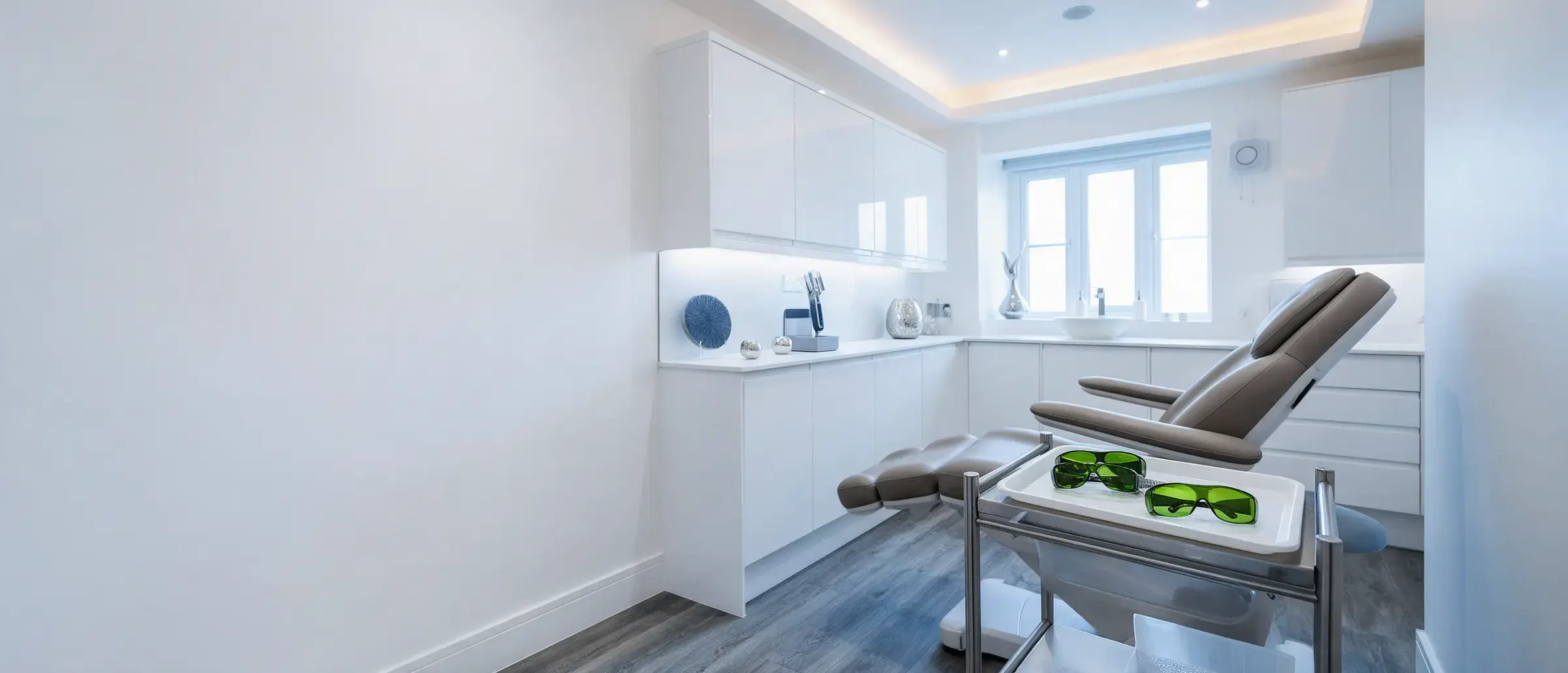
Q-switched Nd:YAG laser in Lancaster
Q-switched Nd:YAG laser is used for unwanted tattoos, PMU and selected pigment. Despite the shared name, it is a different technology from the long-pulsed Nd:YAG used for hair removal, and this page explains what it does and what to expect.
Quick answer
Q-switched Nd:YAG is a nanosecond laser with two wavelengths, 532 nm and 1064 nm, that uses short, high-energy pulses to target tattoo ink and pigment. At Naomi Waite Aesthetics in Lancaster it is used for tattoo removal, permanent makeup (PMU) removal and selected pigmentation, with suitability and a plan agreed at consultation.
What is Q-switched Nd:YAG 532/1064 laser?
It is a nanosecond Q-switched laser for tattoo and pigment treatment, with two wavelengths: 532 nm and 1064 nm. Q-switched describes the way it releases energy, in very short, high-energy pulses.
It is not the same as the long-pulsed Nd:YAG technology used in laser hair removal. The two share part of a name but do different jobs, and they are kept separate at the clinic.
How Q-switched laser works
The short, high-energy pulses target the ink or pigment in the skin, which your body then clears gradually over time.
The two wavelengths suit different colours. 1064 nm is commonly used for black and dark tattoo pigment, while 532 nm can target red and warm colours. Not every colour responds equally, and no single wavelength removes every ink.
What Q-switched laser can help with
Q-switched Nd:YAG may be considered for the concerns below, after your practitioner has assessed the area.
- Tattoo removal, including black and dark inks, and some red or warm colours
- Permanent makeup (PMU) removal
- Pigmentation, for selected types assessed at consultation
- Age spots, where assessed as suitable
- Fungal nail, offered as a treatment option where assessed as suitable
Is Q-switched laser right for me?
How a tattoo or PMU responds depends on the pigment colour and composition, its depth, your skin type and any previous treatment or cover-up work. Cosmetic pigments can behave unpredictably, so they are assessed carefully first.
For pigment, sun-related marks are assessed differently from complex pigment such as melasma, which we do not promise to clear with laser. Tell your practitioner about any medical conditions and medications, such as blood thinners, as these can affect the risk of complications.
What happens during treatment
At your consultation your practitioner assesses the area, discusses your expectations and explains how to prepare. This includes avoiding sun exposure and sunbeds beforehand, because tanned skin increases the risk of burns and pigment changes.
Arrive with clean skin, free of make-up, skincare and perfume on the area. A topical anaesthetic cream can be applied before treatment if needed, and the length of the session depends on the size of the area.
Downtime and aftercare
Redness and swelling are common afterwards, and some areas may crust. It is normal for the treated area to look darker at first. How long this lasts varies, so your practitioner will explain what to expect for you.
Your aftercare will include:
- Protecting the area from the sun with clothing and a broad-spectrum sunscreen
- Letting any crusts come away naturally, without picking them
- Keeping the area dry and avoiding long hot showers, saunas, steam rooms and hot tubs while it heals
- Not over-moisturising while crusts are present
- Avoiding strenuous exercise while the skin is healing
- Contacting the clinic with any concerns
How Q-switched laser compares
Q-switched Nd:YAG differs from Pico laser by pulse duration, and from the long-pulsed Nd:YAG used for hair removal by purpose and pulse type. Your practitioner will explain which is appropriate for your tattoo, PMU or pigment.
Results
Fading is gradual, and results vary with the ink, its depth, your skin and any previous work. We do not promise complete removal or that every colour will respond equally.
Where we show before and after photographs, they are of real clients, not stock or manufacturer images.
Q-switched laser prices in Lancaster
The cost depends on the size and type of tattoo, PMU or pigment being treated. Current prices are shown on our prices page, and your practitioner will confirm your plan cost at consultation.
Q-switched laser: frequently asked questions
Answers to the questions we hear most often. If yours is not here, ask at your consultation.
Related treatments and guides
These pages cover the related concerns and the clinic's other tattoo and pigment laser.
- Pico laser
- Tattoo removal
- PMU removal
- Pigmentation
- Fungal nail
Q-switched Nd:YAG compared with Pico laser and long-pulsed Nd:YAG
| Feature | Q-switched Nd:YAG | Pico laser | Long-pulsed Nd:YAG (hair removal) |
|---|---|---|---|
| Pulse type | Nanosecond pulses | Picosecond pulses | Long pulses |
| Main use | Tattoo and PMU removal, selected pigment | Tattoo and PMU removal, selected pigment | Long-term reduction of pigmented hair |
| What it targets | Tattoo ink and pigment | Tattoo ink and pigment | Melanin in pigmented hair |
Frequently asked questions
It is a nanosecond laser with two wavelengths used to target tattoo ink and pigment. 1064 nm is commonly used for black and dark ink, while 532 nm can target red and warm colours. At Naomi Waite Aesthetics in Lancaster it is used for tattoo removal, PMU removal and selected pigmentation.
Most people describe the sensation as tiny pinpricks on the skin. A topical anaesthetic cream can be applied before treatment to help with comfort. Your practitioner will talk you through what to expect for the area being treated. Session length depends on the size of the area.
The number varies with what is being treated, the ink colours and depth, and your skin type, so there is no set figure. Your practitioner will assess the area and create a plan for you, and will review progress with you as treatment goes on. Laser tattoo removal requires multiple sessions, and results vary with the size, colour and location of the tattoo or mark, so we do not promise complete removal.
Redness and swelling are common afterwards, some areas may crust, and the treated skin can look darker at first. How long this lasts varies from person to person. You will be given aftercare to follow, including sun protection and leaving crusts to come away naturally.
Suitability depends on your skin, the tattoo or pigment, and your medical history. Some skin conditions, blood disorders and medications, such as blood thinners, can increase the risk of complications, and tanned skin carries a higher risk of burns or pigment changes. Your practitioner will review all of this at consultation.
The price depends on the size and type of tattoo, PMU or pigment being treated. Current prices are listed on our prices page, and your practitioner will confirm the cost of your plan at your consultation in Lancaster. Your plan is specific to your tattoo or pigment, so the cost reflects what is actually needed.
Book Your Free Consultation
Tell us your goals. We'll tell you exactly what's possible and build a plan to get you there.