
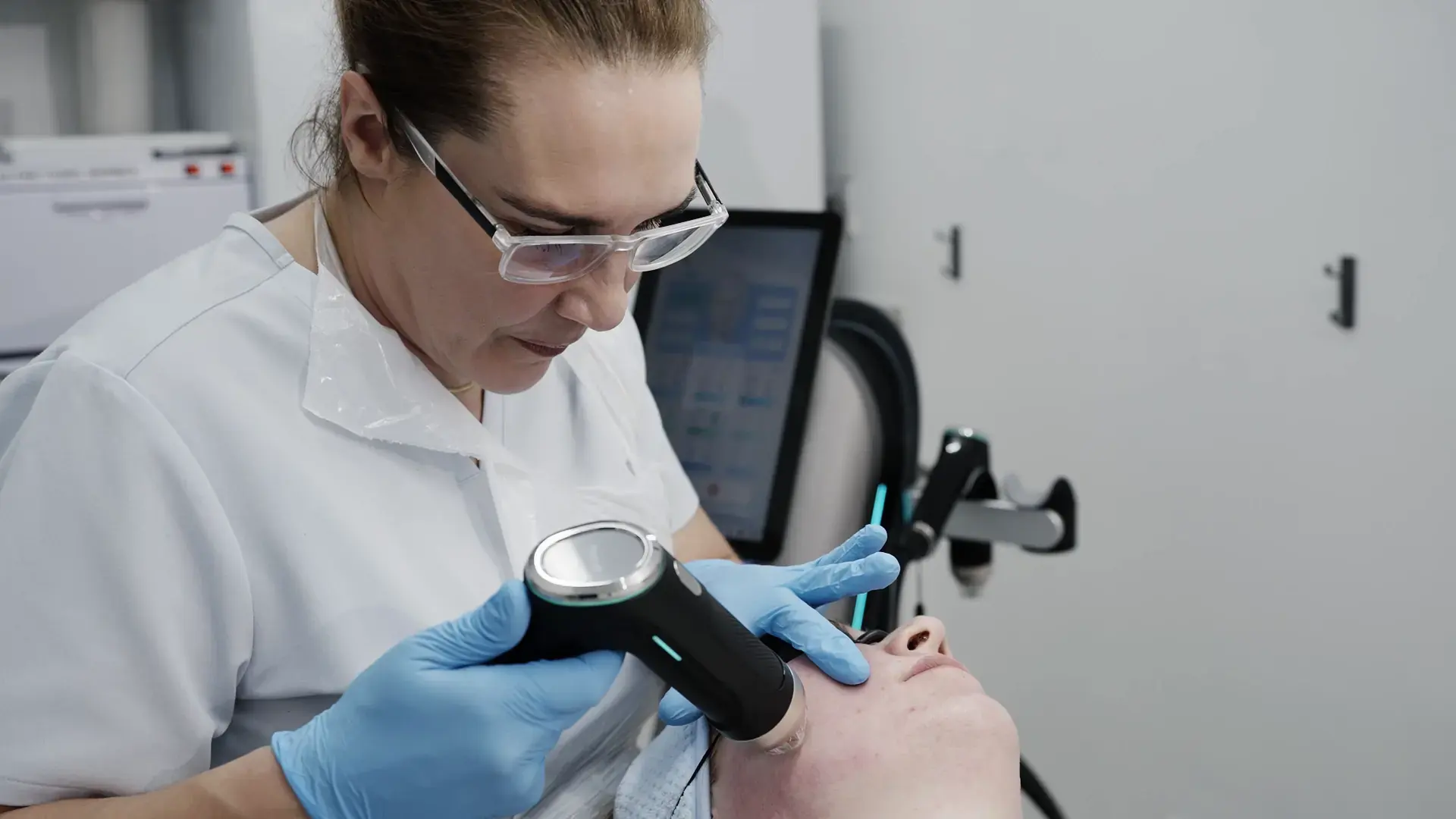
How RF Microneedling can help with acne scarring
Acne scarring can respond to more than one type of treatment, and RF microneedling is often compared with resurfacing lasers as a non-ablative route.
Quick answer
RF microneedling is a non-ablative option considered for acne scarring at Naomi Waite Aesthetics, combining fine needles with radiofrequency energy. Because it doesn't rely on surface ablation, it's often discussed as an alternative to CO2 or Er:YAG laser for people wanting a different downtime or skin-tone profile. Suitability is confirmed at consultation.
How RF Microneedling works on acne scarring
Acne scarring frequently includes rolling or tethered-feeling areas where the skin surface has been pulled down by scar tissue beneath it. Because RF microneedling delivers energy beneath the surface rather than resurfacing the top layer, it's often discussed as a way of addressing this kind of deeper textural change alongside more superficial marks.
For how the treatment itself works, see our RF microneedling treatment page. For acne scarring, the key consideration is whether your scarring is more superficial (where other options may be considered) or has more depth and tethering (where RF microneedling is more often discussed), which your practitioner assesses individually.
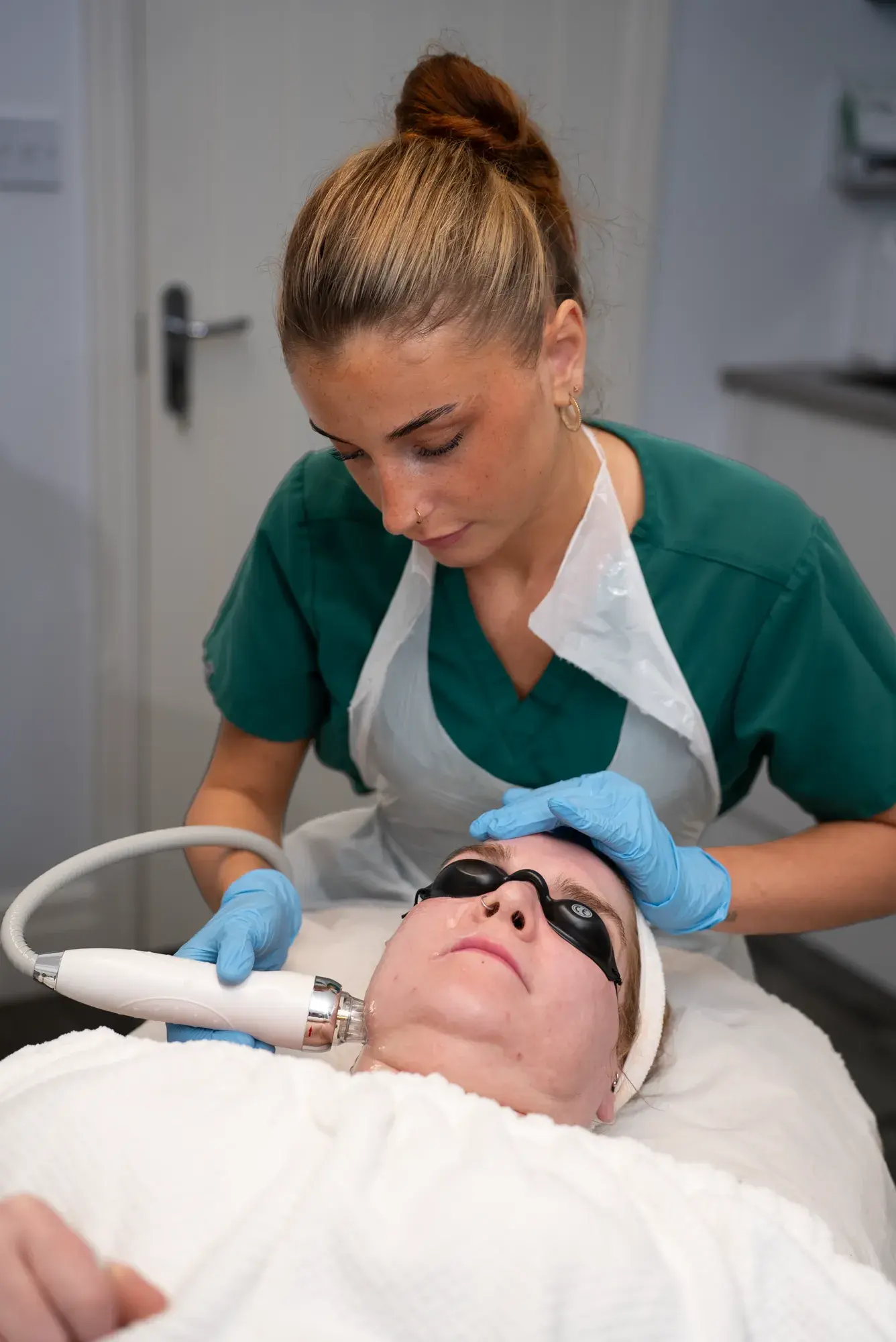
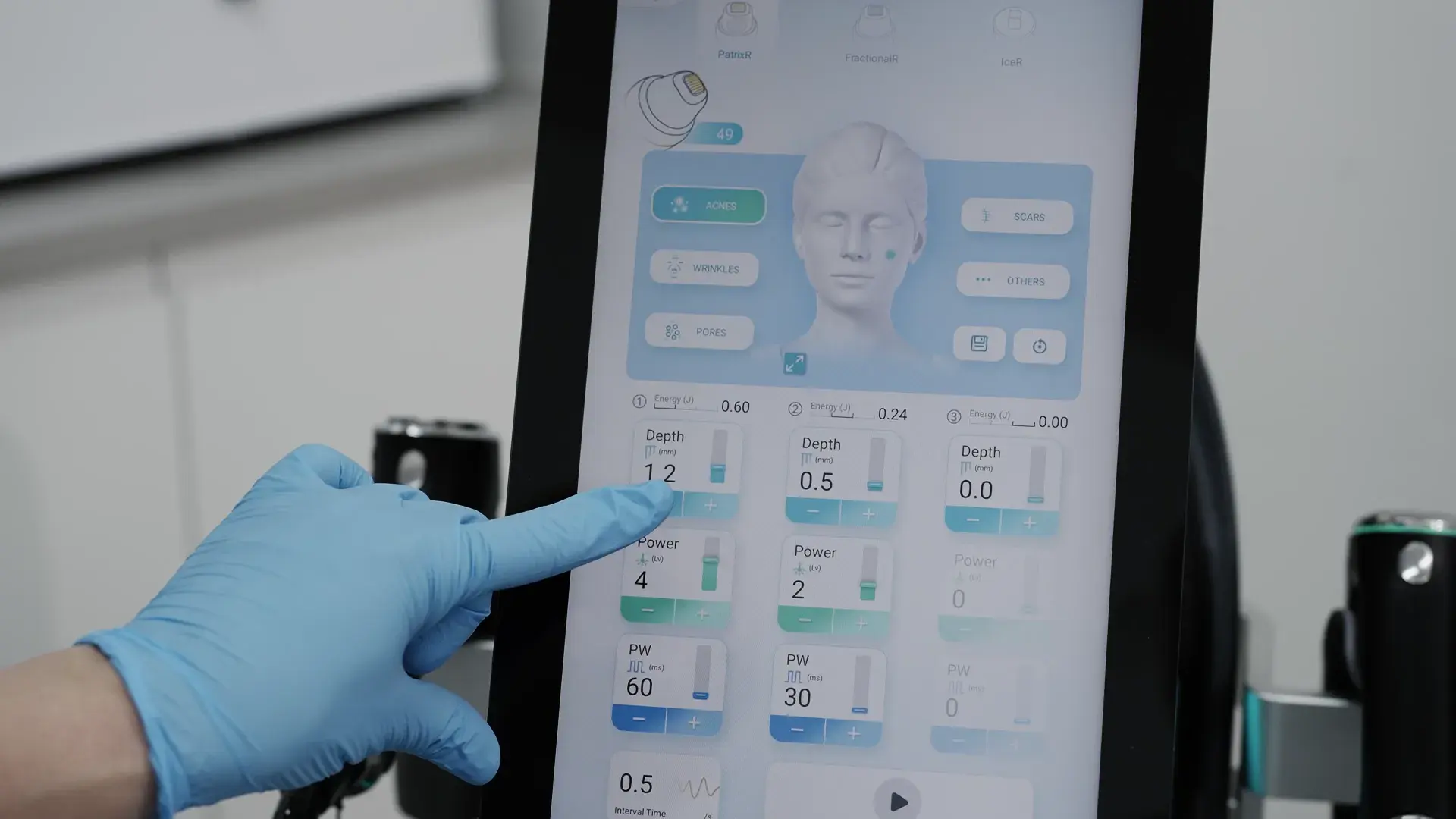
Who RF Microneedling suits for acne scarring (and when another option may fit better)
RF microneedling is often considered by people with acne scarring who want to avoid the more noticeable downtime associated with ablative lasers, or whose skin tone means non-ablative treatment carries a lower risk of pigment change. It's also discussed where scarring includes some depth or tethering rather than being purely surface-level.
It may fit less well where scarring is very shallow and superficial, where standard microneedling alone may be sufficient, or where a practitioner feels ablative resurfacing would address your specific pattern more directly. This is assessed individually, sometimes with support from our skin scanner.
What a course looks like at Naomi Waite Aesthetics
A course for acne scarring starts with an assessment of your scarring pattern, its depth and your skin's current condition, including whether acne is still active. Treatment is then planned around your specific scarring rather than following a fixed template.
Because acne scarring can appear alongside enlarged pores, oiliness or occasional breakouts, your plan may bring RF microneedling together with other elements of your skincare routine. The number and spacing of sessions is confirmed once your scarring has been properly assessed.
RF Microneedling compared with other options for acne scarring
RF microneedling sits between standard microneedling and resurfacing lasers such as CO2 and Er:YAG in terms of how it approaches acne scarring, offering a non-ablative alternative with its own depth and downtime profile. Which fits best depends on your scarring and preferences, worked through at consultation.
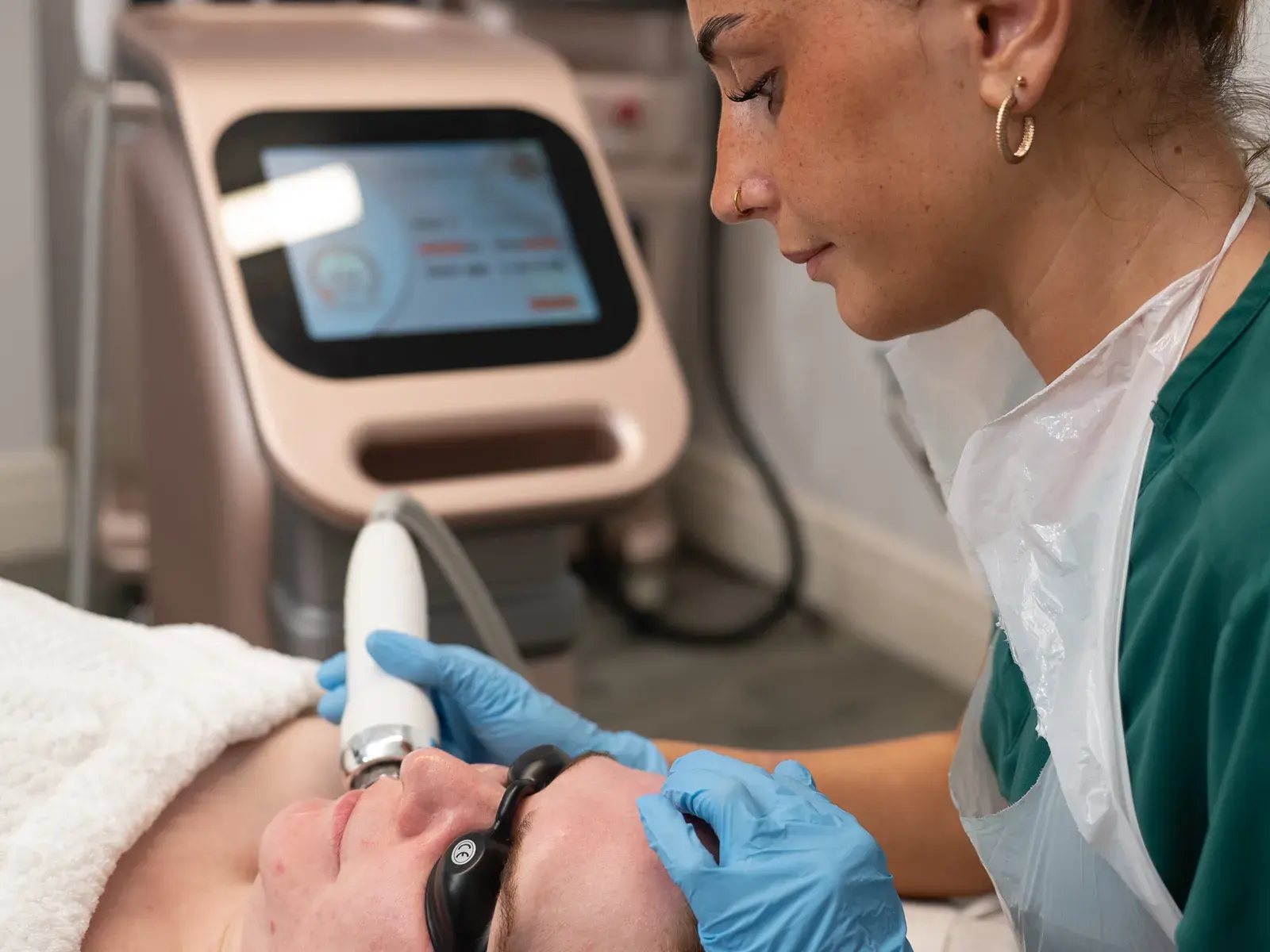
Aftercare after RF Microneedling for acne scarring
General aftercare guidance for RF microneedling is set out on our treatment page. For acne-prone skin, it's particularly important to keep the treated area clean while the tiny needle points heal, and to avoid introducing new active skincare products until your practitioner says it's fine to.
If you notice new breakouts while healing, mention this to your practitioner rather than treating them as you normally would, since healing, acne-prone skin needs a more careful approach. Sun protection matters throughout recovery, as does patience while your skin remodels.
Frequently asked questions
Questions we're often asked about RF microneedling for acne scarring.
Related guides
Compare RF microneedling with standard microneedling and resurfacing lasers for acne scarring, or see how it's used for pores, texture and skin laxity.
Book a consultation
Book a consultation in Lancaster to find out whether RF microneedling is a good fit for your acne scarring.
Frequently asked questions
RF microneedling is a recognised option for helping improve the appearance of acne scarring for some people, particularly scarring with some depth, though results vary and it cannot guarantee a specific outcome. A consultation will assess whether it suits your particular scarring.
This depends on your scarring's depth and pattern and how your skin responds, so we don't set a fixed number in advance. Your practitioner will discuss a plan tailored to your scarring at consultation.
Because RF microneedling doesn't rely on surface ablation, it's often considered across a wider range of skin tones than some laser options, though this is always confirmed individually. Your medical history and scarring pattern are also part of that assessment.
General comfort during RF microneedling is covered on our treatment page. Acne-scarred areas, especially where skin is thinner or tethered, can feel slightly different, and your practitioner will talk you through this before starting.
Changes to scarring texture tend to develop gradually as the skin remodels over the weeks after treatment, rather than appearing straight away. Your practitioner can discuss a realistic timeframe for your scarring at consultation.
Neither is universally better: RF microneedling is non-ablative while CO2 resurfaces the skin's surface directly, and each suits different scarring patterns and preferences. We help you weigh these up for your own scarring at consultation.
Book Your Free Consultation
Tell us your goals. We'll tell you exactly what's possible and build a plan to get you there.