
Ingrown Hairs
Ingrown hairs can be uncomfortable and frustrating, and they can leave marks behind. Here is why they happen and how reducing hair growth may help manage them.
Quick answer
Ingrown hairs are hairs that curl back or grow sideways into the skin instead of rising out of it, often causing red, itchy or sore bumps. They are common after shaving, waxing or plucking. At Naomi Waite Aesthetics in Lancaster, laser hair reduction may help manage them where suitable, after a consultation.
What are ingrown hairs?
An ingrown hair is a hair that grows back into the skin rather than up and out of the follicle. It may curl round and re-enter the skin, or grow sideways under the surface. The skin reacts to the trapped hair, which can cause a small red or skin-coloured bump, sometimes with a visible hair or a pus-filled head.
Ingrown hairs are a common concern for people of every gender. They often appear where hair is regularly shaved, waxed or plucked, such as the beard area and neck, bikini line, underarms and legs. They can be itchy or sore, and repeated ingrown hairs may leave dark marks or, occasionally, scarring, particularly if they are picked.
Many ingrown hairs settle on their own. If an area becomes very painful, hot or swollen, or the redness spreads, it may be infected, and you should speak to your GP or pharmacist.
What causes ingrown hairs?
Ingrown hairs usually happen when hair removal leaves a hair with a sharp tip or a weakened path to the surface, and some hair types are more prone to them than others.
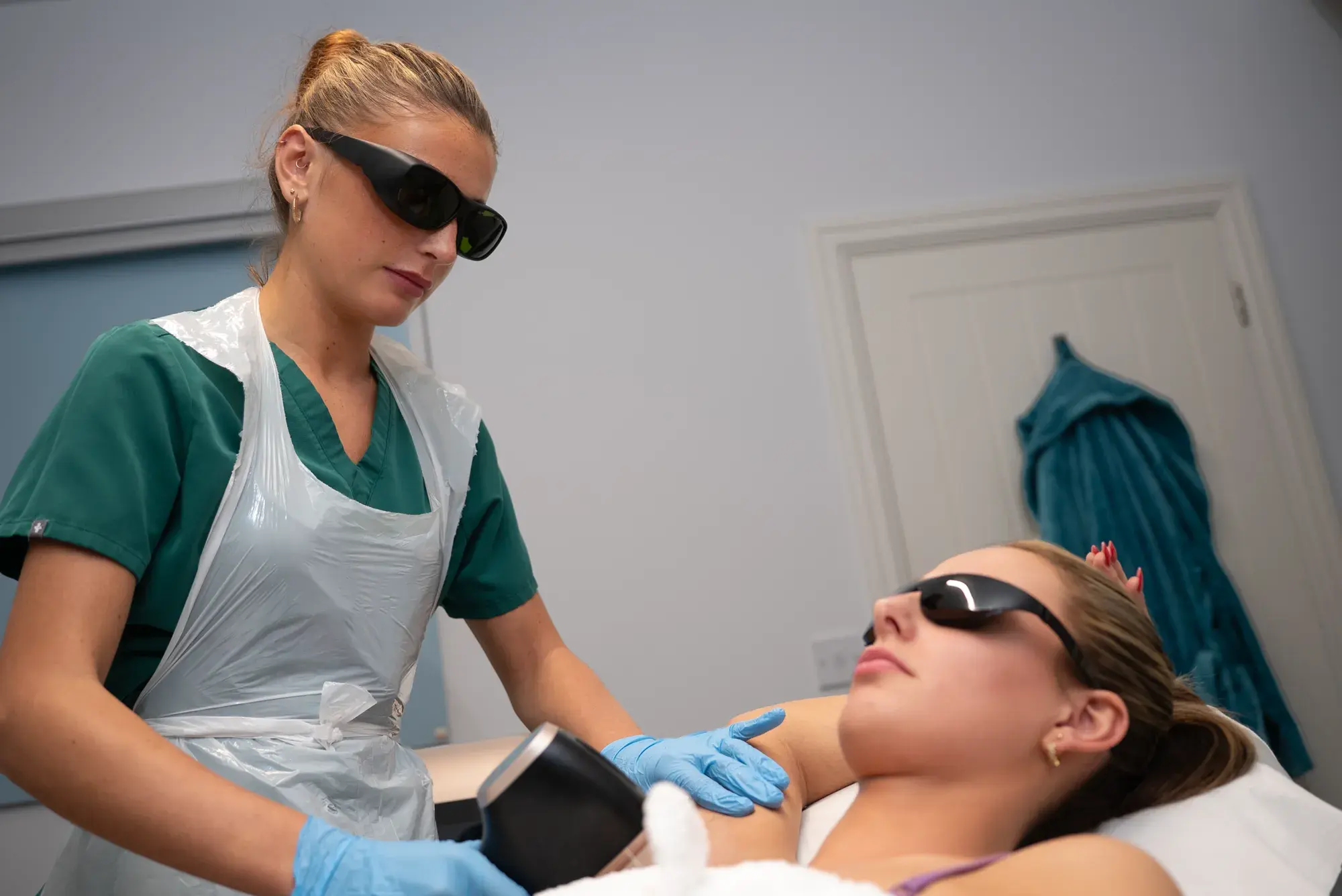
Because ingrown hairs are so closely linked to hair removal habits, reducing the amount of hair that grows in an area can mean fewer hairs are available to become trapped. This is why laser hair reduction is sometimes suggested for people with frequent ingrown hairs. It does not treat ingrown hairs directly, and suitability depends on your hair colour and skin, which your practitioner will assess at consultation.
Common contributing factors include:
- Shaving, especially a very close shave or shaving against the direction of growth
- Waxing and plucking, which can distort the follicle or leave broken hairs
- Curly or coarse hair, which is more likely to curl back into the skin
- Dead skin cells blocking the opening of the follicle
- Tight clothing rubbing against recently shaved or waxed skin
Related treatments
 Alexandrite / Nd:YAG HairAlexandrite / Nd:YAG laser hair removal uses a dual-wavelength, long-pulsed laser to target the pigment in hair and heat the follicle. At Naomi Waite Aesthetics in Lancaster it is offered for long-term reduction of unwanted pigmented hair and, where suitable, ingrown hairs, with the wavelength chosen for your skin and hair.Find out more
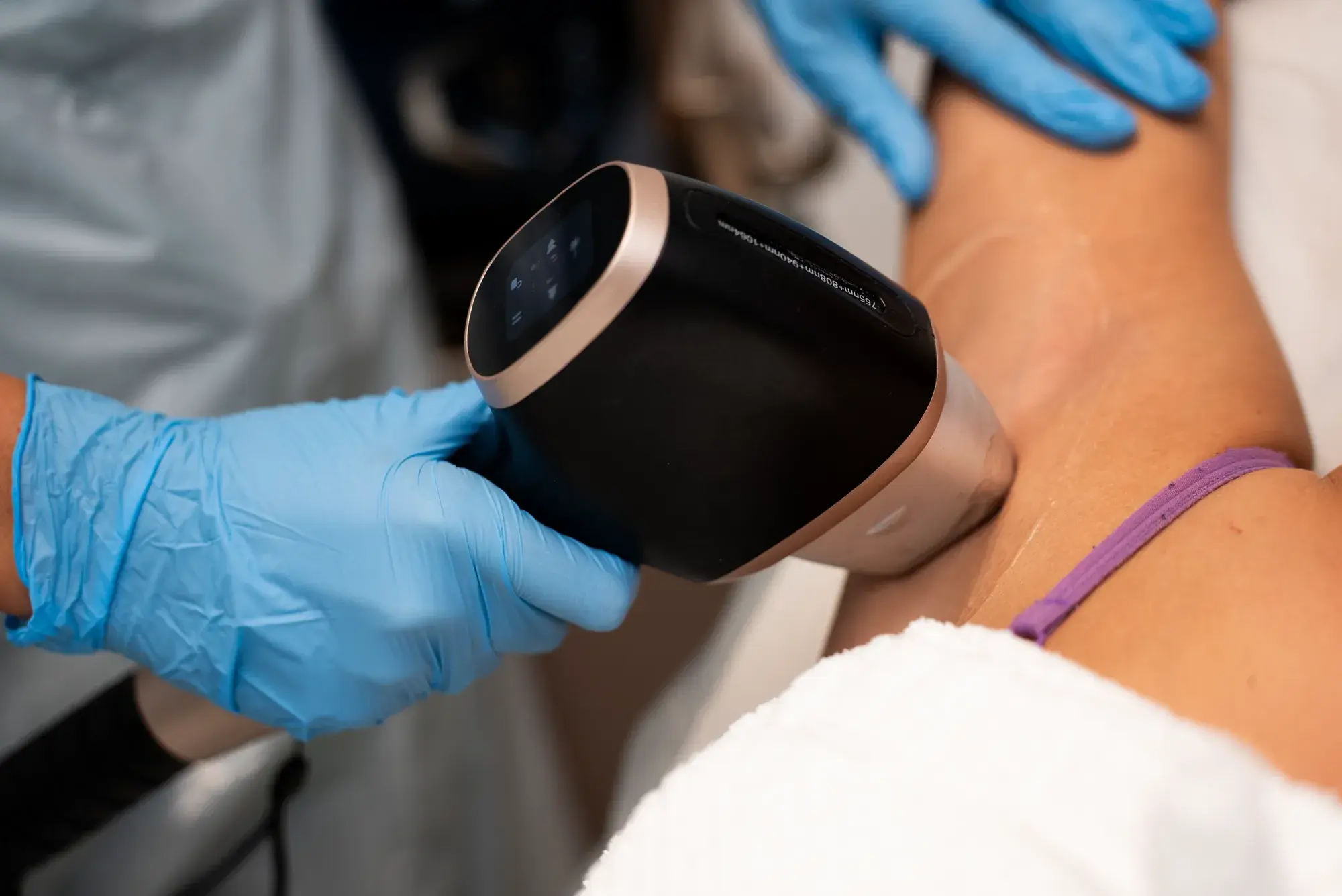 Diode Laser Hair RemovalDiode laser hair removal uses diode laser energy to target the pigment in hair and heat the follicle, for long-term reduction of unwanted pigmented hair. At Naomi Waite Aesthetics in Lancaster it is one of the clinic's core laser hair-removal options, with suitability for your skin and hair checked at consultation.Find out more
Frequently asked questions
Ingrown hairs happen when a hair grows back into the skin instead of out of it, usually after shaving, waxing or plucking. Curly or coarse hair, dead skin cells blocking the follicle and tight clothing can all make them more likely.
For frequent ingrown hairs in an area of pigmented hair, reducing hair growth with Alexandrite / Nd:YAG or diode laser may help manage the problem, and which laser suits you depends on your skin and hair. If your hair is grey, white or very fair, laser cannot target it, and your practitioner will discuss other options such as electrolysis.
Hair grows in cycles, so laser hair reduction is usually carried out as a course of treatments. The number you need depends on the area, your hair and skin. Your practitioner will talk you through a suggested plan at consultation rather than promising a fixed number.
Comfort varies with the area and the person. Your practitioner will explain what laser treatment feels like and check on your comfort throughout.
Downtime varies with the area being treated. If you have active, inflamed ingrown hairs, your practitioner may suggest letting the area settle first. You will be given clear aftercare advice for your treatment.
Laser hair reduction aims to reduce the number of hairs growing in an area, which may mean fewer ingrown hairs. Some hairs can regrow over time, and if you keep shaving or waxing any remaining hair, occasional ingrown hairs are still possible. Your practitioner will talk through realistic expectations.
Laser suitability depends on your skin tone and hair colour, and the Alexandrite / Nd:YAG platform allows the wavelength to be chosen for your skin and hair. If you are prone to dark marks from ingrown hairs, mention this at consultation so it can be taken into account.
The cost depends on the treatment, the size of the area and the number of sessions in your plan. Current prices are listed on the clinic's prices page, and your practitioner will confirm the cost of your personalised plan at consultation.
Book Your Free Consultation
Tell us your goals. We'll tell you exactly what's possible and build a plan to get you there.