
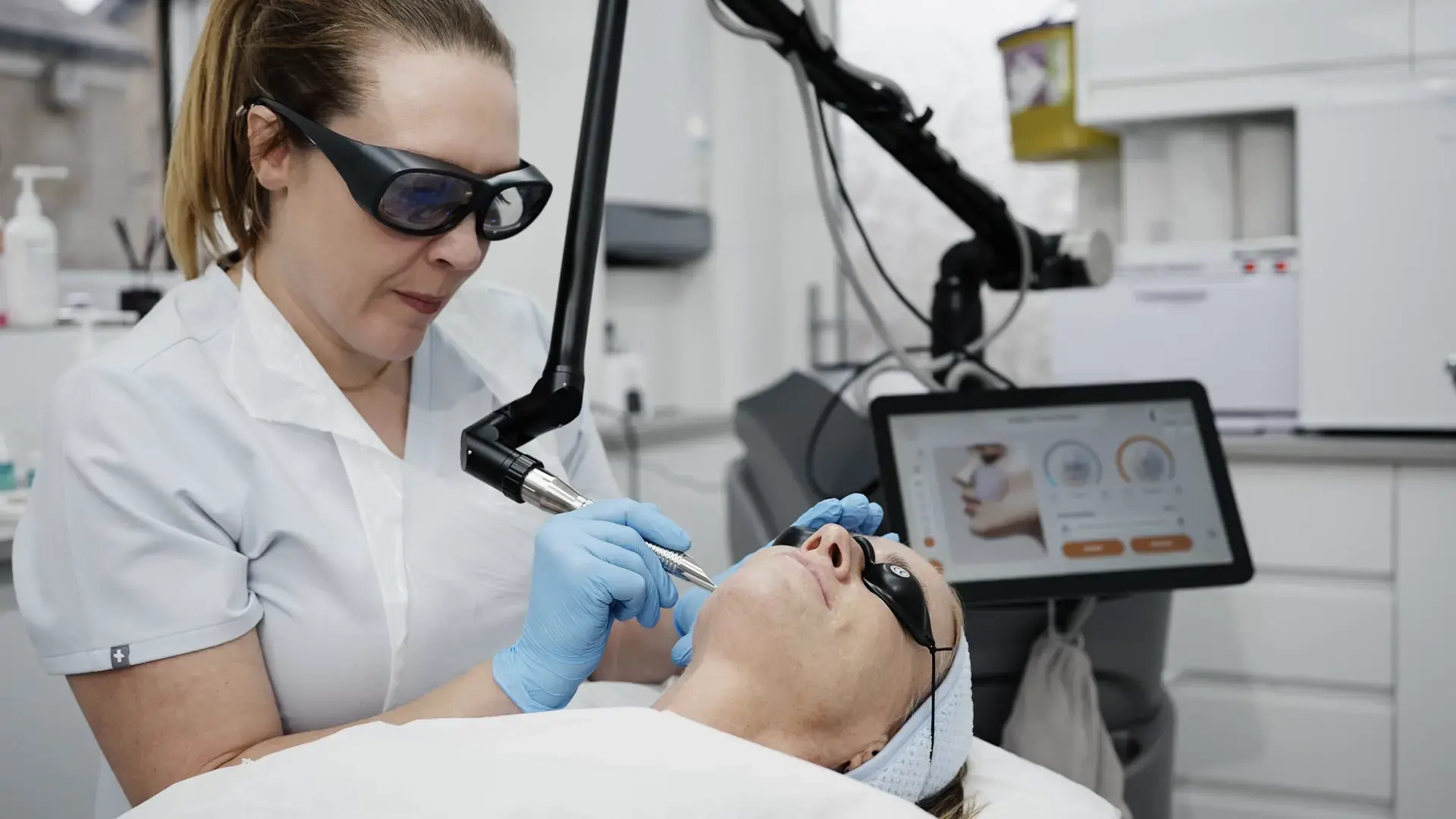
How Er:YAG 2940 Laser can help with scars
Scars differ enormously in cause, age and depth, which is why Er:YAG laser is one of several resurfacing routes we discuss rather than a single default.
Quick answer
Er:YAG 2940 laser is another resurfacing option considered for scars from surgery, injury or other causes at Naomi Waite Aesthetics, alongside CO2 laser and RF microneedling. It offers a different balance of precision and depth, which can suit certain scar types and skin. Suitability is confirmed at consultation.
How Er:YAG 2940 Laser works on scars
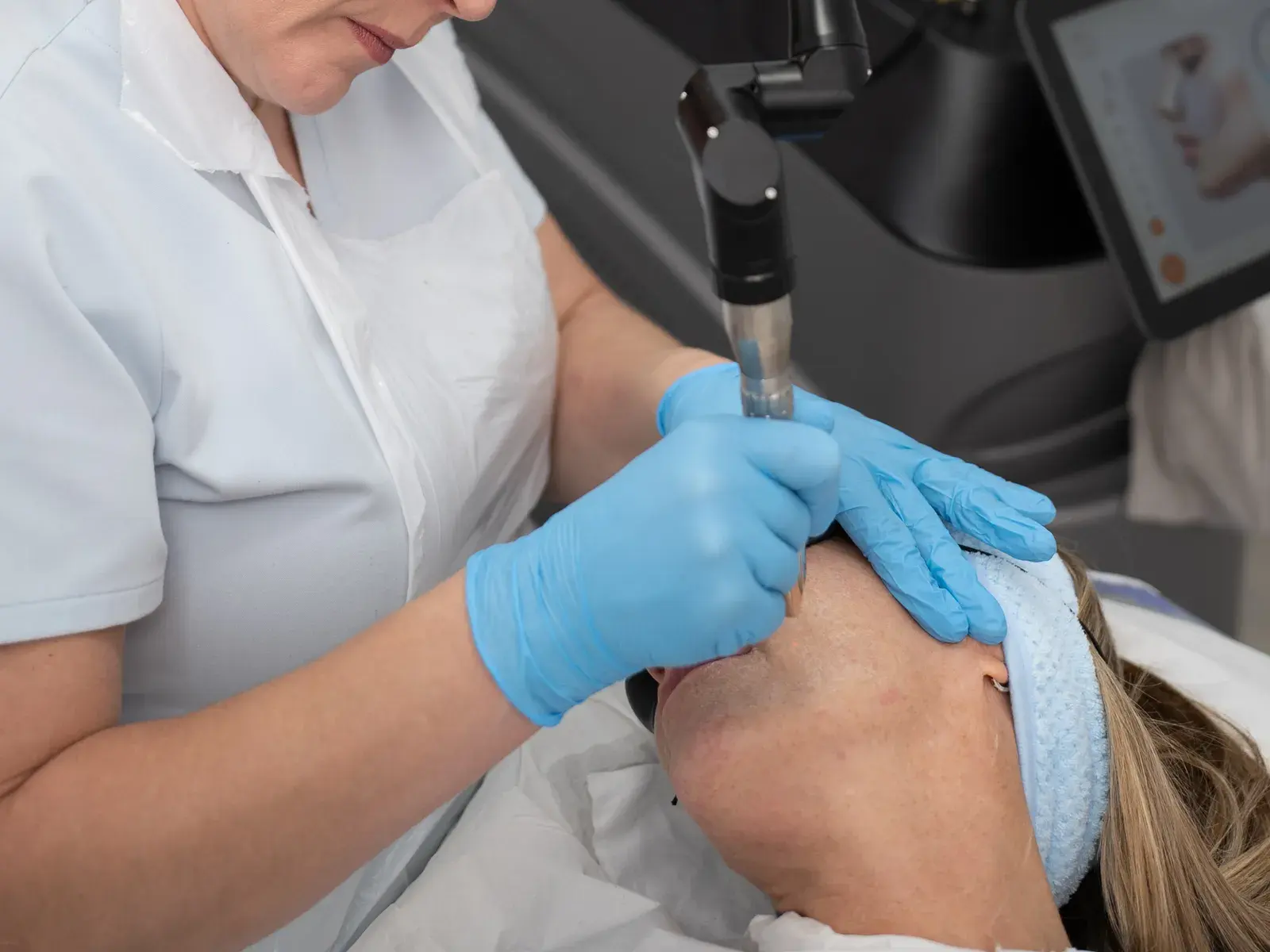
Some scars sit as a fine, well-healed line, while others involve broader textural change in the surrounding skin. Er:YAG's water absorption allows a more controlled, layer-by-layer style of resurfacing, which some practitioners favour for particular scar textures or where a different ablation depth to CO2 is wanted.
For the treatment mechanism itself, see our Er:YAG 2940 laser treatment page. For scars, timing and scar maturity matter as much as the laser chosen: a scar that is still actively changing is generally approached differently from one that has settled, which your practitioner will assess.
Who Er:YAG 2940 Laser suits for scars (and when another option may fit better)
Er:YAG is often considered by people whose practitioner feels a different depth or precision profile to CO2 suits their particular scar or skin. It's usually discussed as an alternative resurfacing route rather than a completely separate category of treatment.
It may fit less well where a scar is still new or changing, where raised or thickened scarring is present, or where non-ablative options such as RF microneedling are preferred. These situations are assessed individually, sometimes with support from our skin scanner.
What a course looks like at Naomi Waite Aesthetics
As with any scar treatment, we start by understanding your scar's cause, age and how it has changed over time, alongside your general skin assessment. This history genuinely shapes the plan, since scar tissue and its maturity affect how it responds to resurfacing.
Because scars occur on the face and body and vary hugely in size, your course is planned entirely around your individual scar. Session numbers and intervals are agreed once your scar and skin have been assessed, not fixed in advance.
Er:YAG 2940 Laser compared with other options for scars
Er:YAG sits alongside CO2 laser, RF microneedling, microneedling and PRP facial as a route for scarring, each suited to different scar characteristics and preferences. We help you weigh these against your specific scar at consultation.
Aftercare after Er:YAG 2940 Laser for scars
General aftercare after Er:YAG resurfacing is set out on our treatment page. Scar tissue can behave slightly differently from surrounding skin during healing, so it's worth following your practitioner's specific guidance closely rather than general skincare habits.
If your scar sits somewhere that rubs against clothing or moves a lot, take extra care while it heals. Daily sun protection matters throughout recovery, since healing scarred skin is more prone to pigment change.
Frequently asked questions
Questions people often ask about Er:YAG 2940 laser for scars.
Related guides
Compare Er:YAG laser with CO2 laser and RF microneedling for scars, or read about Er:YAG laser for texture and fine lines.
Book a consultation
Book a consultation in Lancaster to have your scar assessed in person.
Frequently asked questions
Er:YAG laser is a recognised resurfacing option some people use to help improve the appearance of certain scars, though results vary and it can't remove a scar completely or guarantee an outcome. Whether it suits your scar is assessed at consultation.
This depends on your scar's type, age and how your skin responds, so we can't give a general number. Your practitioner will discuss a realistic plan once your scar has been assessed.
Suitability depends on your skin tone, medical history and your scar's specific characteristics, all confirmed at an in-person consultation rather than assumed generally.
General sensation during Er:YAG treatment is described on our treatment page. Scarred areas can sometimes feel different from surrounding skin, which your practitioner will explain before starting.
Visible change develops gradually as skin remodels over the weeks after treatment rather than immediately. Your practitioner can give you a realistic idea of timing based on your scar.
Neither is universally better: both are ablative resurfacing lasers offering a different balance of depth and precision, and the right choice depends on your scar and skin. This is compared against your specific scar at consultation.
Book Your Free Consultation
Tell us your goals. We'll tell you exactly what's possible and build a plan to get you there.