
3 min read
How diode laser hair removal works and what to expect

Written by Naomi Waite
Founder & Advanced Skin Practitioner
Quick answer
Diode laser hair removal sends controlled laser energy into the pigment in suitable hairs. The energy becomes heat in the follicle, reducing its ability to produce hair. Because hair grows in cycles, treatment is planned as a course. I assess your skin, hair and treatment area before recommending a suitable plan.
What is diode laser hair removal?
Diode laser hair removal is a treatment for reducing unwanted pigmented hair over time. It is a laser-based treatment, not intense pulsed light, and it works by using the colour in the hair as the target.
When the laser energy reaches the hair, the pigment absorbs it and the energy produces heat around the follicle. This heat damages the follicle's ability to produce hair. The aim is long-term hair reduction, rather than a promise that every hair will be removed permanently.
I offer diode laser hair removal at Naomi Waite Aesthetics in Lancaster. As an advanced skin and laser practitioner and educator, I begin by checking whether the treatment is appropriate for your skin and hair, rather than assuming that one laser suits everyone.
Why does diode laser hair removal need a course of treatments?
Hair does not all grow at the same speed or at the same time. Laser treatment is most effective when a hair is in its active growth phase, because the hair is connected to the follicle in a way that allows the energy to reach the target effectively.
At any one appointment, some hairs will be in that active phase while others will be resting. Further appointments allow different groups of hairs to be treated as they enter a suitable growth phase. The plan varies according to the area, hair type, skin type and individual response.
I do not promise a fixed result or a fixed number of appointments. I explain what may be realistic for you at consultation.
Which hair can a diode hair removal laser treat?
A diode laser needs pigment in the hair to absorb the energy. It is generally used for pigmented hair, including darker hair, when your skin and hair are suitable for the treatment.
It is not effective on white or grey hair because there is too little pigment to absorb the laser energy. Very fair or blonde hair may also be unsuitable, depending on its colour and the other factors I assess. If laser is unlikely to work for a particular hair colour, I can discuss whether another hair-removal route should be considered.
Your skin tone, hair colour, hair thickness and treatment area all matter. Hormonal changes, age, some medicines and conditions such as polycystic ovary syndrome can also affect hair growth. If you have noticed sudden or unusual new hair growth, speak with your GP so possible underlying causes can be considered.
What happens during diode laser treatment?
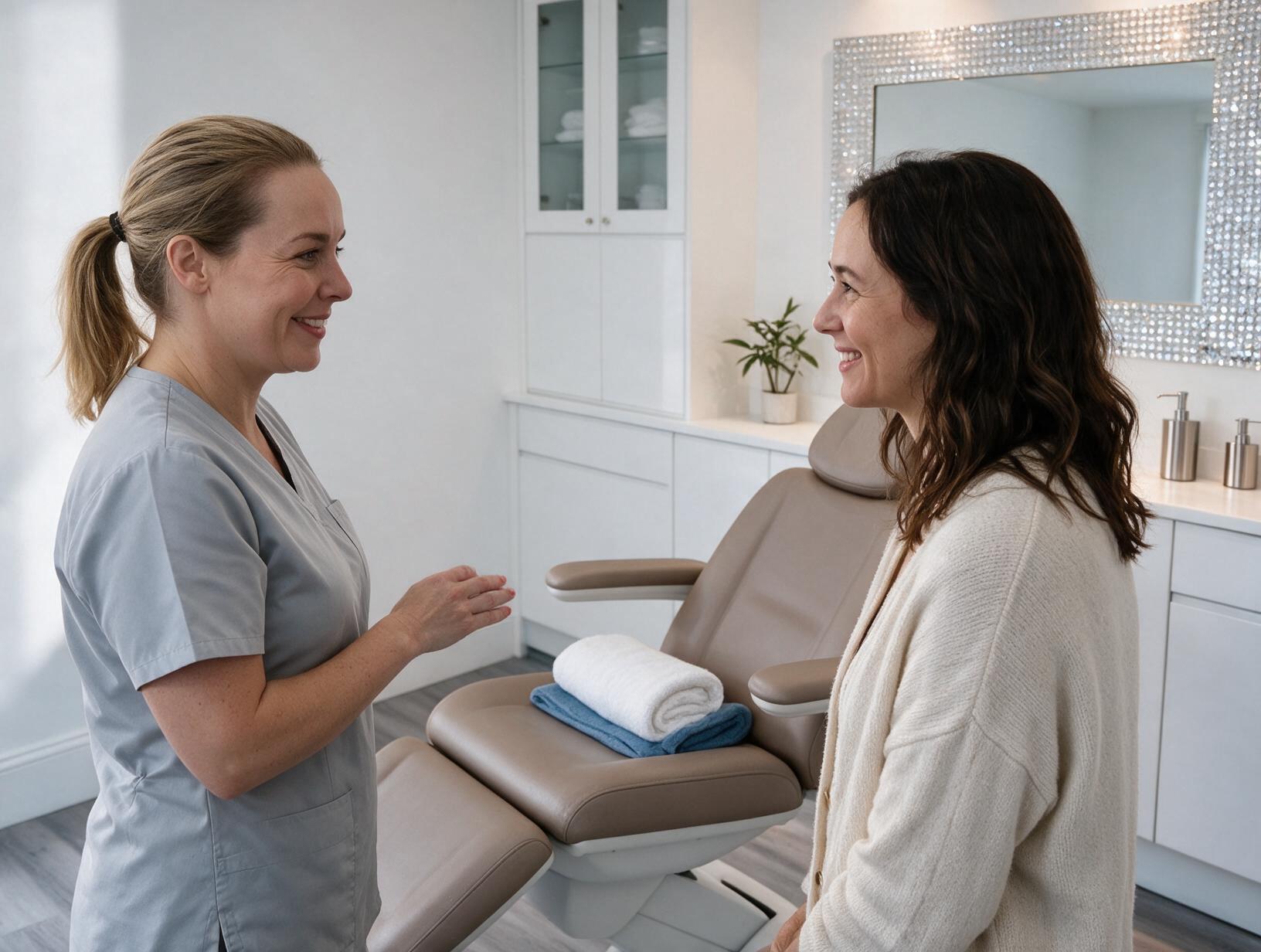
At your consultation, I take a treatment history and assess your skin and hair. We discuss suitability, the area you want treated, how the laser feels and the recovery guidance you will need afterwards.
For treatment, I prepare the area and apply cooling gel to help with comfort. The diode laser then delivers controlled pulses of energy to the hair. Many people describe the sensation as similar to a rubber band snapping against the skin, although this varies with the area treated and your personal sensitivity.
I will talk you through the sensation before we begin and monitor your skin throughout.
What should I expect after diode laser treatment?
Mild redness and swelling around the treated follicles are common immediate reactions and usually settle. Your skin may feel warm or sensitive for a short period. I give you specific aftercare instructions based on the area and how your skin has responded.
After treatment, avoid hot baths, saunas and steam rooms for the period advised. Avoid perfumed products and exfoliants on the area during that period, and do not pick, scratch or rub the skin. If you notice blistering, crusting or scabbing, contact the clinic promptly.
Is diode laser hair removal right for me?
Suitability cannot be confirmed from a photograph or hair colour alone. I need to consider your skin, treatment history, hair characteristics, the area being treated and any factors that may affect healing or hair growth.
Consultation is also the right time to compare diode treatment with other options available at the clinic, where appropriate. I recommend the option that suits your circumstances, and I cannot guarantee an outcome.
Prices are listed on the Naomi Waite Aesthetics website prices page, and the cost of your plan depends on the area and treatment approach discussed with you. Every treatment starts with a consultation covering your skin, treatment history, suitability and recovery time.
You are welcome to book a consultation if you would like me to assess whether diode laser hair removal is suitable for you.